Get Full Government Meeting Transcripts, Videos, & Alerts Forever!
Will County committee moves to forward updated ordinances, amends meeting procedures
Summary
A Will County committee reviewed multi-title ordinance updates, voted to forward Title I to the County Executive, amended parliamentary-procedure language to preserve Roberts Rules exceptions, and discussed settlement approval thresholds, public comment rules and agenda notifications.
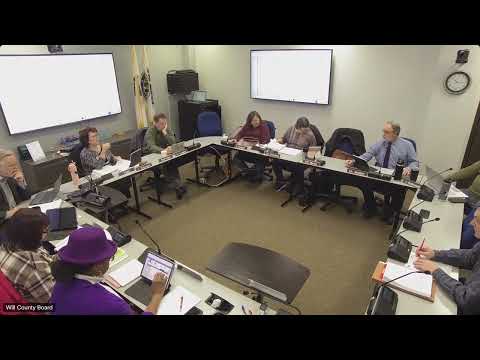
The Will County Ordinance Review Committee on Tuesday reviewed proposed revisions to the county code intended to modernize language and align local rules with state law, voted to forward Title I to the County Executive for further consideration and approved an amendment to meeting-parliamentary language that explicitly preserves exceptions in Roberts Rules of Order.
The committees review, led by the committees legal adviser, Phil Mack, focused on updating old statutory citations and removing procedural provisions that no longer match the countys executive form of government. Mack said the code contained language dating as far back as the 1940s and that some provisions remained from when the county board exercised administrative functions that now fall to the County Executive.
"The last time the entire code of ordinance is done was 1981," Phil Mack, committee counsel, said, adding that he is tracking recent state law changes so local language matches current statutes. "We undertook this in order to just basically bring them up to date." Mack also described his process for circulating strikeout-and-addition drafts to committee members and for producing clean copies for the executive committee and the full board.
Why it matters: The revisions aim to align Will Countys ordinances with state law and the countys current organizational structure, reduce internal inconsistency, and to make statutory authority easier to find.…
Already have an account? Log in
Subscribe to keep reading
Unlock the rest of this article — and every article on Citizen Portal.
- Unlimited articles
- AI-powered breakdowns of topics, speakers, decisions, and budgets
- Instant alerts when your location has a new meeting
- Follow topics and more locations
- 1,000 AI Insights / month, plus AI Chat