Get Full Government Meeting Transcripts, Videos, & Alerts Forever!
Get email alerts on the School Resource Officers topic
No spam. Unsubscribe anytime.
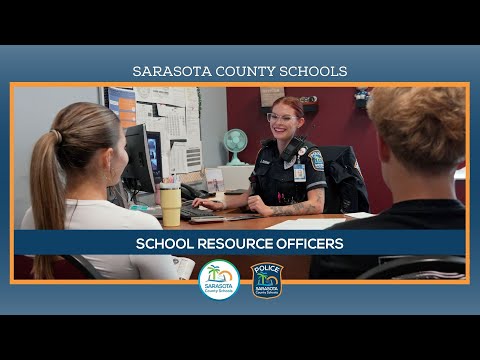
School resource officers describe role as security, educator and mentor
Summary
School resource officers in Sarasota County outlined a three-part role—security, educator and mentor—said switching to school policing can offer more regular schedules and daily chances to build relationships with students, according to a recorded set of remarks included in the transcript.
School resource officers described their job as combining campus security, day-to-day education and mentoring, and said the role offers more regular schedules and a chance to see long-term results with students.
A school resource officer said, "So a school resource officer in my opinion is a 3 pronged job. First off, we're here for security. We want to make sure that the school is a safe environment for everybody that's on campus. You're also an educator." The officer framed the position as one that also allows officers to "be a counselor and a mentor" who can "talk to kids about getting on and staying on a good path in life and avoiding negative choices and consequences."
Jessica Erdman, a school resource officer at Riverview High School, described her pathway into the role and the day-to-day payoff. "I was a self sponsored cadet in the academy. Working Before this, I was a surgical technologist, and I enjoyed helping people in the medical field. But working in the OR, you don't see the outcome. Being an SRO, you get to engage with the students every single day, and you really get to see the difference being made," she said.
A retired Sarasota Police Department officer, reflecting on a long career, said the move into school policing came from a desire to continue community service after retirement: "After 30 years of being in Sarasota Police Department, I retired, thought I was ready to live the good life, and I wasn't. I, felt like I had to give more bike to my community. So I figured, okay, I like kids, and it's another career that I can start." The same speaker described the SRO role as more focused on guidance than typical street patrol, but noted that "when it comes to crimes on campus, then that's where the 2 kind of merge together because a crime is a crime. It's the same as being a street officer."
Officers also described practical benefits of school assignments. One speaker who said she works for the Sarasota County School Police noted that school assignments can mean more predictable time off: "for the first time in my career got to be off on weekends and holidays and be home with my family... You're off for winter break, Christmas, Thanksgiving, and spring break." Another officer said the role offers repeated opportunities to reconnect with each new cohort of students and to guide them: "Every year there's a new group of kids that come in and newer experiences with them. It brings you back to that new officer mentality... If you have that kind of mentality when you come to being a school resource officer, you won't fail. Sky's the limit for you."
Speakers repeated that the most rewarding outcome is seeing a student change course: "It's a really good feeling when you meet a student who's struggling, and then they start to come around. You can really see that change in them," one officer said. Another closed by calling daily positive impact the legacy of the work: "What's really exciting for me is that I actually get to make a very positive impact on a daily basis, and that's that's going to be the legacy of my career."
The remarks in the transcript focus on officers' descriptions of duties, career paths and schedules; they do not record formal policy changes, votes or specific program details.