Get Full Government Meeting Transcripts, Videos, & Alerts Forever!
Get email alerts on the Downtown Code Amendment topic
No spam. Unsubscribe anytime.
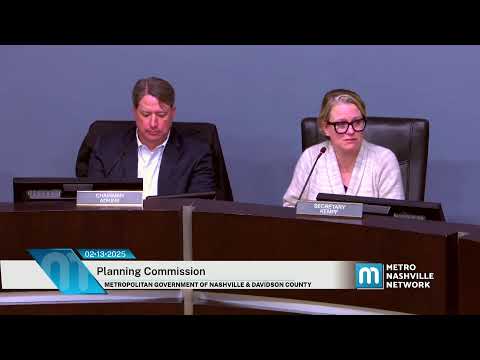
Planning Commission hears Downtown Code update to bonus height and outdoor-space rules; item deferred to March 13
Summary
Planning staff presented a multi-part amendment to the Downtown Code that would revise the Bonus Height Program, add outdoor-space standards and introduce a 12-month transition period; the Planning Commission deferred the text amendment to its March 13 meeting.
Planning Commission staff on Feb. 13 presented a proposed text amendment to the Downtown Code (DTC) that would revise the Bonus Height Program (BHP), update outdoor-space standards and include several housekeeping changes. After a presentation and public comment from a development trade group, the commission voted to defer the item to its March 13 meeting for further review.
The amendment, presented by Metro Planning staffer Jared Islas, would change baseline design requirements for projects using bonus height, revise the menu of public-benefit options used to earn bonus height and raise bonus-height maximums in parts of downtown. The proposal also updates outdoor-space rules, clarifies electric-vehicle charging standards for projects that include EV spaces and contains procedural clarifications intended to align the DTC with departmental policies and state vesting laws.
Planning staff said the draft is intended to better align incentives in the BHP with current priorities for downtown development. Jared Islas said the changes were informed by data showing how the existing program has been used: “To date, 41 projects have certified their bonus height,” and nearly 90 percent of bonus height awarded has come from three parking-related options, staff told the commission. Staff also described a two-phase approach: the current draft is a phase‑1 update to the BHP, while attainable-housing incentives will be developed in a second phase after related departmental work.
Rachel Blackhurst, director of government affairs for NAIOP Nashville, spoke in support and thanked planning staff for nearly two years of outreach: “We are really particularly grateful to planning for responding to our input on the parking element of this proposal,” she said. No speakers registered opposition during the public hearing.
Commissioners asked staff a number of technical questions about how the BHP changes would be implemented and how the proposal would treat historic resources and stormwater. Islas described baseline requirements that must be met on projects over 50,000 gross square feet before other bonus options are available, and he said preservation and privately owned public spaces would receive higher incentives while underground parking would be downweighted. He also described multipliers for pervious surface and stormwater measures within open-space calculations.
Planning staff proposed a transition period to reduce impacts on projects already underway: after the council bill’s effective date, property owners would have one year to use either the 2010 BHP or the proposed 2025 BHP. Staff said the earliest the amendment could become effective is June 3, 2025, if council approvals follow the anticipated schedule.
After public comment and commissioner questions, Vice Chair moved to defer the item to the March 13 Planning Commission meeting. The motion carried.
The commission will take up the DTC amendment again March 13; staff expects to forward a recommendation to Metro Council following that meeting. Metro Council would hold a public hearing on a council bill in early May, staff said; if passed by council and following three readings, the earliest effective date outlined by staff would be June 3, 2025, beginning a 12‑month transition window.