Get Full Government Meeting Transcripts, Videos, & Alerts Forever!
Get email alerts on the State Legislation topic
No spam. Unsubscribe anytime.
Carroll County legislative staff briefs commissioners on dozens of state bills, urges attention to Feb. 28 energy hearing
Summary
Pam Meister summarized key bills in the 2025 Maryland legislative session affecting counties — including a contested energy package, a property-tax bill, Blueprint school funding fixes and potential pension and Medicaid cost shifts — and urged commissioners to consider letters or testimony for the Feb. 28 joint energy hearing.
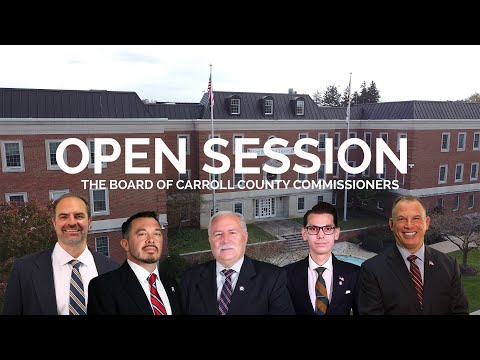
Pam Meister, a county legislative staff member, told the Carroll County Board of Commissioners on Feb. 13 that the General Assembly has produced more than 3,000 bills this session and emphasized several items with direct local impact. “We passed the bill introduction date, as I mentioned, and now we are looking ahead to the fortieth day,” Meister said, explaining the schedule and upcoming hearings.
The presentation outlined bills the county is tracking and the positions Mako (the Maryland Association of Counties) is taking. Meister highlighted SB 415, relating to unpaid property taxes, and said the local hearing “went really well” after county staff and legislators addressed concerns from industry groups about process and burden on applicants. She also reviewed an energy package that includes the Next Generation Energy Act (HB 1035/SB 937), a contentious solar-and-battery bill Mako has opposed because it reduces local regulatory authority and raises public-safety concerns for utility-scale batteries, and an Energy Resource Adequacy and Planning Act that Mako supports with amendments to ensure counties are included in planning.
Why it matters: Meister warned that a number of budget and policy bills could shift costs to counties. She said the state could face federal changes to Medicaid cost sharing that would increase state costs and, by extension, pressure local budgets. She also flagged the Budget Reconciliation and Financing Act (BRFA) as a major vehicle for possible shifts, including teacher pension cost changes that Mako estimates could mean roughly $93 million in additional county costs if enacted as proposed.
Meister reviewed other priorities: bills related to public housing payments-in-lieu, floating solar (which rural counties oppose because of environmental concerns and precedent), reforms to the Blueprint for Maryland’s Future school-funding law that would give local flexibility, and cybersecurity requirements for water and sewer systems that Mako supports only with amendments to avoid unfunded mandates. On the education packages, she described proposed changes allowing small school waivers, school-level reporting, and modifications to teacher incentives; Mako is supporting those changes with amendments to protect local collective-bargaining agreements.
Meister urged commissioners to consider submitting letters and to weigh attending a joint energy hearing scheduled for Feb. 28. “When you write letters, if nothing else, it just creates noise and volume in each of the member’s offices that receive them,” she said, urging participation through Mako’s talking points.
The commissioners commented during and after the briefing and asked staff to circulate talking points and to notify them when testimony opportunities arise. Meister said she will continue to update the county on bill status and provide suggested amendments for items the county supports with changes.