Get Full Government Meeting Transcripts, Videos, & Alerts Forever!
Get email alerts on the K 12 Curriculum topic
No spam. Unsubscribe anytime.
Lewisburg teachers highlight AP Capstone research and seminar classes in academic spotlight
Summary
Teachers described the AP Seminar (10th grade) and year‑long AP Research sequence at Lewisburg Area High School, outlining coursework, student milestones and examples of student research. Presenters said the program helps validate student work and develops research, writing and public‑speaking skills.
At a Lewisburg Area SD board meeting, Jamie Garrett, AP Research teacher at Lewisburg Area High School, and Tyler Russell, AP Seminar teacher, presented an academic spotlight on the district’s AP Capstone coursework and student work in AP Seminar and AP Research.
The AP Capstone sequence pairs a 10th‑grade AP Seminar course with a year‑long AP Research project. "It is unlike any class I've ever taught," Russell said of AP Seminar, describing heavy research, extended writing and required public presentations. Garrett said AP Research requires students to plan, implement and defend a year‑long investigation and submit a final academic paper of about 4,000–5,000 words; he noted a College Board deadline of April 30 at 11:59 p.m. for those submitting their work for AP scoring.
The program can lead to two different College Board recognitions. Students who score 3 or higher on AP Seminar and AP Research earn an AP Seminar and Research certificate; students who also score 3 or higher on four additional AP exams can receive an AP Capstone diploma, Garrett said. The presenters told the board the district has run AP Seminar for several years and that 45 students have completed AP Seminar under the current program.
Russell described the seminar as coach‑like instruction that shifts to whole‑class feedback after the first marking period because student work is submitted to the College Board. "A lot of it is… they get to choose their topics within certain parameters the College Board sets," he said, adding that students pursue a wide range of topics and give multiple oral presentations during the year.
Garrett and Russell gave examples of student research topics to illustrate the range of inquiries students pursue: how Bezier curves affect animation smoothness; methods of beehive winterization; the Vietnam War’s influence on youth political engagement; censorship and processed foods; whether theatrical performance increases empathy in cast and audience; literary analyses of lotus flowers in Greek mythology; and balancing asymmetrical board games.
Presenters said the classes emphasize time management and staged milestones. Russell described an early marking‑period “fast‑forward” version of student work that lets teachers provide intensive feedback before students submit material to the College Board. Garrett said AP Research students typically build drafts and work through an oral defense at the end of the year.
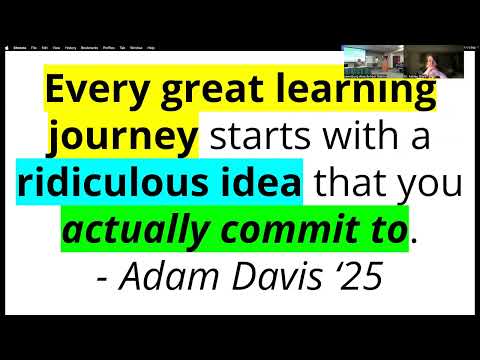
A sample student quotation about committing to a long project was shared at the meeting: Adam Davis, a current student referenced by presenters, wrote, "Every great learning journey starts with a ridiculous idea that you actually commit to." The teachers said that level of long‑form commitment is what distinguishes AP Research from year‑to‑year class projects.
Board members and attendees asked teachers about unusual or "out of the box" research questions and about how teachers scaffold time management across a year‑long project. Russell and Garrett described advising practices, staged deadlines and coaching that shift students from close teacher support to greater independence.
The district presentation was informational; the board did not take any formal action on the AP Capstone program at the meeting.
Sources: Presentation and Q&A during the Lewisburg Area SD board meeting; direct quotes from Jamie Garrett and Tyler Russell as recorded in the meeting transcript.