Get Full Government Meeting Transcripts, Videos, & Alerts Forever!
Get email alerts on the Special Education topic
No spam. Unsubscribe anytime.
Hopkinton administration reports DESE disproportionality findings; root‑cause work and state consultant planned
Summary
District officials reported to the Hopkinton School Committee that DESE has flagged two disproportionality concerns in special education and that the district is conducting root‑cause analysis with state support.
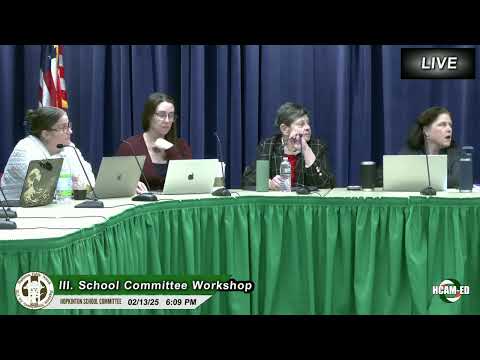
Hopkinton Public Schools administrators briefed the School Committee on Feb. 13 about two findings of disproportionality identified by the Massachusetts Department of Elementary and Secondary Education (DESE) and the district's remedial steps.
Background and prior action: At the end of the previous school year DESE notified the district it had become disproportionate for white students identified in the special‑education category "specific learning disability" (SLD). District staff said they completed a root‑cause analysis over the summer and implemented a set of corrective actions during the fall: purchasing additional assessment tools, working with DESE literacy consultants to create a comprehensive evaluation template, training teachers on neuroscience and reading research, and offering parent workshops and outreach (including a session on eligibility and parents' rights). The district is monitoring this year's eligibility data and expects to have a June determination on whether the interventions reduced disproportionality for SLD.
New notification: In January DESE notified the district of a separate, new concern: an overrepresentation of Asian students in "substantially separate" placements (programs that remove students from general education for significant portions of the day). Administrators cautioned the committee that the district is early in the process and has not completed a root‑cause analysis for that finding. District staff noted that "Asian" includes families from more than 10 countries and that family self‑identification at enrollment complicates simple categorical explanations. DESE has arranged a state‑funded outside consultant to work with the district on the analysis and corrective planning.
Officials emphasized the core goal: ensure any student who requires special education receives timely, appropriate evaluation and services and that placements reflect least‑restrictive environment principles. Committee members asked clarifying questions about the nature of the DESE risk‑ratio algorithm, whether the finding could reflect under‑identification of other groups, and how the district will keep families informed. The administration said it will return with the results of its demographic review and a corrective plan after the DESE consultation.
No vote was taken; the presentation was informational. The district will monitor eligibility data and report back to the committee in June.