Get Full Government Meeting Transcripts, Videos, & Alerts Forever!
Get email alerts on the Postsecondary Outcomes topic
No spam. Unsubscribe anytime.
Survey of recent graduates shows Hopkinton students report overall preparedness, flags study skills and time management
Summary
A longitudinal survey of the class of 2023 found most respondents felt generally prepared after high school, but many cited study skills, time management and financial literacy as areas needing improvement; the district plans follow‑up surveys and department use of findings.
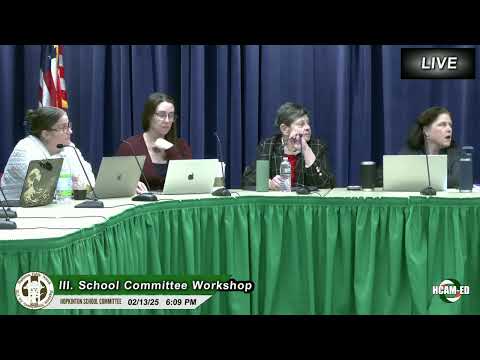
Hopkinton High School administrators and an independent researcher presented results of a "Pathways After Graduation" survey of the class of 2023 at the Feb. 13 School Committee meeting, reporting generally positive outcomes but flagging recurring gaps in study skills, time management and budgeting among respondents.
Dr. Martin (researcher) told the committee the survey — administered in May 2024 to graduates who provided contact information — yielded a 31% response rate of the entire class (38% of those for whom contact details were available). The voluntary survey asked alumni about academic preparedness for college, employment and other post‑secondary paths; it included both closed items and open‑ended questions that produced themes staff said would inform curriculum and student supports.
Key findings presented: respondents generally rated the district's academic preparation favorably; about 55% reported they had to take a college math course to meet requirements; many reported taking at least one Advanced Placement course, though AP credit transfer was uneven; the most common self‑reported gaps were study skills, time management and independent budgeting. Eleven respondents identified as having had an IEP while at Hopkinton High School; the sample's IEP proportion was similar to the district's overall rate, the presenter said.
The presenter said open‑ended responses clustered around five transition challenges — time management, being away from home, daily living skills, academic demands and the social/emotional adjustments of post‑secondary life. The researcher noted response bias: higher‑achieving students were more likely to complete the voluntary survey. Plans are in place to repeat the survey for the class of 2024 and to send a shorter second‑year survey to the class of 2023 to build longitudinal data.
Committee members and administrators described the results as useful for department planning. The guidance and department heads have already discussed using the findings to refine advising and support services; committee members asked that future surveys include questions on students' experience with artificial intelligence at college.
The presenter said the project is intended as a longitudinal study, with next steps including targeted questions for departments and distribution of specific results (for example, application advice) to guidance staff to inform current students.