Get Full Government Meeting Transcripts, Videos, & Alerts Forever!
Get email alerts on the Community Development Districts topic
No spam. Unsubscribe anytime.
Commission denies Bridlewood Community Development District; 3-2 vote after extended public comment
Summary
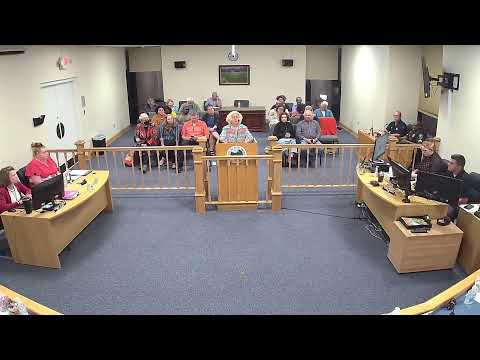
The High Springs City Commission voted 3-2 on Feb. 13 to deny an ordinance establishing the Bridlewood Community Development District under Chapter 190, Florida Statutes, after extended presentations by the developer's consultants and more than two hours of public comment.
The High Springs City Commission on Feb. 13 voted 3-2 to deny an ordinance to establish the Bridlewood Community Development District (CDD), a special-purpose local government proposed for the Tillman property development. The ordinance (referred to in the meeting as Ordinance 2024-O-1) would have created a CDD under Chapter 190 of the Florida Statutes to fund and maintain infrastructure within the Bridlewood development. The motion to deny passed on roll call with Vice Mayor Miller, Commissioner Bloodsworth and Commissioner Weitz voting “yes” and Commissioner Howell and Mayor Tristan Grunder voting “no.”
Developer representatives and their consultants — Chris Potts of LJA Engineering and attorney Alyssa Wilson of the law firm QTAC Rock — described the CDD as a financing and maintenance mechanism the developer had disclosed during earlier entitlement negotiations. Potts said the larger PD (planned development) covers roughly 688 acres and that the proposed CDD boundary for initial phases is about 245 acres, intended to cover early build-out roughly five to six years of work. He said the CDD would be able to issue tax-exempt bonds to fund public infrastructure that benefits the public (for example, water, sewer, roads and drainage) and that much of the CDD's design and transition to resident control is governed by state statute.
Wilson emphasized statutory transparency and governance requirements: CDD board members must comply with Florida's Sunshine Law and public-records obligations, file financial disclosures, complete yearly ethics training, and submit annual audits subject to state review. She explained the typical statutory transition where the initial landowner-controlled board gives way to resident control between years six and eight. She also clarified that bonds are limited to public infrastructure and that gated roadways ineligible for bond funding.
Public comment included multiple residents and local real-estate professionals who raised concerns about long-term costs and disclosure. Rebecca Burns, a local real-estate broker, told the commission that MLS listings depend on realtor-entered data and warned that buyers may not always receive clear information; she said disclosure boxes in listing systems exist, but reliance on realtors can leave gaps. Another speaker who identified as a long-time community board member (recorded in the transcript as "Bridal Bisher, High Springs") argued CDDs can leave homeowners paying more over time and questioned whether up-front savings flow to developers rather than buyers.
Commissioners and members of the public debated multiple topics: whether CDD assessments and operation-and-maintenance (O&M) fees are disclosed early enough in a sale process; how assessments are collected (on the property tax roll for CDD debt service vs. HOA dues collection methods); the length of road life and the risk of future special assessments or shortfalls; and whether CDDs increase property values in ways that change the city's tax base. Potts and Wilson provided technical clarifications, including an example cited at the workshop estimating a bond-based assessment of about $25 per front foot (a roughly $17.50 annual debt-service example for a 70-foot lot) as an illustration, not a final figure.
Several commissioners voiced broader concerns. One commissioner raised constitutional objections to establishing a separate unit of local government, referencing state and federal principles; city counsel and the presenters responded that special-purpose districts are authorized by Chapter 190 and are common in Florida. Other commissioners pressed on homeowner protections, disclosure timing, and whether the development agreement's reference to a future CDD was binding on the commission (staff said it was not binding).
After public comment and extended discussion, a motion to deny the ordinance carried on a 3-2 roll call: Vice Mayor Miller — Yes; Commissioner Bloodsworth — Yes; Commissioner Howell — No; Commissioner Weitz — Yes; Mayor Tristan Grunder — No. The denial means the commission did not establish the Bridlewood CDD at this meeting.
The record shows multiple clarifications from staff: utilities (water and wastewater) were requested by city staff to remain under city ownership; the CDD petition covered the developer's proposed boundary and statutory governance details; and impact fees and building-permit processes remain unchanged regardless of whether a CDD is established. Presenters and many public commenters emphasized that many procedural disclosures are statutory (notice of establishment, recorded assessments, closing-document disclosures), but commenters continued to express concern about how disclosures and long-term costs are communicated to buyers.
Action: Motion to deny ordinance to establish the Bridlewood Community Development District (Ordinance referenced as 2024-O-1). Vote: Vice Mayor Miller — Yes; Commissioner Bloodsworth — Yes; Commissioner Howell — No; Commissioner Weitz — Yes; Mayor Tristan Grunder — No. Outcome: denied.