Lee County commissioners direct Lee County Utilities to stop adding fluoride to drinking water
Loading...
Summary
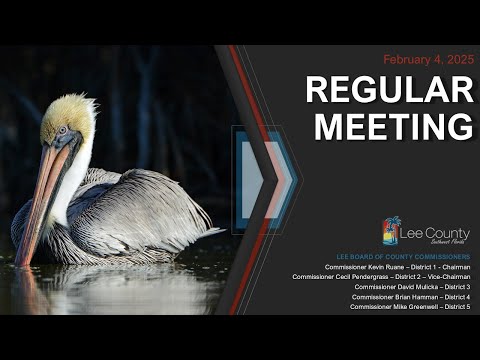
The Lee County Board of County Commissioners voted unanimously Feb. 4, 2025, to direct Lee County Utilities to discontinue adding fluoride to drinking water served by the county utility system.
The Lee County Board of County Commissioners voted unanimously Feb. 4, 2025, to direct Lee County Utilities (LCU) to discontinue adding fluoride to drinking water served by the county utility system.
The item was considered at a legally advertised public hearing. Commissioners moved the direction after extended public comment and remarks from Florida Surgeon General Joseph A. Ladapo, who spoke in support of ending community fluoridation.
The vote followed a wide-ranging public hearing in which dozens of residents, health professionals and advocacy groups spoke. Supporters of removal cited recent federal and state reviews and a federal court finding; opponents — including some residents and speakers who identified themselves as health professionals — urged the board to preserve fluoridation as a public-health tool that reduces tooth decay.
Amanda Swindle, county attorney, opened the public hearing. Pam Keyes of Lee County Utilities told the board LCU has added fluoride since 1979 and “we have dosed the lowest, recommended amount.” Keyes said concerns for the utility include the compound’s corrosive nature, annual operational costs and specialized staff training to handle the chemical.
Speakers urged both sides of the policy question. Florida Surgeon General Joseph A. Ladapo, who traveled to the meeting, told commissioners he had reviewed the scientific literature and said the evidence showing neurotoxic effects associated with fluoride exposure — particularly for children and pregnant women — was strong. “I was stunned,” Ladapo said. “I was stupefied by the strength of the evidence that demonstrates clear neurotoxic effects.”
Residents and activists who supported discontinuing fluoridation repeatedly cited the National Toxicology Program report, a federal judge’s September 2024 decision and the Florida surgeon general’s November 2024 guidance. Voices opposed warned of dental-health impacts and urged the board to consult local health-care providers. Daniel Becker, a resident, asked the board to form a review committee that includes pediatricians, public-health officials and dentists before taking action.
Commissioner Cecil Pendergrass moved to provide direction to discontinue adding fluoride to LCU drinking water; the motion was seconded and the board voted unanimously to approve the direction. County staff clarified the board’s direction applies to Lee County Utilities customers (the county’s unincorporated service area). Pam Keyes noted the county’s municipal partners and independent utilities — for example the city of Fort Myers and Cape Coral utilities — operate separate systems and would not be changed by this board action.
The board did not adopt an implementing ordinance or set an effective date at the meeting. Commissioners and staff said next steps would include drafting the administrative steps required to carry out the board’s direction and coordinating with stakeholders. Staff also noted potential downstream questions about billing, procurement and interlocal relationships with municipal utilities.
Public comment reflected strong local interest. Supporters of removal framed the decision as a matter of individual consent and cited recent scientific reviews; opponents emphasized established dental benefits and the fiscal and access implications for low-income residents. Several speakers asked whether eliminating fluoridation would increase dental costs for low-income families; others recommended alternatives, including targeted dental programs and continued use of topical fluoride through dental visits.
The board’s action on Feb. 4 provides direction to county utility staff to stop adding fluoride to water produced and distributed by Lee County Utilities in its service area. Staff said they would return to the board with details on implementation and any necessary administrative or regulatory steps.
What happens next: staff will prepare administrative and operational steps to implement the board’s direction and will coordinate outreach to municipalities and affected parties. The board did not set a timeline at the meeting; county staff said further implementation details would be brought back for later action and public notice.