Get Full Government Meeting Transcripts, Videos, & Alerts Forever!
Get email alerts on the Public Finance topic
No spam. Unsubscribe anytime.
Preliminary 2025–26 tax‑levy limit presented: district estimates 3.11% cap and thin fund balance
Summary
Assistant Superintendent for Business Sam Gervis outlined the tax‑levy calculation and a preliminary fund‑balance projection that would leave the district below typical reserve recommendations if figures hold.
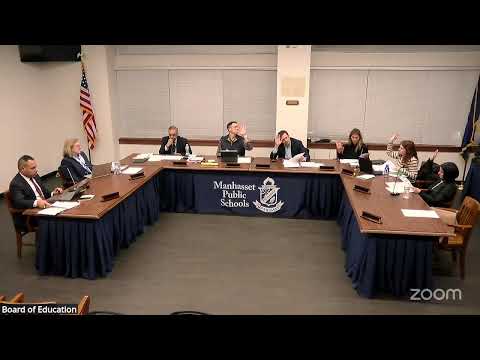
The Manhasset Union Free School District’s business office on Feb. 13 presented an early look at the 2025–26 tax‑levy limit and projected fund balance, saying the district’s maximum allowable levy would be $102,853,135 — a 3.11 percent increase over the 2024 levy — under New York State’s tax‑cap formula.
Assistant Superintendent for Business Sam Gervis walked the board through the multi-step calculation required by state law. He said the district’s starting levy was $99,748,822, then added tax base growth and pilots, and deducted exclusions such as debt service, building aid and the district’s share of Nassau BOCES capital costs. Gervis attributed most of the rise from last year’s 2.68 percent cap to debt-service and a new energy performance contract (EPC) that increases exclusions this fiscal year.
Gervis also presented an interim projection of the district’s 2024–25 year‑end position. The business office estimates roughly $552,000 more in revenue than budgeted and roughly $1.12 million in expense savings, producing an anticipated fund balance of $1,004,287, about 0.9 percent of the general fund. He noted auditors and best-practice guidance typically recommend reserves of 2–4 percent, so the estimate would leave the district on a “very thin” margin if it holds.
Key drivers identified include pilot payments (largely from LIPA), debt‑service exclusions tied to bonds and the new EPC, small changes in state aid and lower‑than‑expected health‑insurance increases for 2024–25. Gervis said the district budgeted conservatively for employee benefits and that actual 2024–25 health‑insurance costs came in materially lower than projected, producing sizable savings this year.
Board members and auditors asked about structural pressures, including rising special‑education contract‑therapy costs (the business office estimated a potential shortfall of about $350,000 in contract therapy) and whether the district could reduce appropriated fund balance carried forward. Administrators suggested exploring in‑house options for related services but cautioned that hiring and retaining therapists can be challenging; they said they would run additional scenarios in coming budget presentations.
Gervis told the board the numbers are preliminary and will be refined in the coming weeks. The administration will present a preliminary 2025–26 budget at the next scheduled meeting and continue public budget hearings in March.