Get Full Government Meeting Transcripts, Videos, & Alerts Forever!
Get email alerts on the K 12 Education topic
No spam. Unsubscribe anytime.
Manhasset leaders keep sixth-grade double-acceleration, change admission rules after community input
Summary
After town halls and teacher feedback, the district recommended preserving the sixth-grade double-accelerated math course while decoupling it from the seventh‑grade AP science pathway, replacing teacher recommendations and the CogAT with a secure, standards-based exam and other supports.
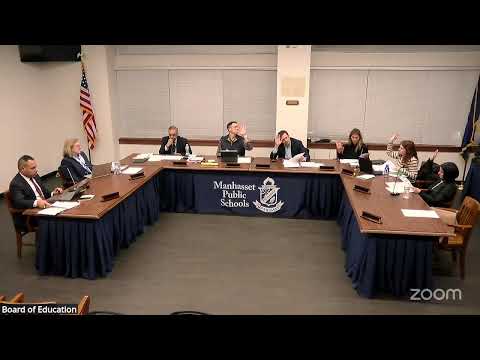
The Manhasset Union Free School District on Feb. 13 recommended keeping its sixth-grade double-accelerated math course and changing how students qualify for it, following a month of parent and teacher meetings.
District leaders announced they will decouple the double-accelerated sixth-grade math program from the seventh-grade AP/honors science pathway and refine selection criteria to reduce misidentification and better support students who skip a year of math content. The administration said teacher recommendations and the CogAT will no longer be used in the identification process this year; instead the district will rely on a secure, locally produced spring exam that demonstrates mastery of sixth-grade standards. That exam will be peer reviewed by the Association of Math Supervisors of Long Island and is expected to be administered in late May or early June.
District officials said the change responds to three concerns: skipping an entire grade of curriculum is unique among district advanced offerings; strengthening elementary math benefits all students; and the previous identification rate (about 21 percent) exceeded comparable districts (6–10 percent) and may have included students who later struggled. Superintendent Dr. Posse and the administrator who presented the plan described data showing that roughly 55 percent of students who had been double-accelerated in sixth grade were meeting expectations later in middle school, evidence that “the program is effective when students are properly identified.”
To reduce pressure on classroom testing and increase instruction quality, the administration proposed adding a math coach role (initially for grades 5–6), two 30-minute sixth-grade enrichment blocks during flex time, summer curriculum writing to support differentiation, and rotating in-class coaching for teachers. The CogAT will be retired as an entrance measure; the district will evaluate nationally normed options such as the NWEA for possible inclusion in 2025–26 as a second measure, rather than a single-test gate, the presenters said.
Administrators told the board there will be no fixed cap on sections: if qualifying numbers require multiple sections, the district will accommodate them and has discussed budget implications with the business office. The panel emphasized that the secure exam is intended to demonstrate mastery of sixth-grade standards and to reduce curriculum gaps that can result from skipping content.
Parents and students at the meeting generally urged preservation of the program but pressed for clearer, multi-measure entry standards and greater transparency. Parent speakers said using only one high-stakes exam could both unfairly exclude students having a single bad day and allow short-term test preparation to skew results. Several asked the district to consider portfolio options or multi-year grade averages; administrators said those approaches are under study for future years but would not be added midyear for 2024–25.
No formal board vote was taken; the item was presented as a discussion and the administration said it will finalize criteria, communicate details to families, and return with any recommended rubric changes before implementation. The district said it will notify parents with a written explanation of the selection process and a link to the tested standards once the criteria are finalized.