Get Full Government Meeting Transcripts, Videos, & Alerts Forever!
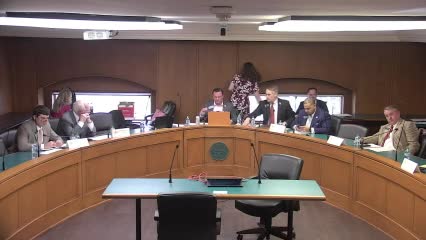
Senate committee advances Mulberry transition bills after debate over services, taxes and immunity
Summary
Senator Ginn presented SB 138 and SB 139 to a Senate committee, saying the bills were requested by the new city of Mulberry to secure transition duties, tax reimbursements and continuity of services after multiple lawsuits and what the sponsor described as adversarial county conduct.
Senator Ginn, sponsor of legislation tied to the newly created city of Mulberry, told a Senate committee that he brought SB 138 and SB 139 to shore up the city’s charter and protect residents after what he described as repeated disputes with Gwinnett County over services and recognition.
"They're on appeal. Apparently, it's in my opinion, a waste of taxpayer dollars, and also trying to circumvent the will of the voters," Senator Ginn said, describing a series of lawsuits and what he said was an adversarial posture by Gwinnett County toward the new municipality.
The bills would, in limited, city-specific language, require Gwinnett County to continue providing certain services to Mulberry during the transition period unless the city opts out; require the county to pay to the city any excess ad valorem taxes collected for police services beyond the county’s documented cost of those services; require the county to keep maintaining roads during the transition unless the city elects otherwise; require maintenance of specified dams of a certain size within the city; prorate taxes and reimburse the city when services are taken over midyear; and reimburse the city for permitting fees the county collected but did not act on. One provision would bar reopening county-wide service delivery agreements solely because of Mulberry’s creation. Another provision would bar the county from charging the city for election costs for two years of the transition period if the city requested that relief.
The bill also includes a remedy tied to noncompliance during the transition: if a court finds that the county violated the statutory transition duties, the bill would (1) require the county to pay the city’s attorney fees for unsuccessful third-party litigation and (2) suspend sovereign immunity for the county for one year with a related waiver of governmental immunity for county officers and employees for that period, subject to a court finding of violation.
Gwinnett County Attorney Mike Lubozak told the committee the county shares practical and legal concerns and urged negotiation through intergovernmental agreements instead of the statutory penalties. "This waiver of governmental immunity would have a devastating effect on recruiting and retention, removing all legal protection for these sworn officers, officers who risk their lives protecting others, and thus making all of us feel less safe," Lubozak said, urging resolution by agreement rather than the bill's remedies.
Lubozak warned that forcing the county to pay over portions of special police-district taxes could conflict with constitutional provisions governing special districts and uniformity of taxation, and that requiring countywide stormwater funds to pay for infrastructure inside an incorporated city could raise gratuities and other constitutional issues.
Todd Edwards of the Association County Commissioners of Georgia (ACCG) raised similar practical concerns about implementation and precedent. Edwards said measuring "actual cost" for law enforcement—limited in the bill to patrolling, responding to dispatches and…
Already have an account? Log in
Subscribe to keep reading
Unlock the rest of this article — and every article on Citizen Portal.
- Unlimited articles
- AI-powered breakdowns of topics, speakers, decisions, and budgets
- Instant alerts when your location has a new meeting
- Follow topics and more locations
- 1,000 AI Insights / month, plus AI Chat