Get Full Government Meeting Transcripts, Videos, & Alerts Forever!
Get email alerts on the Insurance And Labor topic
No spam. Unsubscribe anytime.
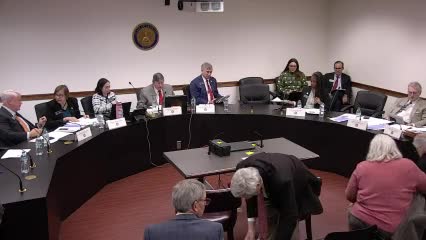
Senators hold hearing on raising liability limits for drivers convicted of DUI or reckless driving
Summary
Senators heard testimony on Senate Bill 121, which would increase required liability limits for drivers convicted of DUI or reckless driving and require proof of higher coverage for a multiyear period. Industry witnesses warned of affordability and placement issues and potential increases in uninsured drivers.
The Senate Insurance and Labor Committee held a hearing on Senate Bill 121, a bill introduced by Senator Marty Harbin that would raise motor vehicle liability limits for drivers convicted of driving under the influence or reckless driving and require proof of higher coverage for a specified period.
Senator Harbin described a personal crash that motivated the bill and told the committee the measure would require a driver convicted of DUI or reckless driving to carry higher limits for four years "to let someone who is charged with DUI know how serious that charge is." Harbin described proposed limits of $100,000 per person for bodily injury, $300,000 per accident and $100,000 for property damage in committee discussion.
Industry witnesses and the Insurance Commissioner's office raised concerns about implementation and affordability. Bobby Potter, representing State Farm, said carriers and the Department of Driver Services already use forms such as SR‑22 and other DDS forms to address high‑risk drivers and that in practice the new high limits could be unaffordable for some drivers or lead carriers to cancel policies: "The concern I would express is the dollar weight associated with this may force that person to be uninsured," Potter said.
Bryce Ross, director of legislative affairs for the Georgia Insurance Commissioner's office, told senators the bill could increase the number of uninsured drivers and that Georgia currently lacks an automated way to track convictions for the purpose described in the bill. Ross urged further interagency and stakeholder discussion and noted the Georgia electronic insurance compliance system referenced in committee is run by the Department of Revenue and may need changes for reporting.
Committee members asked technical questions about whether the proposed new limits were meant to replace or be added to existing minimum limits (25/50/25). Senator Harbin and counsel acknowledged language needed refinement; Baker and industry witnesses said the SR‑22 process typically requires three years of coverage under current DDS rules, while the bill called for four years, creating a difference that would need to be reconciled.
Witnesses suggested alternatives, including giving sentencing judges discretion to require higher limits as a condition of license reinstatement (a practice in some other states), or setting a lower mandated limit to avoid making coverage uninsurable for some offenders. Committee members discussed the tradeoffs between deterrence and the risk that unaffordable limits could increase the uninsured driver pool.
The committee did not vote on SB 121; the hearing concluded with a request for further work with insurers, the Department of Driver Services and the Department of Revenue to resolve enforcement, reporting and placement issues.