Get Full Government Meeting Transcripts, Videos, & Alerts Forever!
Get email alerts on the Conversion Therapy Ban topic
No spam. Unsubscribe anytime.
Council reviews draft ordinance to ban conversion therapy for minors; members seek legal clarifications
Summary
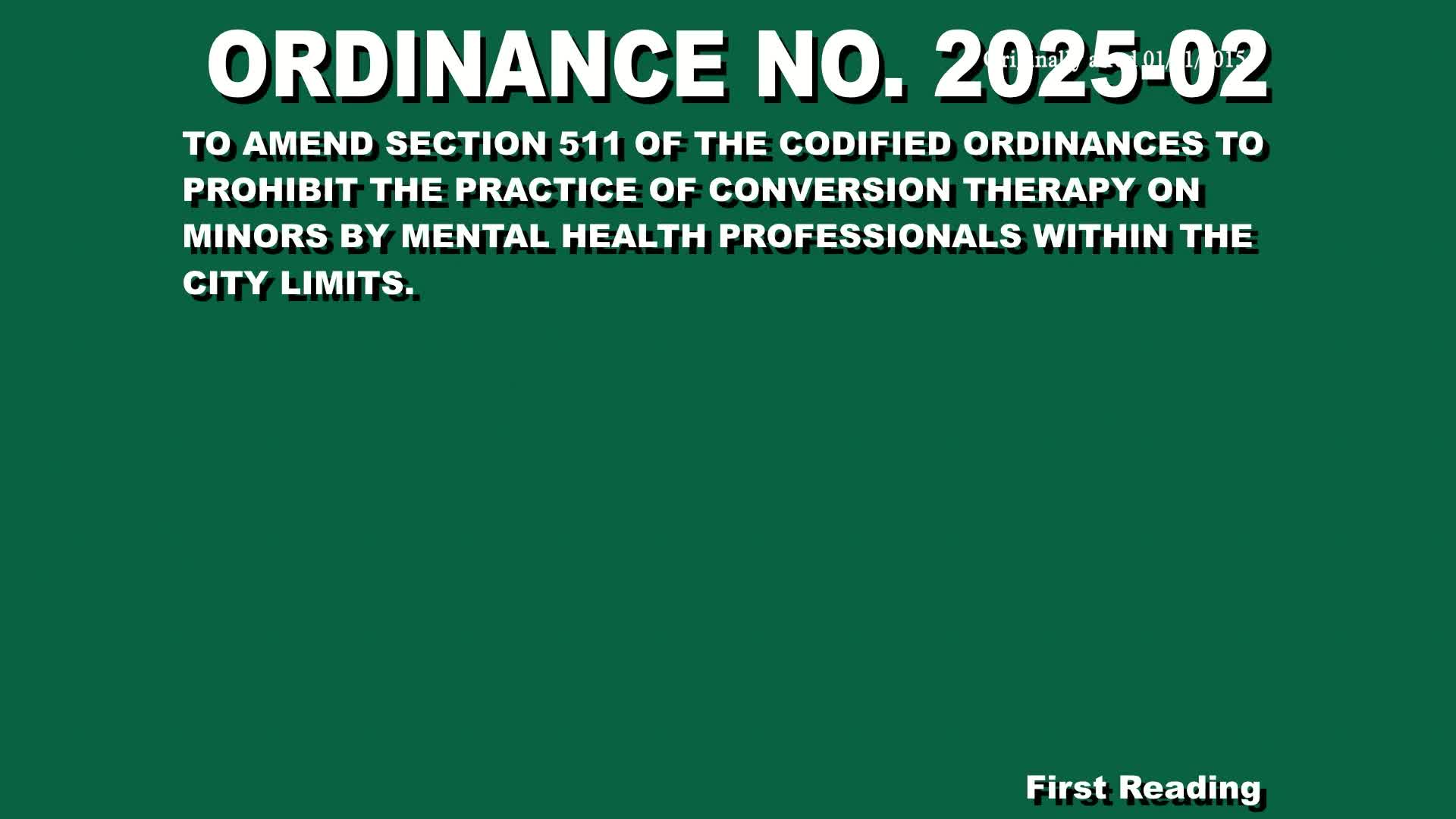
Council heard the first reading of a draft ordinance that would add a ban on conversion therapy for minors to the city’s nondiscrimination ordinance; staff outlined complaint and enforcement procedures and councilmembers raised concerns about public-record and confidentiality implications.
City staff presented a draft ordinance (Ordinance 2025-02) in the council’s first reading that would prohibit licensed mental health professionals from practicing so-called conversion or reparative therapy on minors within Westerville city limits by amending the city’s nondiscrimination ordinance (Chapter 5.11).
The presenter described conversion therapy as attempts to change a person’s gender expression, identity or sexual orientation and cited positions from medical and professional organizations opposing the practice. Under the draft, complaints would be filed under Chapter 5.11 and handled through the same investigative process currently used for housing, employment and public-accommodation complaints. Staff said the city is working with the City of Columbus Department of Neighborhoods to determine whether Columbus would accept investigative authority; if the commission issues a recommendation and the law director accepts it, cases could proceed to mayor’s court as provided in the existing process.
Councilmembers asked for legal clarifications. One councilmember asked staff to report back on why a similar prohibition was not adopted more than five years ago; several members expressed concern about the public-record implications for minors and whether complaints and related records would breach client-therapist confidentiality. Staff explained the typical process: the commission reviews and investigates a complaint, issues a recommendation to the law director who can dismiss or appoint an independent hearing officer; the hearing officer can subpoena records and make findings under the current nondiscrimination enforcement process.
No vote was taken; the item concluded the ordinance’s first reading and staff said they would provide additional information for council’s next consideration.