Get Full Government Meeting Transcripts, Videos, & Alerts Forever!
Get email alerts on the Active Transportation topic
No spam. Unsubscribe anytime.
Residents urge council to pause Bunce Road multimodal plan, citing safety, tree loss and lack of local input
Summary
Dozens of Bunce Road residents spoke against a proposed shared‑use path during public comment at the Feb. 3 Lakewood council meeting. Speakers cited frequent driveways, heavy traffic, tree‑canopy loss, uncertain maintenance and minimal resident outreach as reasons to halt or redesign the project.
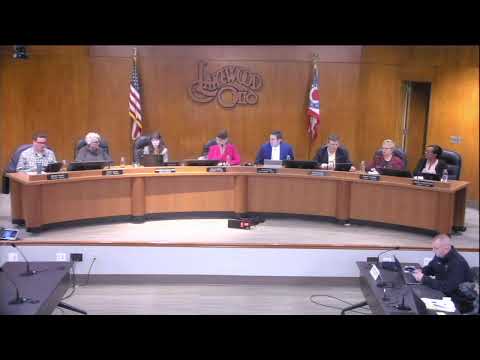
Dozens of Bunce Road residents used the public‑comment period at the Feb. 3 City Council meeting to press elected officials to pause or redesign a proposed Bunce Road rehabilitation that includes a 10‑foot shared‑use path.
Speakers said the corridor’s characteristics — frequent driveways, heavy motor‑vehicle traffic linked to I‑90, two supermarkets, gas stations and daily pedestrian flows to the high school — make a side‑path unsafe and impractical without major redesign. “This setup as it stands simply isn't safe for pedestrians or drivers,” resident Amy Herber said. “According to the city's documentation … fewer than 3% of the local high‑school students rely on bicycles as their primary mode of transportation.”
Residents’ main concerns
Public comments repeated several themes:
- Safety and conflict points: Speakers said a continuous two‑way path adjacent to parked cars and frequent driveways would increase cyclist‑vehicle and cyclist‑pedestrian conflicts. Fire/EMS safety concerns were raised by a former firefighter who said vehicle collisions are more severe than bicycle crashes.
- Driveway density and interruptions: Multiple residents noted that the proposed route crosses dozens of driveways — figures given ranged from roughly 90 to more than 100 — and that those frequent intersections would make a continuous path hazardous.
- Mature tree removal and canopy loss: Several speakers said the design would remove established street trees and large tree lawns, replacing them with small saplings that would take years to restore shade and stormwater benefits. “We are not getting more trees — you are getting far less tree coverage,” one resident said.
- Maintenance and winter snow removal: Residents asked who would clear the proposed 1.5‑mile path in winter and voiced skepticism the city would fund ongoing plowing and debris removal for a new multimodal surface.
- Lack of timely notification and public outreach: Many speakers said neighbors learned about the plan late and asked for additional on‑the‑ground outreach. “No one approached the people on Bunce Road for their opinions,” resident Matt Herberger said. Several invited council members to observe daily traffic and pedestrian patterns from front porches as the weather improves.
City response and next steps
Council President Keppel acknowledged the public comments and said the project currently has no item before council for a vote; she noted the project has a new webpage on the city's site with renderings, budget and timeline and encouraged residents to review posted materials. No council vote or ordinance related to Bunce Road was taken at this meeting.
Context and technical references
At least one public commenter cited the Ohio Department of Transportation multimodal‑design guidance to argue that two‑way side paths are most appropriate where driveway crossings are infrequent. Residents recommended exploring alternative north‑south routes or reallocating available funds to other active‑transportation investments with fewer driveway conflicts and less tree‑loss.
Ending
Speakers requested council pause the Bunce Road multimodal element, improve direct resident outreach and produce a clearer plan for maintenance and liability. Council members and staff did not take immediate action during the meeting; the posted project webpage is the administrative source for renderings and the initial conceptual plan.