Get Full Government Meeting Transcripts, Videos, & Alerts Forever!
Get email alerts on the Marijuana Regulation topic
No spam. Unsubscribe anytime.
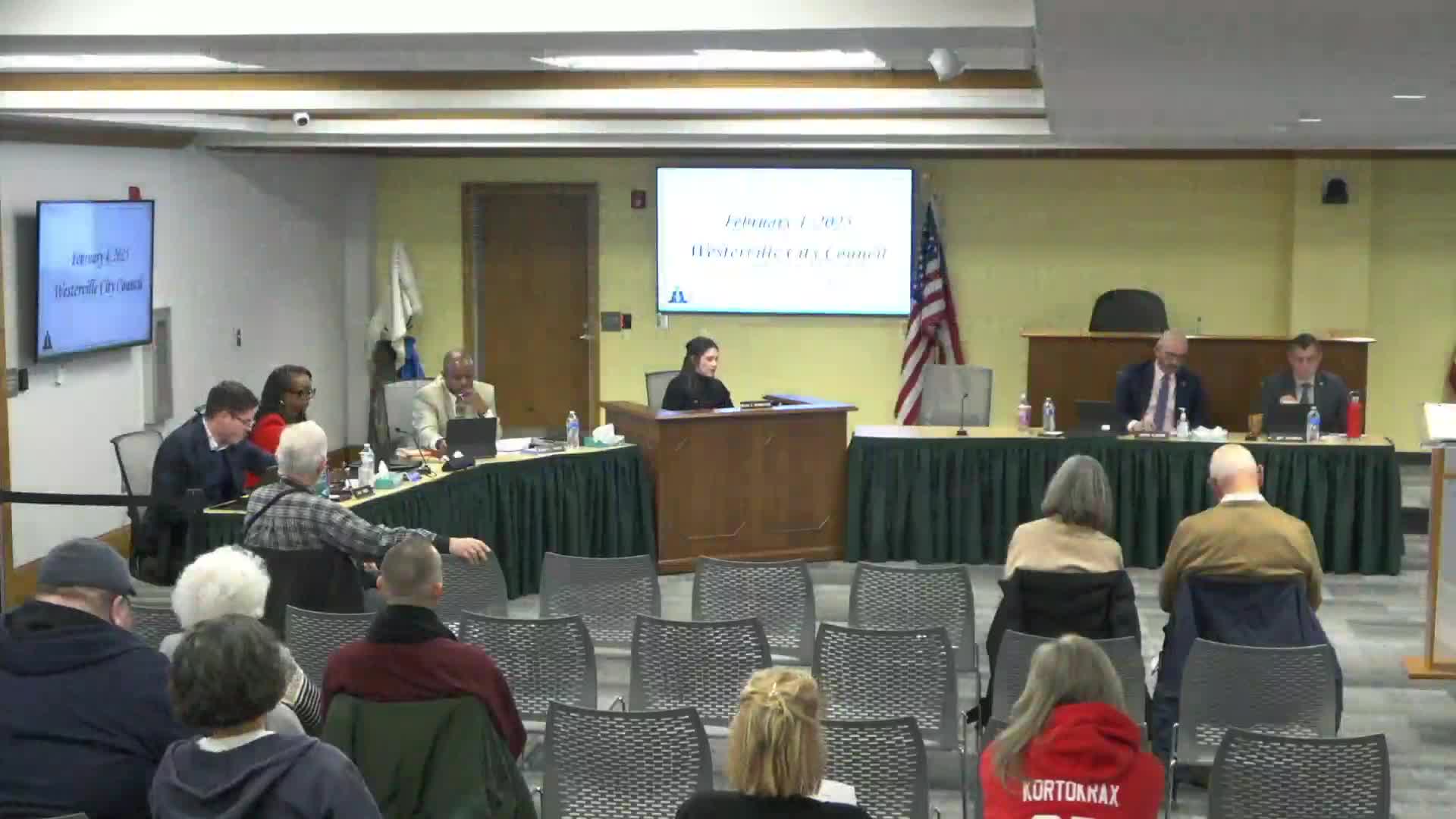
Westerville council adopts marijuana zoning rules that set 8 a.m.–8 p.m. operating window, 500-foot buffers
Summary
On Feb. 4, 2025 Westerville City Council adopted an amendment to the planning and zoning code that establishes operating hours and location buffers for marijuana dispensaries; the measure passed unanimously on third reading.
Westerville City Council on Feb. 4 adopted an ordinance updating the city’s marijuana activity rules, setting a local limit of 8 a.m. to 8 p.m. for dispensary hours and maintaining a 500-foot buffer from specified uses such as schools and libraries.
The change was approved on its third reading after staff presented the draft language and a list of nearby dispensary hours that helped shape the recommended schedule. “We are recommending 8AM to 8PM,” Planning Division staff member Mr. Eflin told the council, adding that the state regulation allows longer hours (7 a.m. to 11 p.m.) but that existing dispensaries in the region generally operate between 8 a.m. and 10 p.m.
The ordinance amends Chapter 1183 of the city’s planning and zoning code. Staff and the Planning Commission recommended approval; council members moved and seconded the ordinance and the roll call vote was unanimous.
Supporters of local limits said the hours reflected what other nearby dispensaries actually use, while at least one resident who spoke during public comment urged council to consider how a 500-foot radius requirement could affect noncommercial “schools” such as small craft or instruction businesses. During citizen comment, Tom Curry noted that a 500-foot radius is about 17 acres and said council should consider how that buffer could restrict uses on nearby properties.
The city’s ordinance parallels state law in applying the 500-foot restriction from listed sensitive uses. Staff noted and council discussed questions raised earlier in the process about how the rule treats preexisting uses and how hours compare to nearby operations.
The ordinance passed unanimously on third reading. Council directed that the adopted limits and the zoning language be reflected in the city’s code as presented.