
Orange County schools review KCE ethics policy; board members press for consistency with state law
Get AI-powered insights, summaries, and transcripts
Subscribe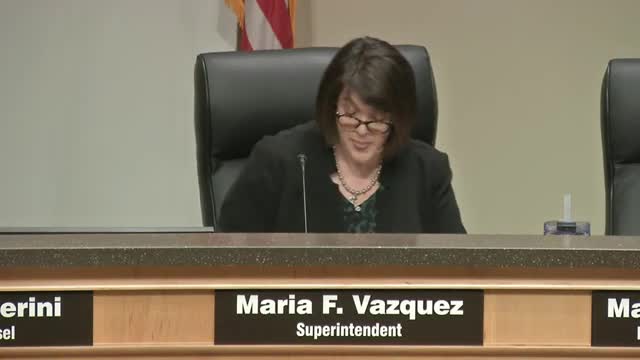
Summary
At a Feb. 13 work session, Orange County Public Schools staff proposed changes to policy KCE on ethics, lobbying and product testimonials and board members discussed aligning district rules with Florida law, adding lobbyist registration, and clarifying testimonial rules for vendors and nonprofits.
Orange County Public Schools staff brought revisions to policy KCE — the district's ethics and lobbying policy — to the school board during a Feb. 13 work session, proposing tighter written controls on employee testimonials for vendors and adding procedures for handling gifts and lobbyist registration.
The draft presented by General Counsel John Palmerini would continue a practice already in place requiring written approval before employees record testimonials for vendors and would add the superintendent as an authorized approver alongside the district's ethics compliance officer, Vivian Kokotis. Palmerini said the draft also spells out a set of conditions for testimonials from employees for organizations that qualify under Internal Revenue Code section 501(c)(3), including that testimonials be voluntary and based on the employee's personal experience and that the vendor submit testimonials for district review before publication.
Why it matters: Board members emphasized that some parts of KCE are more restrictive than state law and asked staff to revise sections so employee and board-member treatment mirror state statute where appropriate. Board members also pressed for clarity so nonprofits that work in schools can continue partnerships while complying with new testimonial rules.
Key proposals and discussion - Testimonial approvals: Palmerini told the board that the draft would require written consent from the ethics compliance officer or the superintendent before an OCPS employee's testimonial may be used by a vendor. He said the policy change was intended "to conform with the practice" under which Kokotis and the superintendent have approved such materials (John Palmerini).
- Required testimonial conditions: The proposed language would prohibit identifying OCPS by name, prohibit filming on OCPS property, prohibit use of OCPS or school logos, and require staff to be identified only by first name, position and school type. Quantitative data in a testimonial would be allowed only after review by the district's research office. Vendors must submit testimonials to the superintendent or designee for review. The draft would also require the vendor to include a disclaimer that the views expressed are those of the individual and not necessarily those of the district.
- Nonprofit partners: Board members raised concerns about restricting testimonials for nonprofits that deliver free programs in schools. Superintendent Vasquez and Kokotis said staff are used to working with nonprofits to limit releases and protect employees and students, and that the policy language could remove the word "product" so the rules apply to testimonials generally rather than only commercial products.
- Discipline language and employee concerns: Members asked about language that would make unauthorized testimonials subject to disciplinary action up to dismissal. Kokotis and other staff said discipline has been rare in practice and often resolves as coaching; they defended the inclusion of severe sanctions for extreme, intentional violations and for cases where parents' or students' rights (for example, use of student images without consent) could be implicated.
- Gifts and alignment with state law: Board members repeatedly requested that the district revert employee and board gift limits in KCE to match applicable Florida law rather than keep more stringent district thresholds (policy had defined some items at $5). Palmerini and staff agreed to prepare redlined changes so the policy language and definitions are consistent with state statutes and the board's specific obligations as elected officials.
- Lobbyist registration: Staff reported that several large Florida districts, including Broward, Hillsborough, Miami-Dade and Palm Beach, maintain lobbyist registration policies. The draft policy includes a lobbyist registration and an annual fee structure (staff said $25 in practice) to improve transparency; board members asked staff to make the registration searchable and to study enforcement and renewal processes.
What the board directed: Members asked staff to return with redlines that (a) reconcile KCE definitions and thresholds with state law where appropriate, (b) clarify who may approve testimonials (superintendent or designee/ethics compliance officer) consistently across the policy, and (c) propose a practical lobbyist registration and renewal regimen with a searchable public list.
Ending: Staff said they will circulate a revised redline that reflects the board's direction. No formal vote was taken at the work session; the item will return for additional discussion and formal action at a later public meeting.