Get Full Government Meeting Transcripts, Videos, & Alerts Forever!
Get email alerts on the Adoption Permanency Timelines topic
No spam. Unsubscribe anytime.
Committee debates adoption-timeline changes in S.121; DSS warns of court and fiscal impacts
Summary
Senate Bill S.121, which would shorten adoption and permanency timelines and add deadlines for background reports and post-adoption agreements, was carried over after extended testimony from DSS and an adoption attorney about court capacity and administrative impacts.
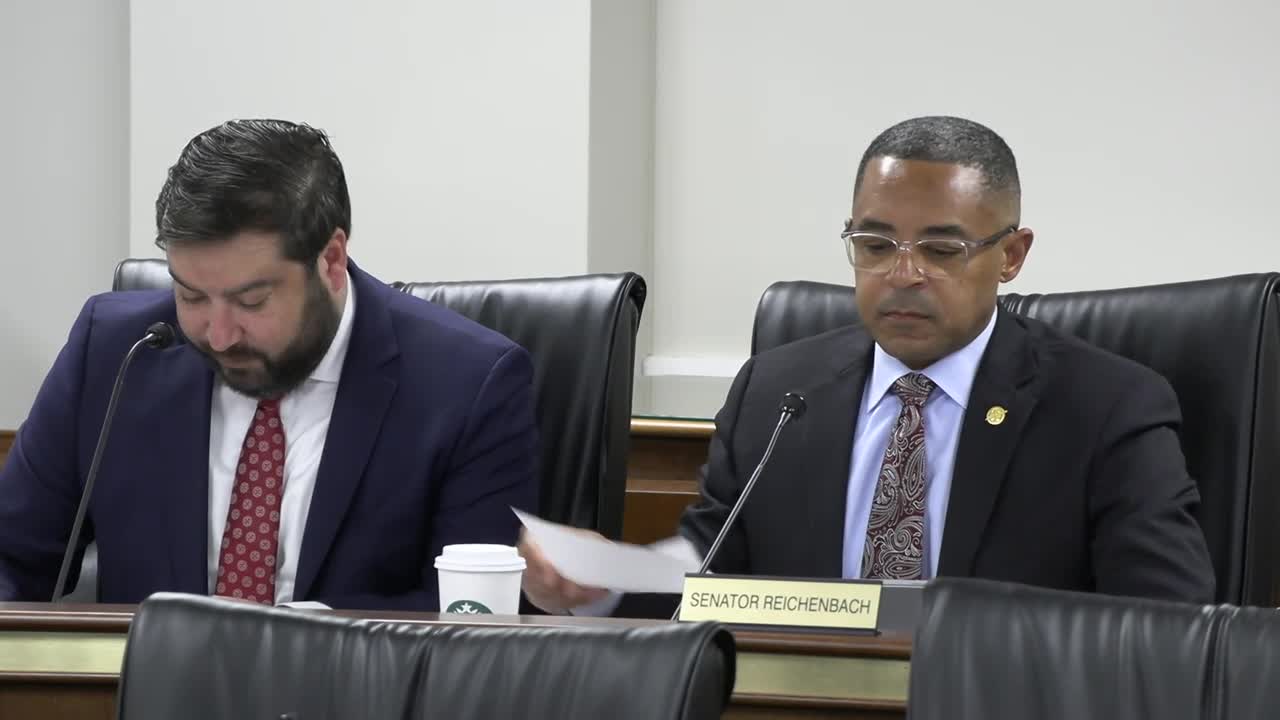
Senate Bill S.121, introduced by Senator Garrett, drew extended discussion and was carried over by the Child Welfare Subcommittee after testimony from agency and private-sector witnesses about possible unintended consequences.
Senator Garrett described S.121 as a package to “implement changes to the adoption process in South Carolina by shortening the deadlines of when permanency planning hearings must be held and setting a time to file background reports.” He told the committee the bill also “reduces deadlines for reunification after a child has been placed in foster care,” provides guidance on post-adoption contact agreements and would establish a tax credit for qualified adoption expenses.
Conley Ann Ragley, testifying for the Department of Social Services (DSS), said the department supports timely permanency but raised several concerns. Ragley told the committee that a narrow portion of the bill touches Daniel’s Law — the state’s safe-haven statute for infants — and warned that a provision (section 1.B.2) that would require every qualifying safe-haven location to be provided with department materials could create a substantial fiscal and administrative burden. Ragley said the department does not maintain a registry of all safe-haven locations and suggested the same information be made available online; she noted the agency updates a brochure annually and last updated it in December 2024.
Ragley provided operational details and numbers to illustrate the scope of the concern: she said the state has historically received as many as about eight safe-haven surrenders in a single year, that “about 95% of our safe havens over the last 5 years have been when mom checks out from the hospital and leaves the baby behind,” and that there are roughly 3,500 churches in South Carolina, which would multiply dissemination tasks if every site had to be physically supplied materials.
Ragley also warned of potential conflict with federal requirements. She said federal law generally requires permanency planning hearings within 12 months and flagged section 6.3 of S.121, which would change required post-termination-of-parental-rights (post-TPR) permanency-planning hearings from annually to quarterly. Ragley and several senators questioned whether that change would increase family-court dockets and produce backlogs without additional judicial resources.
Senators from Anderson, York, Richland and Ridgeland asked detailed procedural questions about how DSS locates and notifies biological fathers, what reunification efforts the agency must make, and how different tracks (Daniel’s Law infant surrenders versus public foster-care adoptions) operate. Ragley described the department’s toolbox for locating fathers and relatives: publishing notices, searching a responsible father registry, contacting family members, and coordinating with regional offices. She said Daniel’s Law infants must be 60 days old or younger and described legal and administrative steps the agency takes, including checks with law enforcement to ensure the child was not taken unlawfully.
Attorney Jim Thompson, who said half his practice is foster-care and public-adoption work, urged the committee to prioritize timely permanency, supported shortening some timelines and defended the proposal to require more rapid post-TPR review. “Reunification should be first. It should be the best opportunity, but reunification must be timely,” Thompson said. He told senators faster post-TPR reviews would keep children “on DSS’s docket” and said obstacles to finalizing adoptions often involve missing medical and social-history reports that delay caseworkers.
After extended questioning and comment, the senator from Calhoun moved to carry the bill over for further vetting; the motion was seconded and carried by voice vote (recorded in the transcript as “the ayes have it”). The subcommittee did not adopt amendments during the session and the bill will return for additional consideration.
Key operational and timeline figures raised in the hearing: Daniel’s Law surrenders have been as many as about eight in a year; roughly 95% of safe-haven surrenders were hospital check-outs in the last five years; some Daniel’s Law adoptions have been finalized in about four to five months while other cases involving contesting relatives or appeals have lingered for as long as three years; DSS said it finalized more than 576 adoptions in 2024. Witnesses repeatedly noted that courts’ capacity — number of judges, uninterrupted docket time and administrative resources — would affect the feasibility of shortening statutory timelines.