Get Full Government Meeting Transcripts, Videos, & Alerts Forever!
Get email alerts on the Morphed Images Minors topic
No spam. Unsubscribe anytime.
Panel approves bill criminalizing AI-morphed sexual images of identifiable minors
Summary
The subcommittee approved H.3046, which would create criminal penalties for creating, distributing or possessing morphed images that depict identifiable minors in sexual or explicit conduct; the bill outlines tiered offenses, treats juvenile first offenses differently and directs adult offenders to offender-registration tiers where applicable.
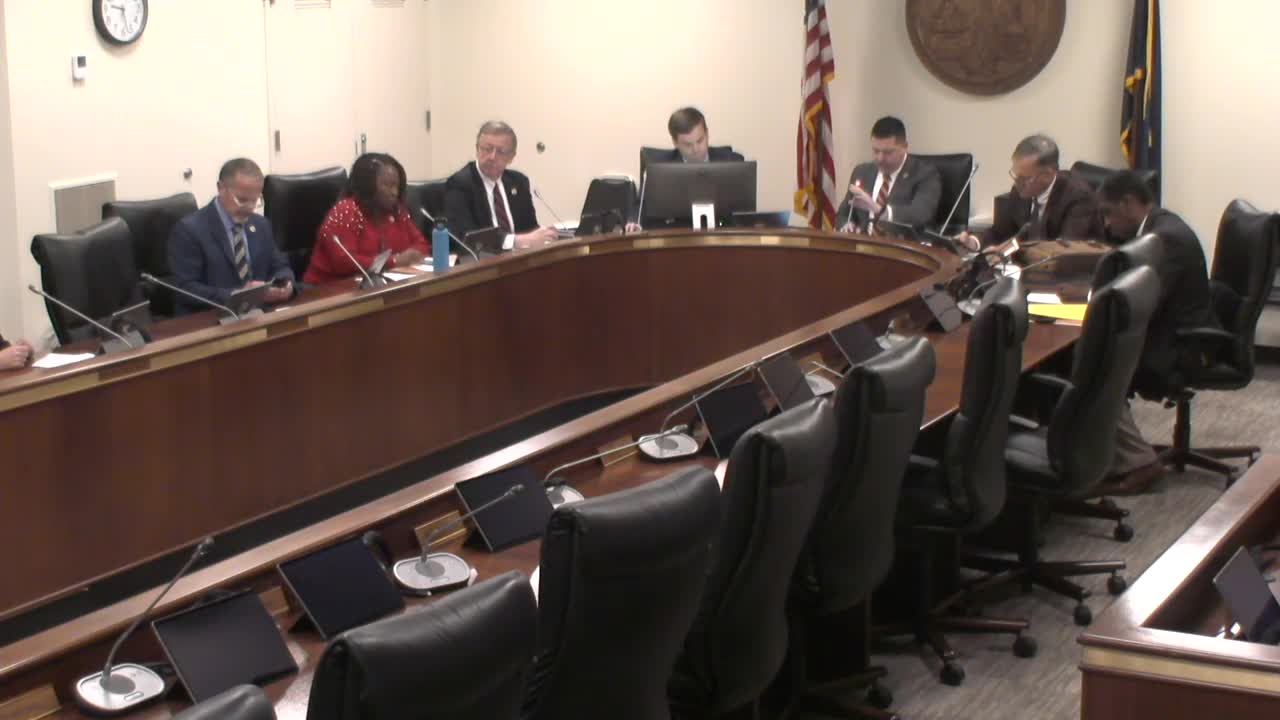
The House Judiciary Subcommittee on Wednesday approved House Bill H.3046 to criminalize the creation, distribution and possession of morphed or AI-altered images that depict an identifiable minor in explicit sexual conduct.
The bill defines an “identifiable minor” as a person who was a minor when the image was created, adapted or modified, or whose face, likeness or distinguishing features make the person recognizable even if the actual identity is not proven. The measure distinguishes degrees of offense: producing morphed images is treated as a higher-degree felony, distribution as a separate degree, and mere possession as a lower-degree offense. Sponsors said the statute does not require proof of the minor's actual identity, only that the image can be recognized as depicting a real person who was a minor when the image was created or adapted.
Representative Wooten, the sponsor, told the subcommittee the legislation grew from testimony gathered by the Joint Citizens and Legislative Committee on Children and that similar measures were considered last year. An academic and family member who identified herself as Mizell described both research and personal experience: she told the committee that photographs of two young women in her family — one under 15 and one under 10 — had been taken from social media, morphed with pornographic images, and later discovered by a third party. Mizell said law enforcement executed a search warrant, found material, but concluded at the time that state law did not prohibit prosecution; she said efforts to obtain action from federal authorities were unsuccessful because of resourcing and prioritization.
Kyle Sin, senior assistant deputy attorney general and head of the Attorney General's Internet Crimes Against Children (ICAC) unit, told the committee the office supports the bill. Sin said existing procedures allow for mental-health evaluations or competency assessments for defendants with intellectual or developmental disabilities, and those processes would remain available in cases involving defendants on the autism spectrum.
The subcommittee conducted a roll-call vote. Representatives Travis Moore (chair), Govan, McCabe, Spann Wilder and Wickenheimer each voted aye, and the subcommittee recorded that H.3046 was approved.
The committee discussion also noted a separate related bill (H.3045) that would address images believed to be entirely AI-generated and therefore not clearly of an actual child; committee members said H.3046 targets images that include identifiable characteristics tied to a real person.
Votes at a glance: H.3046 — approved (Subcommittee roll call: Moore Aye; Govan Aye; McCabe Aye; Spann Wilder Aye; Wickenheimer Aye).