Get Full Government Meeting Transcripts, Videos, & Alerts Forever!
Get email alerts on the Public Works Leadership topic
No spam. Unsubscribe anytime.
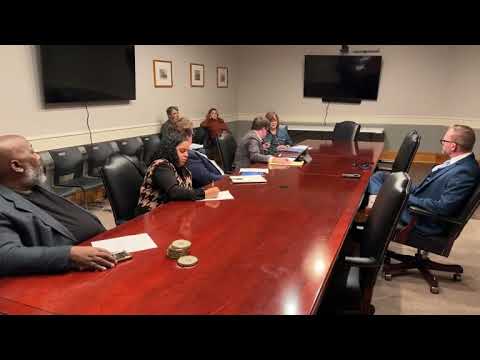
Candidate for public works director highlights permit revenue gains, grant management and staffing priorities
Summary
An applicant for public works director described prior experience operating heavy equipment, said a former building department saw its permit revenue rise while he led fee changes, and outlined approaches to federal grants, CDBG/HOME funds, staffing and communication with the council during a candidate interview.
A candidate for the city’s public works director position described experience operating heavy equipment, cited past changes to building-permit fees that he said raised revenue, and said he would prioritize using federal grants and existing staff resources to maintain infrastructure and parks if appointed.
The candidate, identified in the meeting transcript as "Candidate (unnamed), applicant for public works director," told council members he had worked in utility operations and had experience handling heavy equipment for "about a year and 9 months." He said that when he led the building department in Trussell he reviewed local ordinances and fee schedules and that department’s permit revenue went from "around 253 hundred thousand dollars a year" to "generating all of our $5,000,000 for that department," as he phrased it.
The statement about Trussell was presented as the candidate’s own account of past management and fee review; no supporting documents were introduced during the interview. The candidate emphasized grant compliance as a constraint on how federal funds are spent, saying that for larger federal projects such as Ironbound Road and other named grants the city must meet federal grant assurances or risk repaying funds.
In answering questions about CDBG (Community Development Block Grant) and HOME (HOME Investment Partnerships Program) funds, the candidate said his approach would be to follow legal limits on use and to prioritize projects based on available "seed" funding and program requirements. He told the council he and city staff have discussed better ways to use those funds with a consultant and a staff member he identified as "Miss Woods," but he did not specify exact allocation priorities.
On staffing and operations, the candidate said the city already evaluates whether a position is required "at this level" and whether responsibilities can be reassigned. He described focusing on equipment and maintenance needs rather than adding large numbers of staff, and said, "We're...just adding a little to it," when discussing increased maintenance needs for parks and closed roads.
The candidate also addressed communication with the council, saying he would provide information to help elected officials make informed decisions and described town-hall style outreach as a way to collect community feedback. He noted the city has been using court orders to address some local public-safety and property-damage issues and said the city had improved how it addresses "trashed up" areas over the past three years.
Several council questions asked for specifics on staffing approaches, leadership style, coordination with state and federal funding, and politically sensitive communications. The candidate declined to provide detailed answers to topics subject to legal constraints, saying in part that "we can't comment on that for legal reasons or NDAs" when asked how he would handle some politically sensitive issues.
No formal action, vote or appointment occurred during the segment covered by the transcript. The interview segment in the record focused on the candidate’s experience, high-level approaches to grants and budgeting, and communication and staffing philosophies, rather than concrete program commitments or budget decisions.
The remainder of the interview included shorter exchanges about potential capital-expenditure approaches (whether to budget block-by-block or building-by-building), questions about how the candidate would manage closed roads and property-owner costs, and an acknowledgement that some implementation details (including ownership decisions and 772-related amendments) would require additional discussion before firm commitments could be made.
"This is the most exciting time to be any part of this city," the candidate said, framing his remarks around opportunity and incremental, compliance-focused steps on larger grant-funded projects.
The transcript shows the candidate repeatedly urged looking first at existing records and costs to identify potential savings or revenue opportunities before adding staff or changing program structure.