
Senate defeats bill to add tribal casino land near Grand Forks; supporters cite jobs while opponents warn expansion of gaming
Get AI-powered insights, summaries, and transcripts
Subscribe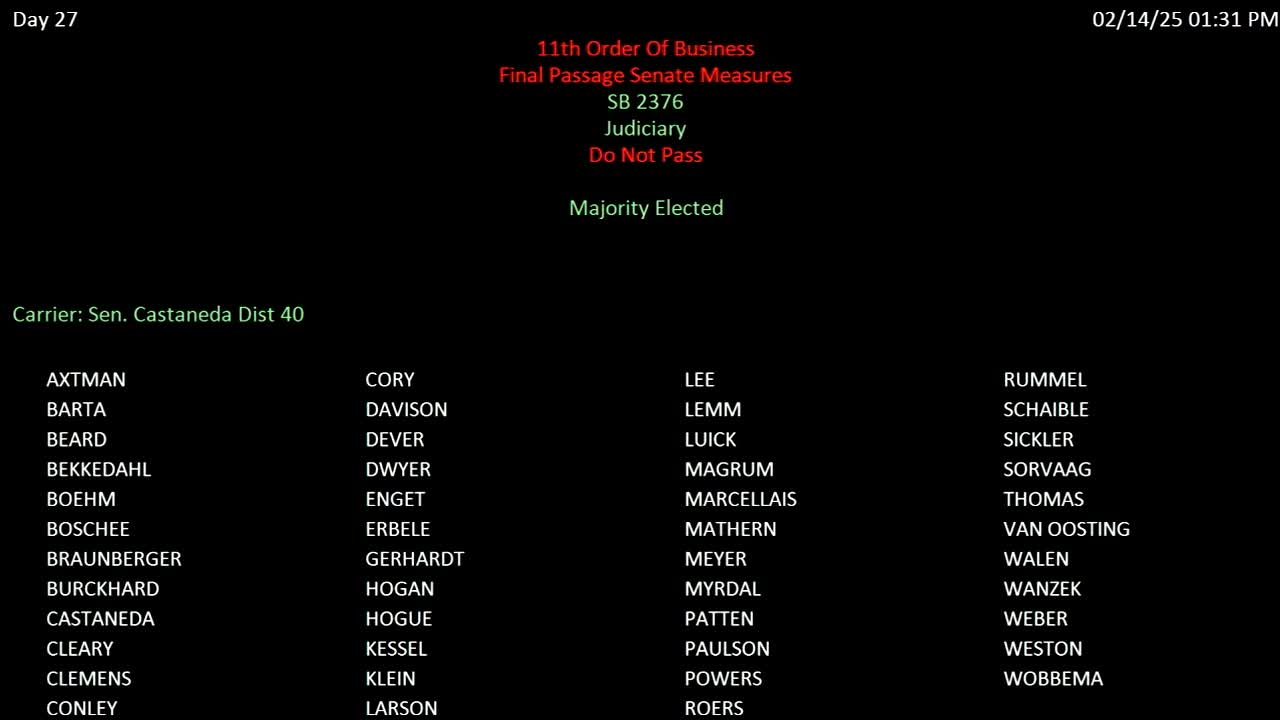
Summary
Senate Bill 23‑76, which would have allowed the Turtle Mountain Band of Chippewa to place a parcel of land in Grand Forks County into trust for tribal gaming under the state compact, failed in the Senate 29‑15 amid debate over economic benefits, local support and social concerns.
Senator Castaneda introduced Senate Bill 23‑76, which would amend the tribal‑state gaming compact to permit a specified parcel in Grand Forks County to be used for gaming if federal and local approvals followed. "In order for this land to be essentially used for gaming, you have to obviously have a local ability to decide and say, yes, you can build a casino," Senator Castaneda said during floor remarks.
Supporters said the project would be privately financed by the Turtle Mountain Band of Chippewa, would not cost the state directly and could bring substantial economic activity to Grand Forks. Senator Marsalais told the chamber the tribe proposed a roughly $280 million resort, employing about 800 people, with a 225‑room hotel, convention facilities and entertainment amenities. "This would bring significant investment to the area, providing well‑paying jobs, opportunities for small businesses," Marsalais said.
Opponents questioned the expansion of commercial gaming off tribal reservations and the effect on existing charitable gaming and communities. Senator Larson said the state legalized gambling for limited charitable gaming and warned against broad expansion. Others expressed concern about proximity to the University of North Dakota and potential social costs. Questions were raised about project financing and long‑term community impacts.
Supporters pointed to local government and business endorsements and described a proposed community host agreement to fund local services; critics insisted those agreements and promises did not mitigate broader concerns. The Senate voted 15 ayes, 29 nays and 3 absent and the bill failed.