Get Full Government Meeting Transcripts, Videos, & Alerts Forever!
Get email alerts on the Budget Finance topic
No spam. Unsubscribe anytime.
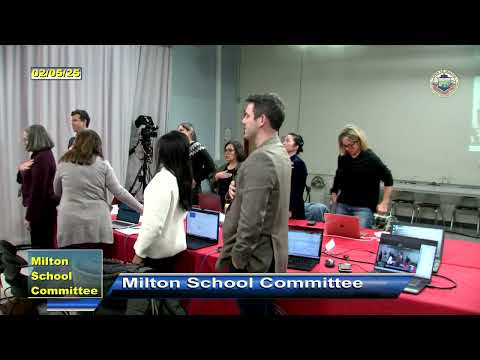
Milton School Committee hears mid‑year budget shortfall; district outlines cuts, offsets and next steps for FY25 and FY26
Summary
The Milton School Committee devoted most of its meeting to an updated financial briefing: district staff outlined a multi‑million‑dollar projected FY25 shortfall and described offsets and next steps as the committee finalizes FY26 budget requests and a possible override.
The Milton School Committee spent the bulk of Tuesday’s meeting on the district’s finances after the finance subcommittee and central office reported a multi‑million‑dollar projected shortfall for fiscal 2025 and explained how that projection intersects with the FY26 budgeting process.
What the district reported: Finance staff told the committee that if no corrective action were taken, the district’s FY25 position would show a significant deficit driven mainly by: special‑education transportation costs, higher energy/utilities spending and substitute teacher coverage. The district said those categories have consistently exceeded budgeted amounts and, in some cases, are mandated expenses (special‑education transportation) that are difficult to curtail quickly.
Immediate corrective actions: The administration described an offset package already in place or planned to reduce the projected deficit. Steps include a purchase‑order freeze and a hiring freeze (with exceptions for legally required positions), reallocating allowable revolving‑fund revenues (for example, some food service account charges to reflect cafeteria custodial time), deferring planned facility and maintenance work, using certain revolving funds and targeted reductions in discretionary spending. The district emphasized those moves are not costless and would affect operations and services if extended long term.
State aid and timing uncertainty: Finance staff said the governor’s proposed supplemental Circuit Breaker funding for special‑education costs could reduce the deficit, but that the governor’s budget is not final and timing of any supplemental funds is uncertain — a risk because funds sometimes do not arrive until after fiscal year end.
FY26 planning and override context: District staff and finance subcommittee members reviewed FY26 planning, explaining the district built a level‑service budget informed by historical expense trends. The level‑service request is substantially larger than the town’s likely non‑override number; the committee described the difference and said that reconciliation with the Select Board will be needed as the town finalizes its fiscal plan. The committee is pursuing public Q&A sessions and a joint presentation with the Select Board next week to explain needs and answer questions.
Public and committee reaction: Speakers at public comment — including town meeting members and parents — urged the committee to secure level‑service funding and expressed concern about further reductions. Committee members and finance subcommittee participants emphasized the need for transparency; some members praised the district’s more granular budgeting approach this year and said it helps identify structural issues (for example, underbudgeted utilities and high transportation costs) earlier in the cycle.
Vendor warrants and votes: The committee approved vendor warrant 29 ($196,466.85, payable 01/30/2025) and vendor warrant 30 ($131,465.74, payable 02/06/2025) during the meeting.
Next steps: The finance subcommittee will continue to meet and refine FY25 projections and the FY26 request. The district has planned community budget sessions (the first scheduled at 5 p.m. Monday at the high school) and a joint presentation with the Select Board Tuesday. Committee members asked for an updated FAQ for the public and for more concrete material they can use when discussing the override and the district’s needs.
Ending: Committee members said the district’s more granular review of expenses and the early identification of shortfalls is a corrective step; they urged public engagement ahead of the FY26 decision and pledged to continue regular updates.