Get Full Government Meeting Transcripts, Videos, & Alerts Forever!
Get email alerts on the Budget Operational Override topic
No spam. Unsubscribe anytime.
Milton school leaders urge operational override after multi-year budget shortfalls
Summary
Milton School Committee and district leaders described a structural budget deficit, a projected $2 million shortfall for FY25 and a FY26 “level service” override need while outlining mitigation steps and promising more community outreach amid public calls for audits and transparency.
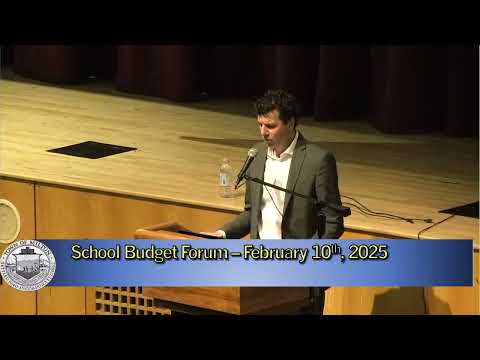
Milton — School committee chair Lizzie Carroll told a packed forum that Milton Public Schools requires “an operational override that at a minimum funds level service to avoid devastating impacts on our staff and students.” The committee and district leaders outlined how a $4 million gap in FY24, use of one‑time funds and year‑to‑year pressures have left the district facing a projected $2,000,000 shortfall for the current fiscal year and a 9.44% “level service” budget increase for fiscal 2026.
Why it matters: The override would let the district exceed the Proposition 2½ tax limit to maintain current staffing and services next year. District leaders said anything below level service would require deep reductions that could affect class sizes, student supports and optional programming. Community members told the committee they want clearer accounting, faster outreach and independent review of past budgeting decisions.
District leaders summarized the problem and next steps. Superintendent Burrows said the FY24 shortfall emerged as the district closed its books last summer and noted that some costs—particularly special‑education placements and transportation—rose faster than past projections. “We need to fund our mission,” Burrows said, adding that the district is working with the school committee and town administration on a FY26 request that accounts for structural deficits rather than relying on one‑time funds.
Assistant Superintendent Katie Blake, who the committee credited with new budget controls, described a software limitation in the town‑wide financial system: “The financial system that we utilize…doesn't have a systemic way to project what the outstanding balances are for salaries.” Blake said she performed manual calculations for the second‑quarter report to produce a more accurate projection of year‑end exposure.
District actions described as underway include a hiring freeze, a pause on nonessential purchases, increased use of rollover accounts and other administrative measures intended to reduce the FY25 gap while limiting impacts on students. The school committee and district leadership also said they will continue partnering with the select board to determine a final override amount and to coordinate public outreach, including an FAQ, additional forums and materials for families.
Public reaction at the forum mixed urgency with skepticism. Parents, students, town meeting members and staff pressed for immediate transparency, asked for a line‑by‑line accounting, and urged independent review or a forensic audit of past budget decisions—particularly the use of ARPA (American Rescue Plan Act) funds and “free cash” to cover recurring costs. Several speakers cited long‑standing concerns that one‑time funds were used to support ongoing positions, and asked how the district will prevent similar shortfalls if an override passes.
Special education was a recurring focus. Multiple speakers and district officials emphasized that rising out‑of‑district placements and related transportation costs have driven substantial spending increases. District officials said they want to develop in‑district capacity to reduce out‑of‑district placements over time and stressed that special education services should not be framed as a “problem,” but noted those line items contributed heavily to the FY24 and FY25 pressures.
Next steps and timeline: The committee said it will press the select board for a definitive no‑override budget number so planning can proceed, and it expects the town‑level decision and any subsequent ballot campaign to occur in the spring and early summer (town meeting in early May and a likely June ballot date if an override is placed). The district also plans to distribute an FAQ and ramp up community outreach—signs, forums, PTO collaboration and digital communications—and invited interested residents to upcoming joint meetings with the select board and the annual budget hearing on March 5.
What was not decided: No formal votes were recorded at the forum. The measures described (hiring freeze, purchase freeze, use of rollover accounts, outreach) were presented as administrative directions and work in progress rather than actions adopted by a formal vote.
The forum closed with district leaders asking the community to stay engaged while the district and town continue working on a balanced, long‑term budget approach.