Get Full Government Meeting Transcripts, Videos, & Alerts Forever!
Get email alerts on the Public Waterfront Access Pud topic
No spam. Unsubscribe anytime.
Commission debates requirement for 50% public waterfront access in PUDs; motion rescinded for rewrite
Summary
Planning staff proposed requiring PUDs and specific development plans on waterfront parcels to provide public access to at least 50% of the waterfront; commissioners asked for clearer definitions and rescinded the motion so staff can rewrite the language.
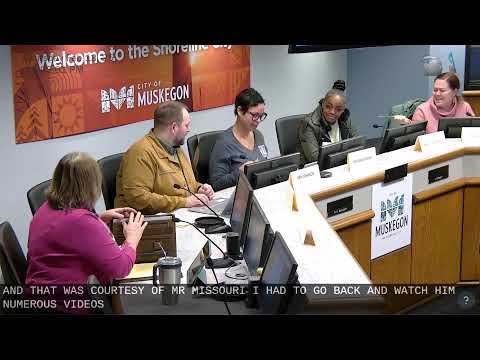
The Planning Commission debated a staff-initiated zoning amendment Feb. 13 that would require all planned unit developments (PUDs) and specific development plans in several zoning districts to include public access to at least 50% of any waterfront in a development.
Staff said the requirement expands an existing rule that applies in certain residential districts, and that the change responds to master-plan input requesting greater public waterfront access. “We currently have in our neighborhood zoning districts that any PUD is required to have 50% of the waterfront accessible to the public,” staff said, and the proposed amendment would extend similar requirements to additional zoning designations that are likely to be redeveloped on the waterfront.
Commission discussion focused on how to interpret and measure "50% public access," legal and practical enforceability, and possible alternatives (for example, counting trails, publicly accessible decks or other amenities in lieu of literal shoreline access). Commissioners and staff noted that the term "common open space" used in existing code may not guarantee public access because it can be held for the collective use of a development's owners/tenants rather than the general public.
Several commissioners and the planning director suggested adding flexibility or clearer definitions to avoid unintentionally blocking redevelopment (staff cited Windward Point as an example where strict 50% shoreline access would have created practical challenges). Proposals discussed included allowing equivalent public amenities (beaches, kayak launches, trails) to count toward the requirement, clarifying whether percentage applies to shoreline length versus acreage, and using dedicated recorded easements to ensure public access.
A motion to recommend the amendment (moved by Commissioner Keys and supported by Mayor Ken Johnson) was made. After extended discussion and staff request for time to rewrite language, the motion was rescinded and the item was sent back to staff for revision; staff said it will return the item with clarified language and that a subsequent public hearing will be scheduled when it is re-noticed. The commission did not adopt the amendment at this meeting.
Commissioners expressed strong support for the goal of increasing public waterfront access but emphasized the need to write a code provision that is practical, enforceable and clear about the form of public amenities that would satisfy the requirement.