Get Full Government Meeting Transcripts, Videos, & Alerts Forever!
Get email alerts on the Cyberbullying Internet Safety topic
No spam. Unsubscribe anytime.
Pacific Grove workshop urges parents to limit screen time and shows how to report cyberbullying
Summary
Presenters from Monterey County Behavioral Health and nonprofit partners told parents at a Pacific Grove Middle School workshop that more than half of students surveyed spend four or more hours a day on screens and outlined steps to spot and respond to cyberbullying, including anonymous reporting and restorative practices at school.
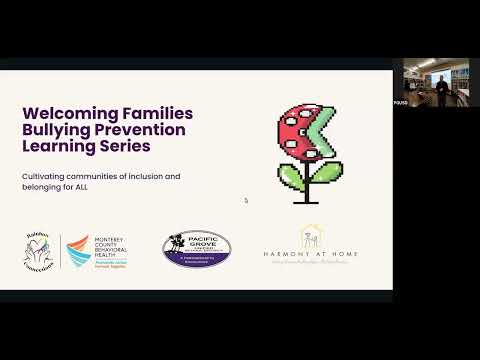
At a virtual and in-person workshop hosted at Pacific Grove Middle School, presenters from Monterey County Behavioral Health and nonprofit partners urged parents to monitor children’s screen time and described practical steps to identify and respond to cyberbullying.
Casey Redenbush, services manager for Monterey County Behavioral Health and leader of the Rainbow Connections project, opened the session by asking parents to consider how many hours their children spend online and by noting district survey results showing substantial screen use. "We gathered some survey data, and 51.9 percent of our students average 4 hours a day or more on screen," Redenbush said, adding that weekend use is often higher.
Why it matters: workshop leaders and school staff said sustained online exposure can harm students’ mental health, interfere with school attendance and learning, and sometimes requires action by schools and law enforcement. The presenters gave a working definition of cyberbullying and steps families and schools can take to respond.
Denise Adeza, Rainbow Connections’ bullying-prevention specialist for Harmony at Home, read the workshop definition: "Cyberbullying is the use of electronic communication tools such as social media, messaging apps, gaming platforms, or other digital technologies, which is being used to harass, to intimidate or to embarrass somebody or another individual." Adeza and other presenters described typical behaviors — sending threatening messages, posting embarrassing photos without consent, impersonation or "catfishing," exclusion from group chats and public shaming — and stressed that online content can persist after it is removed because others can screenshot and redistribute it.
PG Middle staff described how schools handle incidents that affect students’ ability or willingness to attend. "If something really icky is sent over media, then law enforcement is definitely the one you want to know," said Sean Roach, a school staff member, adding that the campus does not allow cell phones and that the school often uses restorative approaches to address online conflicts that spill into school life. "Every kid has a right to come here, has a right to be safe, and receive the education the best education that they possibly can," Roach said.
Practical steps for families and students outlined in the workshop included: setting age-appropriate screen-time limits (presenters noted one- to two-hour guidance for younger children, while older students often exceed four hours a day), using parental-control software such as Bark or NetNanny, monitoring feeds and browser history, discussing digital citizenship and privacy, and role‑playing how to respond when targeted. Presenters also recommended blocking and reporting offenders on platforms and using anonymous tip lines when needed.
Legal and policy context: the workshop referenced California Civil Code section 1714.1 (parental liability for a minor’s willful misconduct) and the California Education Code as frameworks the district considers when cyber incidents impede a student’s ability to attend or learn. Presenters directed parents to stopbullying.gov for federal guidance on laws and reporting options and reminded families of a district anonymous reporting system called "See Something, Say Something," which is available 24/7.
Speakers emphasized bias-based cyberbullying — harassment based on race, sexual orientation, gender identity or disability — as especially harmful. "When it is targeted based on an identity that's considered bias-based cyberbullying," Redenbush said, "the words can really, really harm and impact the self-esteem" of young people.
The workshop included role-playing scenarios for parents (for example, how to respond if an embarrassing photo circulates or a child is excluded from a group chat). School staff described restorative circles, counseling and parent-to-parent outreach as common tools used to get students back into school and address emotional harms.
Organizers and partners represented at the session included the Rainbow Connections project, Harmony at Home (anti-bullying programs), the You Will Arise program (arts and expression activities), and resources such as SmartSocial (a digital-safety newsletter and training). Presenters also promoted an upcoming Pink Shirt Day event at Northridge Mall intended to encourage student-led anti-bullying activities.
The session closed with a final appeal to parents to keep lines of communication open, watch for behavioral red flags (withdrawal, mood changes, sudden grade drops, avoidance of school), and use available reporting tools so schools can act. "Please utilize that, if necessary," Redenbush said of the anonymous tip line.