Get Full Government Meeting Transcripts, Videos, & Alerts Forever!
Get email alerts on the Child Welfare And Early Childhood topic
No spam. Unsubscribe anytime.
Ohio Department of Children and Youth lays out budget goals to cut infant deaths, expand child care and reduce foster placements
Summary
Director Wente told a legislative committee the new department is focusing on reducing infant mortality, improving kindergarten readiness by expanding child care access, and decreasing the number of children entering foster care; she described new programs, baseline data and pilot partnerships that are driving the budget request.
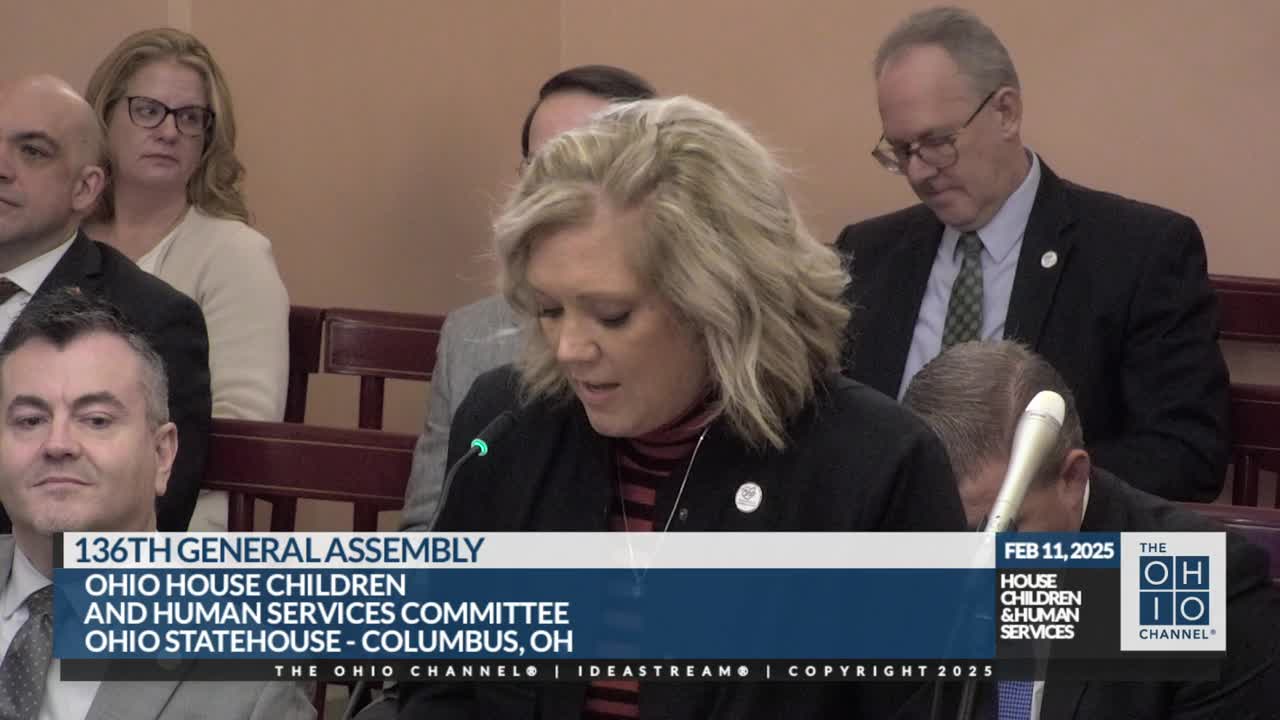
Director Wente, director of the Ohio Department of Children and Youth, told a state legislative committee that the newly created department is centering its biennial budget request on three goals: reduce infant mortality, improve kindergarten readiness through expanded child care access, and reduce the number of children entering foster care.
Wente said the department now houses early childhood programs that were moved from multiple agencies and serves children “prenatal to 21.” She told lawmakers Ohio’s total population is about 11,800,000 and the department’s focus covers an estimated 3,000,000 children; she added just over 660,000 are ages birth to 5 and roughly half of children live under 200% of the federal poverty level.
The department has launched several operational changes it says will support those goals. Wente described a central intake expansion and a family-facing application called Sparkler that launched in September; she said the intake/screening expansion allowed the department to screen more than 2,200 children ages 2–5 in the first weeks after the app’s launch and that about 100 of those children were connected to additional services such as preschool special education. She said an expanded cross-agency data link — using the state student identifier — let staff match children in custody with openings in early childhood education quickly and cited connecting more than 150 four‑year‑olds to full‑day classroom slots last year.
On infant mortality, Wente said Ohio has averaged 7.1 deaths per 1,000 live births the last two years and that the department’s target is to reach 4.4 per 1,000 (a top‑10 target). She reported preliminary calendar‑year 2024 data for January through November at 6.4 per 1,000 and said the department is pursuing community pilot work, including a partner for change opportunity modeled on Cradle Cincinnati; Wente said the pilot will focus first on Montgomery, Lucas, Cuyahoga, Franklin and Hamilton counties because those five account for more than 45% of births and infant deaths statewide.
Wente described other program changes and early results: creation of parent and youth ambassadors (21 ambassadors so far, with a target of two per the department’s 12 regions), cross‑training of licensing and regulatory staff (which she said allowed the department to cancel a contract and realize a $300,000 savings), and investments that added roughly 5,000 infant and toddler slots statewide through infant/toddler infrastructure and access grants announced at the governor’s state‑of‑the‑state. She said the Child Care Choice Voucher program expanded eligibility this year to 200% of the federal poverty level and, since April, has served more than 6,500 children across more than 4,300 families; she cited parent survey results — “85% of the parents say the program helps them be at school or work for longer or more hours” — as an early indicator of impact.
On foster care, Wente said the number of children in state custody was the lowest since 2016, at just under 14,300 as of an October 31 count, but that the number in congregate residential placements remained near 2,000. She told lawmakers the department convened a children’s services working group in August 2023 with about 40 members representing boards, hospitals, county JFS offices and public children services agencies to pursue multiple initiatives intended to reduce placements and open capacity, including telehealth and a technology solution to help caseworkers find placements more quickly.
Wente also cited recent legislation that affects placements and oversight, naming House Bill 315 (changes to notification, training and background checks for group homes) and House Bill 7 (the Strong Foundations Act) as measures that “gave us additional teeth” to improve placements and coordinate supports such as Help Me Grow and peer supports.
Committee members asked for follow‑up details on several items: Representative Lett requested a breakdown of the 5,000 newly available slots by setting (centers versus family child care); Wente said most were in centers but that investments intentionally supported family child care and that the state saw a net increase of just over 100 family child care programs from state fiscal 2023 to 2024. Representative Salvo asked where Ohio ranks now on infant mortality; Wente said the state ranked 43rd in the last count and 44th the year prior. Chair White and multiple members requested the department provide materials to help legislators promote the Sparkler app and other resources to constituents.
Wente closed by saying the department is refocusing dollars on “proven strategies” and accountability and that she looks forward to returning with detailed budget testimony during the upcoming biennial budget process.