Get Full Government Meeting Transcripts, Videos, & Alerts Forever!
Get email alerts on the K 12 Education topic
No spam. Unsubscribe anytime.
Northern Lights reports fewer referrals, rising assessment rates and named Project AWARE pilot
Summary
Staff at Northern Lights told the Superior School District board that referrals and chronic absenteeism have declined, academic benchmarks show modest gains, and the school was chosen as the district's Project AWARE pilot; transportation barriers and limited community resources remain challenges.
Prince Whitakerich, Northern Lights presenter, told the Superior School District Board of Education on Feb. 10 that the school has seen a “significant decrease” in both major and minor referrals and that attendance is improving.
“That 82% of Northern Lights students have had 10 or fewer absences,” Prince Whitakerich said, and he added that reduced referrals and improved attendance are linked to better learning outcomes.
The board heard that Northern Lights was selected as the district’s Project AWARE school, with second- and third-grade teams slated to participate in the pilot. Project AWARE is being framed by presenters as work focused on “organizational well-being,” directed at supporting adults who support students; district leaders said they will begin with one school and consider expansion next fall if the pilot shows positive outcomes.
Nancy Benner, identified as a Northern Lights staff member working toward administrative certification, described instructional collaboration at the school. She said four of six teacher teams are newly formed this year and that shared leadership and PLC (professional learning community) practices, including new “data digs” and a protocol rolled out in February, are meant to increase accountability for interventions.
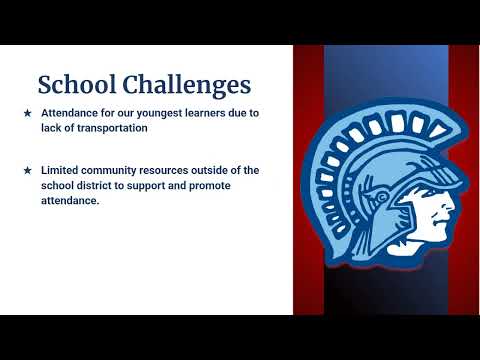
Board members and presenters also discussed attendance barriers. Whitakerich and Benner said transportation remains a persistent issue for some younger learners and that community resources outside the district are limited. A board member relayed a practice from another district — a time-limited transportation voucher program paid by the board to reduce absences — and suggested the district could consider a similar targeted approach.
On academic goals, presenters gave baseline and interim results the board can track: at the start of the year the target was to raise reading performance from 66% to 70% and math from 75% to 78% (measured against the 25th percentile benchmark described by presenters). Whitakerich reported interim results of about 72% of students above the 25th percentile in reading and about 76% in math.
The presentation closed with thanks to staff and a reminder that the Project AWARE work will initially be limited in scope while the district evaluates outcomes.
The report was delivered during the superintendent’s report segment of the Feb. 10 regular board meeting.