Get Full Government Meeting Transcripts, Videos, & Alerts Forever!
Get email alerts on the Transportation Infrastructure topic
No spam. Unsubscribe anytime.
N.H. DOT outlines $17 million Route 101 rehabilitation, bridge replacement and roundabout plan in Swanzey
Summary
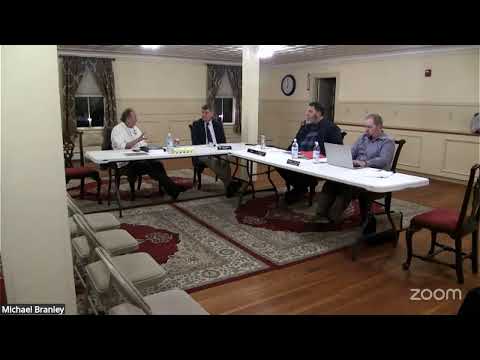
State Department of Transportation staff and their consultant presented designs and a timetable for a federally funded rehabilitation of Route 101 east of Keene at a Swanzey Select Board meeting, including a full replacement of the red‑listed 1933 Branch River bridge, wider 5‑foot shoulders, drainage upgrades and a new roundabout at the Swansea Factory Road connection.
State Department of Transportation staff and their consultant presented designs and a timetable for a federally funded rehabilitation of Route 101 east of Keene at a Swanzey Select Board meeting, including a full replacement of the red‑listed 1933 Branch River bridge, wider 5‑foot shoulders, drainage and stormwater treatment, and a new roundabout to reconfigure the Swansea Factory Road intersection.
The project, which DOT and consultant CHA described as about 1 mile of roadway with an estimated $17,000,000 construction cost, is intended to address failing pavement, poor drainage, structural problems with the Branch River bridge and limited pedestrian and bicycle accommodations along the corridor. Ellen Mosher, project manager with CHA, said the bridge “is on the state's red list” and that nondestructive testing found alkali‑silica reaction (ASR) in concrete cores, prompting a recommendation to replace the structure rather than attempt rehabilitation.
Why it matters: the corridor carries significant daily traffic, serves adjacent homes and small businesses, and contains constrained geometry because of the Branch River and steep slopes. DOT presenters said the replacement and shoulder widening aim to improve safety for motorists, pedestrians and bicyclists, reduce recurring pavement work and address an aging concrete slab under the roadway.
What DOT proposes and why: Dave Smith of N.H. DOT and CHA staff described their preferred concept (labeled alternative 2c) that realigns Swansea Factory Road behind a fastener mill, constructs a roundabout at that new junction, maintains two 12‑foot travel lanes (one each direction) and formalizes 5‑foot shoulders on both sides rather than full sidewalks or bike lanes because of right‑of‑way and environmental constraints. Presenters said the existing pavement sits above an approximately 20‑foot‑wide concrete slab that must be removed and that the project requires full‑depth reconstruction (“full box reconstruction”) in places.
Bridge findings and design constraints: CHA reported the Branch River bridge was constructed in 1933, is eligible for the National Register of Historic Places and shows ASR—commonly called “concrete cancer”—in core samples. Because the new span will be longer to meet current river‑crossing requirements, the team said a modern steel‑girder bridge with a concrete deck is likely; presenters noted they expect resource agencies to seek reuse of the stone fascia where feasible.
Environmental, cultural and archaeological work: the project team reported acoustic bat surveys found the northern long‑eared bat (listed as endangered) and the tricolored bat (proposed for listing). CHA said tree clearing will be seasonally limited to avoid impacts to bats. An architectural survey identified several potentially historic buildings; an archaeological geophysical (GPR) review found possible buried mill‑era remains in one location and no subsurface finds in another. The team stated it is incorporating best management practices (BMPs) for stormwater treatment and will monitor for archaeological findings during construction.
Property and business impacts: presenters acknowledged that some private properties are substantially affected. Jay Blanchard’s commercial building lies in the footprint of the proposed roundabout; CHA staff said they met Mr. Blanchard and are studying options including shifting or relocating the building within his property and changing access. The presentation also noted parts of the Moose Mart building and other historic mill parcels encroach on the existing right of way; the team said acquisition or relocation discussions will be part of right‑of‑way planning and negotiation with owners.
Traffic and construction staging: CHA said it anticipates maintaining one lane of traffic during much of construction through alternating traffic control, possibly using police or temporary signals, and that full closure of Route 101 is not expected. Because of the depth of work, utility relocations, drainage and a bridge replacement, DOT staff estimated construction would take about 2½ New Hampshire construction seasons (roughly April–November each year) and tentatively targeted construction to begin in spring 2027 after final design and bidding.
Process and timeline: because the project is federally funded, presenters outlined required NEPA work and that a draft NEPA document and a public hearing are milestones. The team said it expects to issue a draft environmental document and hold a public hearing this summer to advance the project into final design (2026–2027) and then to construction bidding. Presenters invited the town and residents to join the consulting‑party process under FHWA procedures.
Board and public questions: residents raised concerns about water resources and local cut‑through traffic. Mark Scalera, a resident, asked about the downstream diversion dam and cautioned that a new roundabout could increase traffic on Swansea Factory Road; he also suggested design details to keep runoff off the river. Presenters said daily on‑site construction oversight and DOT environmental compliance inspections would be required to prevent uncontrolled discharges.
Local costs and amenities: Select Board discussion included whether to add decorative streetlights or match Main Street lighting. Presenters and board members noted such decorative or matching fixtures would not be eligible for the federal grant and would be a local expense; the board asked staff to obtain cost estimates so members can decide whether to fund decorative lighting locally at a later stage.
Next steps: CHA and DOT will continue right‑of‑way mapping, environmental permitting, and owner outreach. The presenters said they will return with updated plans as design advances and asked the board to refer residents to their project website and provided contact details for follow‑up.
Ending: Select Board members thanked the presenters and noted continued public outreach and negotiations will be necessary before the town sees construction activity.