Get Full Government Meeting Transcripts, Videos, & Alerts Forever!
Get email alerts on the State Finance topic
No spam. Unsubscribe anytime.
Ohio Lottery projects continued transfers to education while requesting modest operating increases
Summary
Ohio Lottery Director Michelle Gilchrist told the House Education Committee the lottery expects to transfer roughly $1.462 billion in FY 2026 and $1.467 billion in FY 2027 to the Lottery Profits Education Fund, requested modest increases for operating and advertising, and highlighted a $5 million responsible-gambling appropriation.
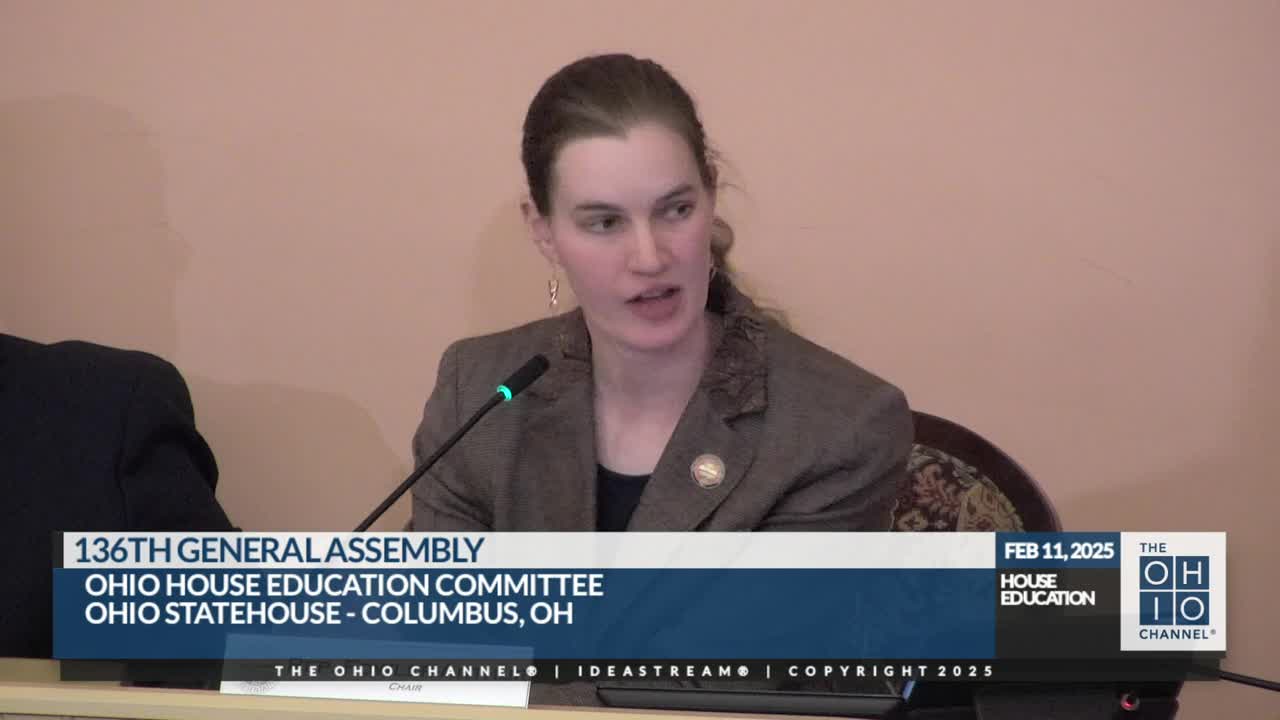
Michelle Gilchrist, director of the Ohio Lottery Commission, presented the commission’s budget outlook and spending priorities to the House Education Committee, outlining forecasts for sales, prize payouts and transfers to the Lottery Profits Education Fund (LPEF).
Gilchrist said the lottery is self-sustaining and non‑GRF, and that historically about 24 cents of every dollar sold for traditional games transfers to the LPEF; the commission reported record transfers in recent years. For the next biennium the lottery projected transfers of $1.462 billion in FY 2026 and $1.467 billion in FY 2027; the agency requested appropriations of $450 million for FY 2026 and $458 million for FY 2027 across its line items to operate the agency. She told the committee the lottery has approximately 1,500,000 users of its MyLotto app and that the agency operates a portfolio of traditional games, VLT oversight, and type C sports‑gaming kiosks at some retail locations.
The lottery’s request includes a $5 million appropriation for responsible-gambling programs — the largest in the agency’s history, the director said — and funding for a two‑year conversion of the central gaming system and retailer equipment. Gilchrist said operating cost increases reflect COLA and health-care inflation, DAS facility charges, audit expenses and obligations tied to vendor contracts.
Committee members asked about multi‑state jackpots (large jackpot winners can drive spikes in sales) and competition from ondemand sportsbook apps and other gaming venues. Gilchrist said kiosks and type‑C sports‑gaming locations capture a small share of sports betting revenue compared with mobile sportsbooks but remain part of the retail mix. Members also asked about transfers to education and whether those transfers could be adjusted; Gilchrist said the lottery transmits profits to the LPEF and that allocation decisions are reserved for the General Assembly.
Why it matters: Lottery profits are a sizable and recurring source of state education funding, supporting K–12 and other education programs. The agency’s forecasts and spending decisions affect revenue available to the state and its education appropriations.
What the committee heard: The lottery projected stable sales and transfers with modest operating increases and emphasized responsible‑gaming investments and a planned multi‑year gaming-system conversion.