Get Full Government Meeting Transcripts, Videos, & Alerts Forever!
Get email alerts on the Maternal Health topic
No spam. Unsubscribe anytime.
Ohio minority health commission cites hubs, community health workers to reduce preterm births and costs
Summary
The Ohio Commission on Minority Health highlighted the Pathways Community Hub model and community health workers as an evidence‑based, pay‑for‑performance care coordination approach that reduced preterm birth and showed favorable return‑on‑investment in pilot studies; commissioners urged continued funding to scale hubs statewide.
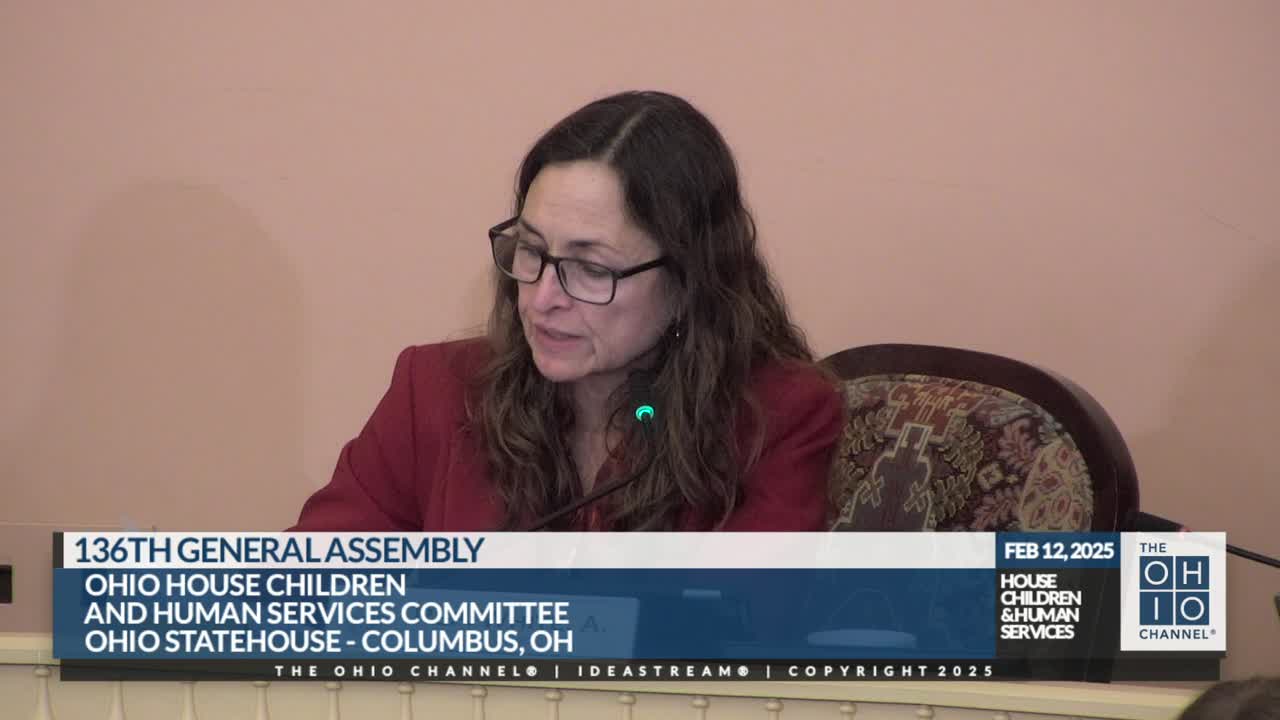
Angela Dawson, director of the Ohio Commission on Minority Health, told the House Children and Human Services Committee the commission’s demonstration grants and Pathways Community Hub model are producing measurable results in reducing preterm births and improving outcomes for high‑risk pregnant women.
Dawson summarized statewide disparities and program outcomes: Ohio’s overall infant mortality rate was reported at 5.7 per 1,000 live births in the department’s cited data, but the Black infant mortality rate remained higher at 13.4 per 1,000 live births. She said calendar‑year 2023 preliminary hub data covered about 2,500 high‑risk pregnant women and 1,055 singleton births and showed a lower preterm birth rate among hub participants than the statewide Black preterm birth rate. Dawson cited studies and economic analyses saying community health worker interventions produce a positive return on investment — citing a $2.47 return on investment per dollar for Medicaid payers in 1 study and local retrospective studies showing favorable outcomes for hub participants.
Dawson described the Pathways Community Hub as a nationally certified, evidence‑based care coordination model that uses community health workers to connect high‑risk mothers to prenatal care, housing, behavioral health and other supports; hubs operate under formal, standardized processes and contract with Medicaid managed care plans in Ohio. The commission said hubs cost roughly $1,500 per mother in the statewide demonstration and credited the model with fewer neonatal intensive‑care admissions and lower low‑birth‑weight rates among participating groups in preliminary analyses.
Committee members thanked Dawson and asked no further questions; the commission asked for continued support of demonstration grants and funding to scale care coordination across the state.
Ending: The committee closed the informal hearing and signaled additional budget hearings to follow for other agencies; the commission’s testimony will be included in the committee record for budget deliberations.