Get Full Government Meeting Transcripts, Videos, & Alerts Forever!
Get email alerts on the Behavioral Health topic
No spam. Unsubscribe anytime.
Ohio proposal expands crisis response, mobile teams and community behavioral health clinics
Summary
Leanne Cornyn, director of the Ohio Department of Mental Health and Addiction Services, presented the agency’s executive budget priorities to expand crisis and community behavioral health services.
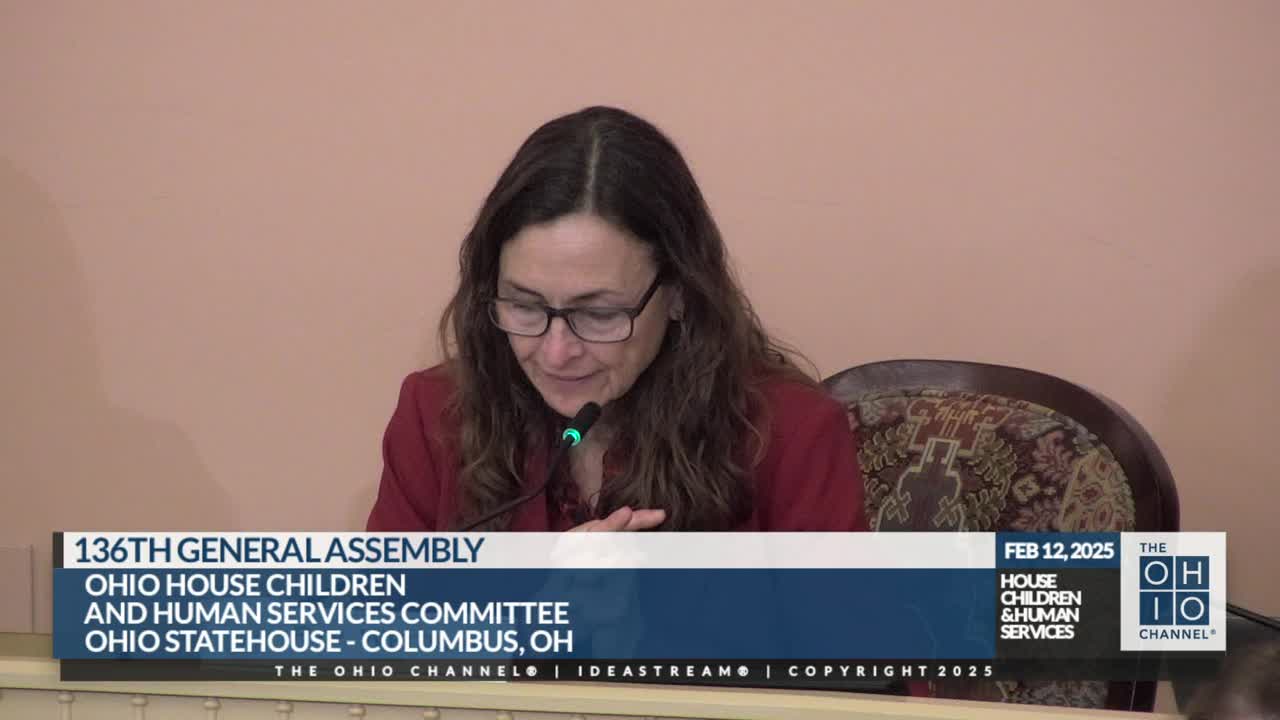
Leanne Cornyn, director of the Ohio Department of Mental Health and Addiction Services, presented the agency’s executive budget priorities in an informal hearing, outlining expansion plans for statewide crisis services, mobile response teams, coordinated specialty care and workforce supports.
"That is why this budget will close a gap in crisis care by ensuring all Ohioans in crisis have someone to call, someone to respond, and somewhere safe to go," Director Cornyn told the House Children and Human Services Committee. She described continuing investment in 988 call centers, a proposed centralized system with 9‑1‑1 interoperability and a plan to expand mobile crisis and Mobile Response and Stabilization Services (MRSS) for children and a similar mobile response network for adults.
Cornyn provided several operational metrics and funding proposals: Ohio currently has 19 988 call centers and has fielded more than 440,000 calls, texts and chats since the nationwide launch; the department reported a 35% average monthly increase in contacts year‑over‑year and said an actuarial projection estimated a 28% increase in demand in the upcoming biennium. MRSS, the director said, is a 24‑hour hotline that aims to reach young people within 60 minutes and can provide up to 42 days of follow‑up support.
The budget request includes $4.8 million over the biennium to expand coordinated specialty care (CSC) for first‑episode psychosis statewide, investments to phase in certified community behavioral health clinics (CCBHCs) in partnership with Medicaid, and a restructuring of dozens of targeted grants into six block grants (mental health, substance use disorder, prevention services, crisis, criminal justice and recovery supports) for ADAMH boards to increase local flexibility.
Cornyn also recommended a departmental name change to the Department of Behavioral Health beginning in fiscal year 2026, saying the broader term would reduce stigma and reflect integrated services for mental health and substance use disorders. She proposed renaming and strengthening the workforce office to the Bureau of Behavioral Health Workforce Excellence and requested funding for a statewide workforce needs assessment and technical assistance to providers.
On criminal justice and reentry, the director described a proposed pilot modeled after Miami‑Dade County that would divert some individuals with lower‑level felonies to competency restoration, crisis stabilization and reentry supports; the budget sought $11.7 million per year for that pilot. Cornyn also said the department seeks to increase funding for reimbursement of medications for mental illness and substance use disorders purchased by county jails and community correctional facilities — a program that previously received $5 million per fiscal year and which the department said was insufficient to meet rising demand.
Committee members pressed for details on CCBHCs, measurement and accountability for capacity increases, funding sources for medications and the proposed name change. Cornyn said the department will develop RFPs, reporting requirements and outcome metrics for grant recipients, that some hospital access funds were moved into block grants rather than eliminated, and that federal funding streams (block grants and opioid response grants) currently provide about 25% of the agency’s funding.
Ending: Cornyn told the committee the agency will follow up with additional information and technical details; the hearing concluded with committee members saying they would want more detailed fiscal and programmatic information in subsequent sessions.