Get Full Government Meeting Transcripts, Videos, & Alerts Forever!
Get email alerts on the Snap Benefits Cliff topic
No spam. Unsubscribe anytime.
ODJFS director outlines SNAP ‘‘off‑ramp,’’ Benefit Bridge and childcare as barriers to work
Summary
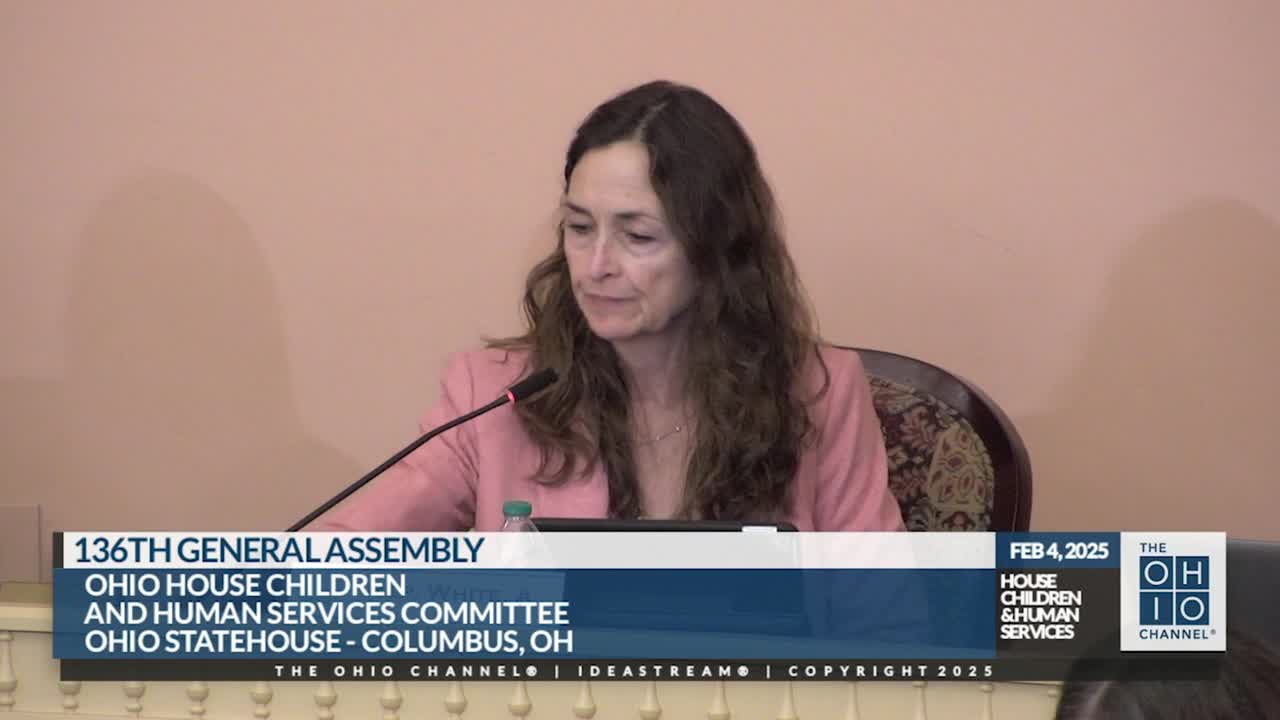
Matt D'Amshroeder, director of the Ohio Department of Job and Family Services, told the House Children and Human Services Committee that SNAP rule changes, the Benefit Bridge pilot and childcare access are central to moving Ohioans from public assistance into work.
Matt D'Amshroeder, director of the Ohio Department of Job and Family Services, told the House Children and Human Services Committee that the agency has focused on preventing benefit “cliffs” and on connecting people to jobs.
D'Amshroeder said the department adopted a SNAP “off‑ramp” rule that went into effect Oct. 1 of last year to allow benefit reductions over time as wages rise. "What we're looking at here is for individuals who are doing exactly what we want them to do, engage in meaningful employment and earn money to support their family," he said.
The nut graf: The department framed the SNAP change and its Benefit Bridge pilot as parts of a strategy to remove disincentives to work while preserving a safety net, and identified childcare access as the main obstacle county offices report when people try to increase work hours.
D'Amshroeder told lawmakers SNAP benefits are 100 percent federally funded and that states receive federal administrative funding with a state match. He described local county departments of job and family services as “the front door of services to Ohioans” and said most program delivery is “state supervised, county administered.”
On the Benefit Bridge pilot, D'Amshroeder said participating counties are allowed to braid a small amount of General Revenue Fund (GRF) with TANF cash assistance to provide intensive case management and short‑term supports. He described the program with an example of a participant in Licking County who opened a savings account, completed job training, and moved off public assistance after intensive case management. "We have about 13 counties right now," he said, and added that "the limiting factor, candidly, is around GRF."
Committee members pressed for details about the SNAP off‑ramp and timelines after a member described a constituent who lost benefits following overtime. D'Amshroeder said eligibility calculations are handled at the county level and offered to connect members to county offices to resolve specific cases.
D'Amshroeder also reviewed other major ODJFS programs: child support (he said the state collects and distributes more than $1,600,000,000 annually to nearly 600,000 children), adult protective services (funded from state GRF without a federal match), unemployment insurance (state and federal employer taxes fund benefits and federal grants aid administration), and workforce services including OhioMeansJobs and Apprentice Ohio. He said Ohio has more than 23,000 apprentices enrolled and noted WIOA funds are fully federally funded.
On workforce barriers, D'Amshroeder prioritized childcare. "The number one issue that we hear about as the limiting factor for individuals who can work and want to work is issues around childcare," he said, and described an employer toolkit his office is developing to connect businesses to hiring incentives and support services.
Ending: D'Amshroeder invited members to follow up and to meet one‑on‑one as the budget process continues; he said he will return for more detailed budget testimony to the finance committee.