Get Full Government Meeting Transcripts, Videos, & Alerts Forever!
Get email alerts on the Town Goals Budget Planning topic
No spam. Unsubscribe anytime.
Moraga council begins budget year planning, orders staff to draft 5 goals and top 10 priorities
Summary
At a Feb. 12 study session, the Moraga Town Council discussed revisions to the town mission statement and a proposed framework of five broad goals and 10 priorities to guide the biennial budget. Council directed staff to refine wording and return with a formal package for adoption; no final votes were taken on the mission or goals.
The Moraga Town Council on Feb. 12 launched its FY 2026–27 budget-year planning by asking staff to produce a concise mission statement, five broad goals and a list of 10 top priorities to guide the town’s biennial budget. The council discussed land use, infrastructure, public safety and community facilities at length and set direction for staff to return with word-smithing and an actionable priorities package for future adoption.
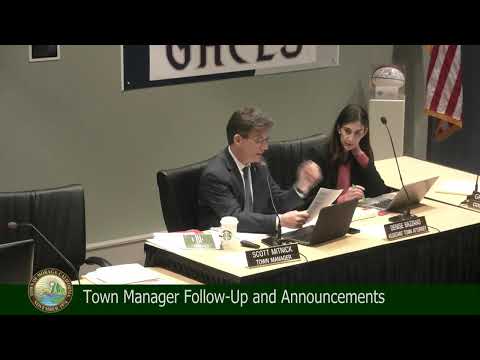
Town Manager Scott Mitnick told the council the process would move the town from a combined set of 11 goals and priorities to a more focused framework intended to guide the upcoming budget. “We’re recommending that you have five broad goals and 10 priorities,” Mitnick said. “They’re just — it’s more manageable. It helps the council become more focused.”
The discussion began with a review of the town’s current mission statement, which Mitnick read aloud and then contrasted with several shorter alternatives submitted by council members and staff. Council members worked together during the meeting to produce a draft phrasing; Mitnick said staff would return at the next meeting with a formal recommendation for adoption. Several council members favored a shorter, service‑oriented statement that also mentions preservation of town character and open space.
Council members and staff moved quickly from the mission statement to a line‑by‑line review of categories staff compiled from submissions by council and department heads: land use, finance, infrastructure, public safety and quality of life. For land use, council emphasized encouraging high‑quality infill and reuse of underutilized commercial parcels while protecting neighborhood character. Mitnick described a proposed priority that staff draft “a plan to encourage property and business owners to develop their properties within the parameters of the general plan” and to show “notable progress to eradicate existing blight and underutilized properties within the town’s commercial areas.”
Public safety and emergency evacuation were a major focus. Mitnick and staff explained that Moraga is participating in a countywide evacuation study funded by a Caltrans grant; staff said the grant agreement was recently secured and an RFP for consultants should be released within about three weeks. The council also directed staff to expand public‑facing education and preparedness work, and to hold a community public safety meeting. Chief Jeff Isaacs of the Moraga‑Orinda Fire District and the police chief (referred to in the meeting as Chief King) were cited as partners in the outreach. Mitnick announced a town hall on April 21 at Saint Mary’s College that staff said will be recorded and posted online.
Infrastructure and facilities drew sustained discussion. Public Works Director Sean Knapp briefed the council on the townwide pavement and sidewalk program, saying the current contract has completed the originally scoped work and additional work around Campolindo High School and Moraga Road is nearly finished, with punch‑list items remaining. Knapp said a change order added four sidewalks serving nearby homes and work to finalize striping and signage is in progress. He also summarized the town’s policy to use Measure K funds to address curb and driveway work related to street reconstruction projects.
On parks and open space, staff reported they received multiple proposals for a recreation and open‑space master plan and expected to select a consultant next month; work was projected to begin around June 1 with completion targeted in late 2026. Staff also noted challenges for town facility solar projects at the library because of utility crossings and large mature trees on the site.
Councilmembers raised priorities for further work that staff will fold into the draft priorities: a) an actionable plan to promote redevelopment of underused commercial parcels (including exploring public‑private partnership approaches), b) a long‑term financial strategic plan to identify recurring revenue options (for example, expanded lighting/landscaping districts or other voter measures), c) continued pavement and storm‑drain projects, d) an expanded public safety outreach and home‑hardening program tied to the county evacuation study, and e) a feasibility check on the town’s meeting capacity and options for interim meeting venues and long‑term chamber improvements or alternatives.
Public comment at the session included a Campolinda neighborhood resident, Casey Rain, who urged the council to consider seniors and other vulnerable residents when planning community wellness and services. Rain also suggested the mission statement include “creating” a vibrant, innovative and sustainable community; councilmembers incorporated similar language into their working draft.
No formal vote was taken on the mission statement or the proposed goals during the study session. Council members directed staff to return with polished language and a formal mission/goals package for action at a future meeting. Separately, the council adopted routine agenda and consent items earlier in the meeting and approved a resolution designating alternate standby officers for emergency reconstitution of the council (items 6.1, 6.2, 6.3 and 6.4 were approved as presented; see “Votes at a glance”).
The council scheduled follow‑up items: the refined mission, goals and priorities package; a legislative‑platform briefing and midyear budget review on March 12; and a council organizational session on March 19. Staff said they would circulate draft language before the next meeting to allow members and the public to review suggested edits.