Get Full Government Meeting Transcripts, Videos, & Alerts Forever!
Get email alerts on the Youth Services Mentoring topic
No spam. Unsubscribe anytime.
Friends of the Children Utah seeks $150,000 one‑time to expand long‑term professional mentoring for high‑risk children
Summary
Friends of the Children Utah asked the subcommittee for a $150,000 one‑time appropriation to support its long‑term, salaried professional‑mentor model for children ages 4–11 experiencing multiple adversities; the group presented program outcomes and longitudinal data to argue for prevention and cost savings.
Friends of the Children Utah asked the Criminal Justice Appropriations Subcommittee for a $150,000 one‑time appropriation to support its professional mentoring program for children facing intergenerational poverty, trauma and other compounding risks.
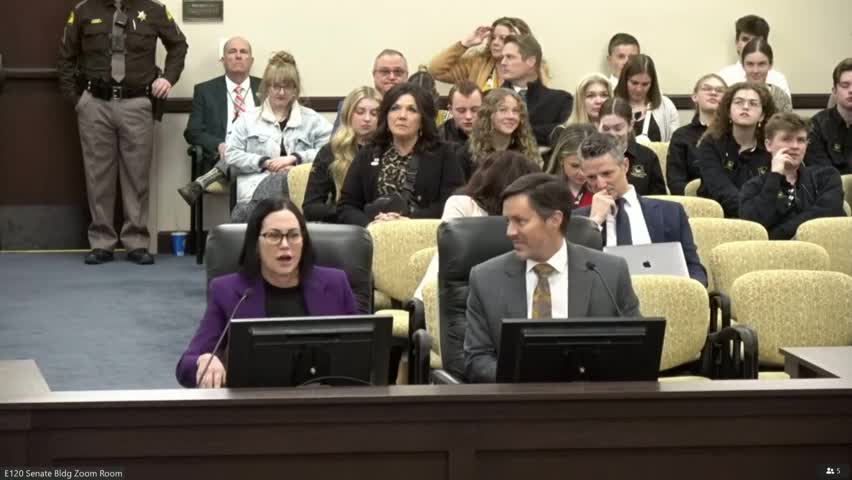
Kelsey Lewis, executive director of Friends of the Children Utah, said the nonprofit pairs salaried, trained professional mentors — called “friends” — with children starting at ages 4–6 and commits to mentorship through high‑school graduation. Lewis told the committee the Utah chapter serves about 300 people and has 62 youth currently paired with friends.
Program focus and evidence
Lewis described the model as trauma informed and relationship focused. She said all currently served youth face multiple adversities and reported program demographics and outcomes on the record:
- Program size and profile: 300 individuals served; 62 paired youth aged 5–11. Lewis said 100 percent of those youth face generational poverty and multiple adverse childhood experiences (ACEs); 70 percent live in single‑parent households; 30 percent qualify for an IEP or 504 education plan; 31 percent are in kinship care; 24 percent have parents who have been incarcerated; 18 percent have parents who have experienced substance‑use problems; and nearly 40 percent are impacted by domestic violence.
- Outcomes: Lewis presented longitudinal outcomes from the national model and Utah site, including an 83 percent high‑school graduation rate for youth paired with a friend, 98 percent delaying parenthood beyond their teen years, 93 percent remaining free of juvenile‑justice involvement while paired, and 92 percent enrolling in post‑secondary education, enlisting or entering the workforce. She said independent cost analyses show a $7 community return for every $1 invested and estimated lifetime savings approaching $1 million per child served over 12 years.
Legislative reaction
Senator Cullimore sponsored the request and committee members praised the prevention focus. Members asked about relationships with parents; Lewis said the program intentionally builds trust with caregivers and uses a family engagement coordinator to connect families to services and coordinate referrals.
Next steps
The subcommittee did not vote on the RFA during the hearing. If appropriators include the request on a chairs’ list or the committee approves it in later deliberations, the one‑time funding would be available to the organization as described.