Get Full Government Meeting Transcripts, Videos, & Alerts Forever!
Get email alerts on the Zoning Wind Solar Moratorium topic
No spam. Unsubscribe anytime.
Shelby County board tables proposed automatic moratoriums for wind and solar siting
Summary
After a presentation from the zoning administration, the Shelby County Board voted to table an amendment that would trigger automatic local moratoriums on commercial wind and solar facilities if parts of the state law were overturned.
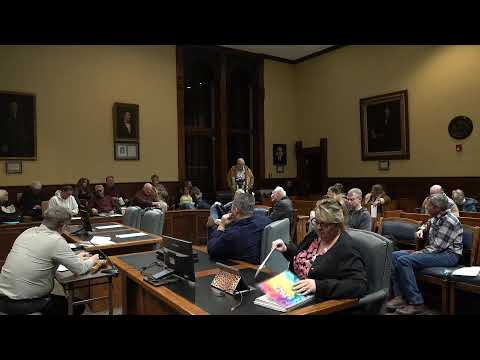
Shelby County Board members on Feb. 13 voted to table a proposed zoning amendment that would create automatic, self-executing moratoriums on commercial wind and solar energy facilities if specified sections of state law are invalidated by appellate courts.
The zoning board asked the county board to consider adding a new paragraph to Article 2, Subsection 16 procedures, and a matching paragraph to Article 2, Subsection 16.5 procedures, that would put an automatic moratorium in place for wind or solar facilities if Illinois Public Act 102-1123 or the Illinois statute cited as 55 ILCS 5/5-12020 paragraph g were found invalid on appeal. Scott McKee of the county zoning administration read the proposed language aloud and said the amendment, if enacted, would not immediately institute a moratorium but would make one self-executing under the narrow condition that the listed state law provisions were overturned and the county board had not removed the moratorium by majority vote.
Board members and staff discussed the legal exposure created by the proposed language. McKee and other speakers explained the proposal was intended to give Shelby County an option to decline special use permits for commercial wind or solar projects if the state statutory limitation that currently constrains local authority were removed. The proposal would not force the county to deny permits; it would only enable the board to do so if the state-law barrier fell away.
Ruth (staff member) told the board she had reviewed the law and the resolution and described the amendment as a preventative measure that would only take effect if the state statute were successfully challenged. She said other legal remedies, such as seeking an injunction if a challenge arose, would remain available to the county.
Board members asked whether the setback and technical requirements cited in the state statute would still apply and whether existing permits would be affected. McKee read setback distances that his office uses and said those figures match the state standards. He also said any facilities already issued special-use permits before a moratorium would not be affected; the moratorium would apply only to new applications.
Speakers warned the amendment could open the county to litigation. McKee read the statute’s clause that appears to bar counties from adopting regulations that would disallow commercial wind or solar facilities, whether permanently or temporarily, and said passing the amendment could invite lawsuits from project proponents.
After extended discussion, County Board member (Mr.) Foster moved to table the item and asked that the zoning board rework the language to be broader and allow more flexibility; the motion was seconded and the board voted to table the amendment. Supporters of tabling said more time was needed for legal review, for broader drafting that could preserve potential county authority without limiting future options, and for education of board members and the public.
The board did not adopt the zoning amendment on Feb. 13. The zoning board may revise the proposal and return it to the county board at a later meeting.
The debate highlighted a tension two officials described repeatedly: the state statute currently constrains Shelby County’s ability to deny special-use permits for commercial wind and solar facilities that comply with state standards, but several county board members and the zoning board wanted a mechanism that would restore local discretion if the state statute were overturned.
Looking ahead, the zoning board and county staff were asked to refine the draft language and coordinate additional legal input before the county reconsiders the measure.