Get Full Government Meeting Transcripts, Videos, & Alerts Forever!
Get email alerts on the K 12 Education Mtss topic
No spam. Unsubscribe anytime.
Franklin Regional presents midyear MTSS data showing gains in K–8 reading and targeted math work
Summary
District MTSS coordinators told the school board the multi-tiered system of supports is yielding midyear growth on STAR and Acadience screeners, while administrators say the district will shift emphasis toward math and science in the next comprehensive plan.
Franklin Regional School District administrators told the school board on Feb. 10 that the district’s multi-tiered system of supports (MTSS) is producing measurable midyear gains in early reading and targeted math growth while the district prepares to shift energy toward mathematics and science over the next three years.
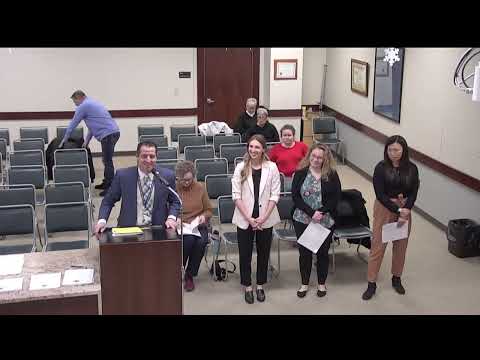
Superintendent Dr. Anthony Peraino opened the report by praising winter athletics, then turned the presentation to the district MTSS team, which described how the K–12 framework coordinates universal screening, data meetings, and tiered interventions across buildings.
Audra Meehan, MTSS coordinator at the primary building, said the district uses a tiered approach: “The core instruction is what we do with the classroom teachers and that’s the instruction that every student receives,” and Tier 2 “is the targeted support where there are different supplemental interventions and that is about 5 to 15 percent of students,” while Tier 3 is intensified individual support. Meehan also emphasized cross‑building professional learning communities and vertical alignment.
Megan Balsic, who described the district’s “FR MTSS focus,” said common assessments, routine PLC (professional learning community) meetings and the district’s new use of Performance Matters are helping teachers analyze data more quickly. Allison Frank, MTSS coordinator at the Intermediate School, outlined the district’s assessment mix: universal screeners (STAR and Acadience), targeted diagnostics and weekly or biweekly progress monitoring using STAR custom assessments and exit tickets.
Frank gave midyear percentages for early grades: first grade was 84 percent at or above benchmark on Acadience, with 64 percent already at the end‑of‑year goal; kindergarten showed 90 percent at or above benchmark with 66 percent having met the end‑of‑year goal. At the Intermediate School, Frank said average grade‑equivalency growth on STAR across the fall‑to‑midyear window was about 1.0 in math and roughly 0.6 in reading; she described that span as approximately three months of instruction (September to December) used to compute growth.
Board members pressed for detail on how MTSS signals translate to parent notification. Meehan and Frank said teachers typically raise concerns at conferences and during PLC data meetings; parents are advised that “all teachers are teachers of reading” because staff completed LETRS training, and that the system is designed to catch students early through triangulation of curricular checks, universal screeners and observational information.
Board member questions focused on where effort is directed next. Dr. Peraino and the MTSS team said the district will continue strengthening Tier 1 instruction while expanding targeted supports. They cited a plan to store curriculum in PowerSchool’s UCCI Chalk and to use Performance Matters for gap analysis so the district can compare standards, common assessments and PSSA/Keystone alignment in coming years.
The presentation also highlighted middle‑school math improvements. District staff said fifth‑grade math showed a 1.8 grade‑equivalency growth midyear and sixth grade a 1.1 growth; staff attributed gains to flexible, fluid grouping, math labs and a partnership with math consultant Anne Bergander focused on transitional grade alignment.
Superintendent Peraino called the MTSS update “modest” in tone but said the district has “a body of work” in place — PLCs, common assessments, data teams and targeted interventions — that will inform the next comprehensive plan. The board did not take formal action; administrators said MTSS refinements and curriculum alignment are ongoing steps for the district this spring.
Ending: District leaders said next steps include continued progress monitoring, aligning curriculum and assessments in Performance Matters and adding curricular materials to UCCI Chalk so the district can run a gap analysis and refine Tier 1 through Tier 3 practices.