Get Full Government Meeting Transcripts, Videos, & Alerts Forever!
Get email alerts on the Municipal Finance topic
No spam. Unsubscribe anytime.
Bristol officials report near‑complete tax collections, warn motor‑vehicle valuation changes will reduce revenue growth
Summary
City finance staff reported near‑100% collection of current levy and higher building‑permit revenues, while the assessor outlined a new state vehicle valuation method that cut motor‑vehicle net valuation and will damp revenue growth; Council approved several routine measures including a $30,500 contingency transfer for soil management.
City finance staff told the joint meeting of the Bristol City Council and Board of Finance on Feb. 11 that the city has collected about 99.6% of its current levy and is tracking near or above budget in several revenue categories, even as a statewide change to vehicle valuation reduced the city’s motor‑vehicle tax base.
Diane (city finance staff) said the city’s current levy stood at $167,200,000 and “we are at 99.58% collected” for the January accounting period. She reported building‑permit fees and conveyance taxes at roughly 82% and 89% of budgeted levels, and noted motor‑vehicle supplemental receipts of $1,540,000 that slightly exceeded the supplemental budget. She also reported delinquent‑tax demand activity: 1,148 real‑estate demands totaling $3,280,000 in tax due with $140,000 in interest, and 574 personal‑property demands totaling $527,000.
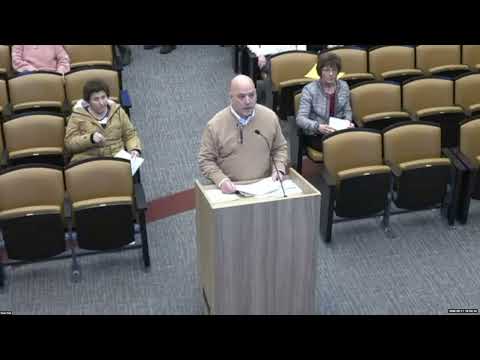
Tom Denote, the city assessor, presented the signed 2024 grand list and a multipart explanation of why the city will realize only modest additional tax revenue from this year’s valuations. The grand list figures he reported include roughly $4.5 billion in real‑estate value, about $536 million in personal property, and roughly $450 million in motor‑vehicle value. He said combined net assessment increases in real estate and personal property total about $104 million, but a new state valuation method for registered passenger vehicles reduced the motor‑vehicle net valuation by about $77.5 million, roughly a 14.7% decline.
Why it matters: the assessor said the net result of those changes will generate about $750,000 in additional revenue for the city this year — far smaller than recent year‑over‑year growth. Mayor Jeff Caggiano told the joint meeting the combination of shifting valuations and large spending requests has prompted staff to ask departments to trim FY26 operating budgets by 2%–5% and to implement a hiring freeze during the budget process.
What changed for cars: Denote said the new approach, required by state law, values registered passenger vehicles using manufacturers’ suggested retail price (MSRP) depreciated according to a state schedule, then multiplies that depreciated MSRP by the statutory assessment ratio (70%) to produce the assessed value. Quoting his slides, Denote told the meeting, “the assessed value of your vehicle will automatically decrease according to the depreciation schedule and your vehicle will be assessed at no less than $500 for taxation purposes at any time.” He cited Public Act 22‑118 and the June special session Public Act 24‑1 as the state authorities implementing the change.
Denote gave a worked example comparing the old approach and the new MSRP‑based approach for a 2020 Honda Accord. Under the prior statewide guide (clean retail), the example produced an assessment that led to an estimated $462 tax bill; under the MSRP/depreciation method, the same vehicle’s estimated tax bill would be about $355 — a $107 reduction (roughly 23%). He said about 32,981 of roughly 51,000 registered passenger vehicles on the grand list decreased in value under the new method and about 18,000 increased, and he estimated roughly 6,000 taxpayers would see higher motor‑vehicle taxes based on the change.
Exemptions and appeals: Denote said roughly 2,700 vehicles were automatically exempted under statutory provisions (he cited section 12‑81/82 of the Connecticut General Statutes) — examples include personal utility trailers, snowmobiles and ATVs when used exclusively for personal use; by contrast campers and commercial trailers remain assessable. He also said the Board of Assessment Appeals’ authority in vehicle cases is strictly limited to argument over the MSRP (price), not the city’s final tax computation.
City finances and near‑term outlook: Finance staff said investment earnings are conservatively estimated at 2.25%, and the city’s general revenue picture remains steady apart from the changes described. The Board of Education’s budget request was described as substantially larger than prior years and still subject to potential state reimbursements; the assessor and finance staff said they expect to continue firming revenue estimates as late‑posted receipts are recorded over February.
Votes at a glance: The council approved routine business and several measures during the Feb. 11 meeting, including a transfer of $30,500 from the capital projects contingency fund for soil management at the Carrier property. Other formal actions taken that evening included an adopted real‑estate encroachment enforcement policy; two ordinance amendments to police ranks and retirement benefit language; multiple reappointments to municipal boards; approval of an easement to Eversource Energy; a city resolution to seek inclusion in the federal Highlands boundary; municipal grant‑aid recertification of $4,856,624; a $57,500 contract amendment for the City Hall renovation project; and a $50,000 full‑and‑final settlement of a workers’ compensation claim. (See the article’s structured actions list for motions and outcomes.)
Bottom line: City finance staff described collections as strong for January, but the assessor and mayor warned that the state’s change in vehicle valuation and large budget requests — notably from the Board of Education — will require scrutiny during upcoming budget hearings. The council directed departments to seek 2%–5% year‑over‑year reductions in their FY26 requests and imposed a temporary hiring freeze to preserve flexibility during the budget process.