Get Full Government Meeting Transcripts, Videos, & Alerts Forever!
Get email alerts on the Education Lcap Update topic
No spam. Unsubscribe anytime.
District presents LCAP midyear update showing progress on attendance and targeted supports
Summary
Superintendent staff presented the midyear Local Control and Accountability Plan update, reporting partial implementation across LCAP goals, expenditures through midyear, and gains in several student groups while noting continued work on chronic absenteeism and school climate.
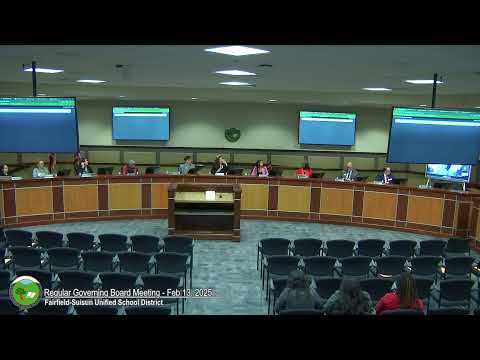
Fairfield‑Suisun Unified School District staff presented a midyear update on the district’s three‑year Local Control and Accountability Plan (LCAP) at the Feb. 13 governing board meeting, highlighting partial implementation of actions and updated fiscal figures.
The LCAP midyear report covers the first six months of Year 1 in the district’s three‑year cycle and is required to be presented to the board before Feb. 28. Doctor Sheila McCabe and goal chairs told the board most actions remain “in progress” because they are designed to conclude at the end of the three‑year cycle.
Key highlights and data - Academic supports: Ninth‑grade Math 1 students earning Cs or better increased by 5 percentage points, staff said, and expanded learning (ELOP) funding and programming showed gains for African American and socioeconomically disadvantaged students. - Social‑emotional and safety work: The district reported a reduction in the percentage of students experiencing bullying and harassment and described ongoing work to expand tiered social‑emotional instruction and restorative practices. - Attendance and chronic absenteeism: As of Jan. 10 the district‑wide chronic absenteeism rate stood at 19.8%, an improvement of 2.03 percentage points from the same point last year. District attendance averaged 93.4%, a 0.63 percentage point increase year over year. - Family engagement and Family Resource Centers (FRCs): The district cited expansion of parent programs, multilingual communications (ParentSquare, Peachjar, S'more), and strong utilization metrics for FRCs: nearly 200 families assisted with financial aid navigation, 800 basic‑needs items distributed, and thousands of resource calls logged. - Fiscal reporting: When the LCAP was adopted in June the district budgeted approximately $16–17 million annually to implement LCAP actions. Staff reported that of a roughly $70 million in funds principally directed to high‑need students, about $56 million has been expended to date. In addition, LCFF supplemental concentration revenue increased from a June projection of about $28 million to approximately $35 million due to a higher unduplicated pupil count in October.
Why it matters The midyear update is an accountability step required by state law and provides the board and the public with progress data on actions tied to district goals and the use of funds intended to support English learners, foster youth and socioeconomically disadvantaged students. The changes in unduplicated counts and resulting revenue adjustments will affect multi‑year budget projections and planning.
Board response Board members praised the scope of family engagement work and the PLTI parent leadership program. Several trustees asked for continued monitoring of school climate measures — noting, for example, that eleventh‑grade students reported a decline in school connectedness — and emphasized the need to target supports where absenteeism remains high.
Ending District staff said the full annual LCAP report will be presented in June and that fiscal adjustments tied to updated state revenue estimates will be reflected in subsequent budget presentations.