Get Full Government Meeting Transcripts, Videos, & Alerts Forever!
Get email alerts on the Student Technology And Discipline topic
No spam. Unsubscribe anytime.
Middletown School Committee approves first reading of districtwide cell phone policy
Summary
The Middletown School Committee voted to approve the first reading of a districtwide cell phone policy after extended debate over stakeholder input, emergency communication procedures and implementation timelines. The policy will return for a second reading after the superintendent develops implementation protocols and gathers stakeholder input.
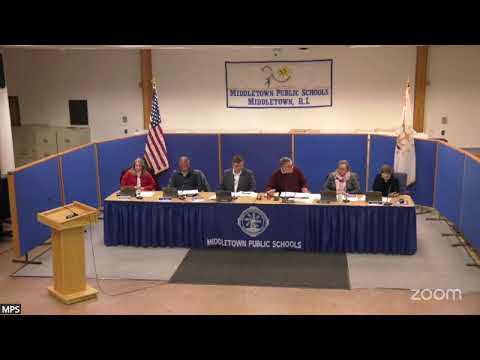
The Middletown School Committee on Feb. 13 approved the first reading of a districtwide cell phone policy aimed at restricting student use of cell phones and other personal electronic devices during instructional time.
The motion for a first reading passed by voice vote; committee members said the vote advances a uniform approach across schools while allowing time for the superintendent and building principals to develop protocols for enforcement and exceptions. Superintendent Billy Niemeyer said, “the policy is a good idea for the district,” and said he looks forward to community and staff input ahead of a second reading.
The measure follows three pieces of written correspondence the committee received in advance: a message from Kristen McLean, an English teacher at Middletown High School, that said, “I support the proposed cell phone policy. As a classroom teacher, it is a core keep kids off their cell phones during class,” and two statements from students and parents sent on behalf of Middletown High School urging stronger limits on in-class device use.
Committee members debated process and content. Member Teresa Spangler said she would have preferred broader stakeholder involvement before the first reading. Member Tammy Holden and others pressed for clearer definitions of emergency exceptions and asked how parents would contact students in true emergencies. Member Bill Nash spoke in favor of the ban’s aims, saying he is “fully convinced that this needs to happen” and that student phone use can be “detrimental to learning.”
Several members asked the superintendent to return with implementation details before scheduling a second reading. One proposal the committee discussed was to allow the superintendent flexibility to develop building-level protocols and to create an outreach plan to inform parents and students before enforcement begins. Some members said they would not support a second reading next month unless the administration had time to solicit stakeholder feedback and propose enforcement protocols; others said the district’s existing safety and office-based communication procedures addressed emergency concerns.
The committee’s first-reading approval does not finalize the policy. The superintendent was asked to work with principals, staff and families to draft protocols, clarify emergency definitions, and propose an implementation timeline for the committee’s consideration at a future meeting.
Votes and formal actions on the policy were taken during the regular meeting; details of the motion and its outcome are recorded in the meeting actions.