Get Full Government Meeting Transcripts, Videos, & Alerts Forever!
Get email alerts on the Civil Service Police Leadership topic
No spam. Unsubscribe anytime.
Worcester research bureau urges local merit process after state allows chiefs to be exempt from civil service
Summary
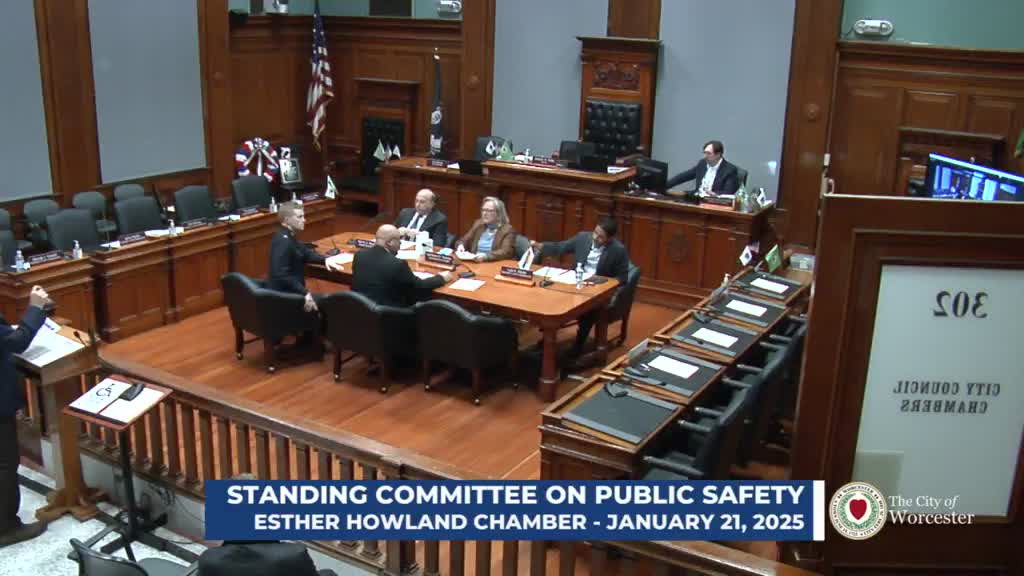
The Worcester Regional Research Bureau presented a report to the City Council Public Safety Subcommittee outlining statewide civil service changes that allow cities to exempt police chiefs and deputy chiefs; the bureau recommended a local, merit‑based selection process and other steps. The subcommittee voted to accept and file the report.
Paul Matthews, executive director and CEO of the Worcester Regional Research Bureau, told the Worcester City Council Public Safety Subcommittee that recent state reforms permit municipalities to exempt police chiefs and deputy chiefs from civil service and urged Worcester to adopt a clear, local, merit‑based selection process for those positions.
"The bureau is a 40 year old nonprofit that was established to provide objective, nonpolitical policy research to the public and policy makers," Matthews said while presenting the bureau's September analysis on civil service and police leadership. He said the state's Mass Leads Act included civil service reforms that remove the chief and deputy chiefs from civil service in communities that secure exemptions.
The bureau's report, delivered to the subcommittee as Communication 3A, noted reforms contained in the Mass Leads Act and recommended four steps the city should consider: establish a local, merit‑based selection process for chief and deputy chiefs; ensure the deputy chief selection process aligns with community priorities; consider using Part 10 hiring authorities to improve practices; and examine, via a collective‑bargaining study committee, the potential impacts of exempting larger swaths of a department from civil service.
Matthews said the report surveyed municipal practice as of September and found many municipalities moving to exempt leadership positions. "As a result of these reforms, it's expected that 24 municipalities, including Worcester, are gonna exempt such positions in their police and fire departments," he said. The report also summarized local steps such as an affirmative action plan and cited the city's March 2024 Racial Equity Audit as background for reform discussions.
Public commenters responded during the meeting's public comment period. David Webb, who identified himself as a Worcester resident, praised the report's focus on local hiring authority and said the change "allows us to ensure there is 0 chance of ever hiring a bad cop by hiring someone who isn't a cop." Fred Nathan, another resident, said he believed most officers in Worcester "are very good" and questioned the need to change the existing civil service arrangements.
The subcommittee voted to accept and file the communication. The vote was recorded in the meeting minutes as "So voted"; no roll‑call tally was entered on the record for this item.
Why it matters: removing chiefs from civil service shifts certain employment disputes and hiring decisions from the Civil Service Commission to the city manager as employer of record, a point discussed by council members in questioning Matthews and raised in public comment. The bureau emphasized that collective bargaining and local policies will affect how any new hiring regime operates.
The report will be posted on the bureau's website and was submitted to the council; Matthews said a fuller bureau report on the state reforms is forthcoming.