Get Full Government Meeting Transcripts, Videos, & Alerts Forever!
Get email alerts on the Civil Rights And Civility topic
No spam. Unsubscribe anytime.
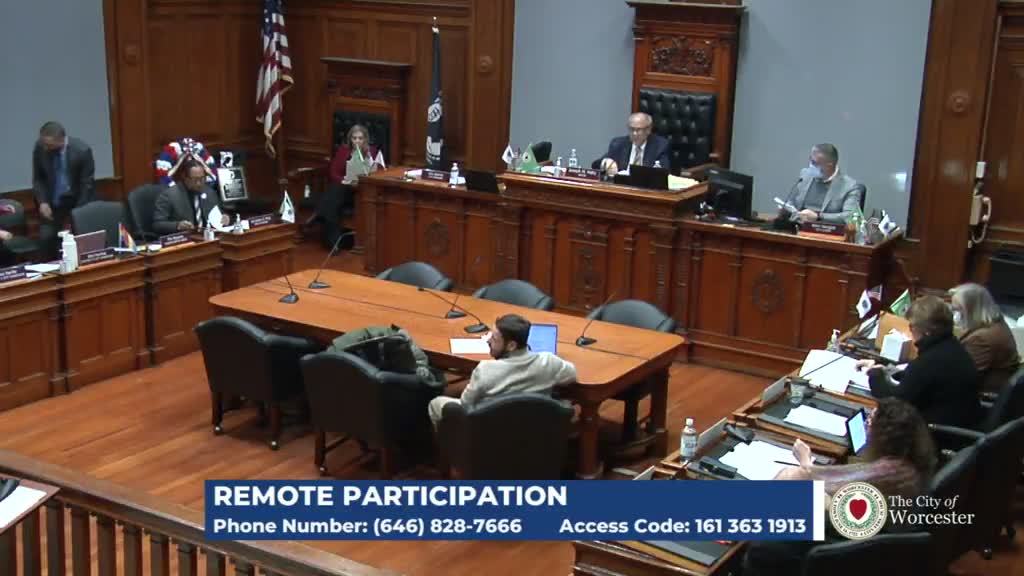
Worcester council condemns transphobic language, agrees to explore training and remote-participation policies
Summary
After an evening of public comment and debate, the Worcester City Council voted to condemn use of a transphobic slur in council conversations, authorized staff to reaffirm workplace protections, and sent an order about remote participation and decorum to the city manager for review.
The Worcester City Council on a night of extended public comment publicly condemned use of a transphobic slur directed at a council colleague, agreed to support identifying LGBTQ+- and disability-informed training for elected officials, and sent an order asking the city manager to examine remote participation and meeting decorum.
The council took up the matter after more than two hours of public testimony from residents, advocacy groups and city staff who described repeated dehumanizing language directed at Councilor Nguyen and urged the body to preserve remote meeting participation as an accessibility and safety option. The council also heard multiple speakers highlight the mental-health risks to LGBTQ+ youth and city staff. "The Worcester NAACP unequivocally condemns the division and hate festering within our city council," Fred Taylor, president of the Worcester NAACP, told the council. "We demand that our leaders engage in constructive dialogue, actively promote understanding, and confront discrimination head on."
Why it matters: Speakers said the episode has harmed public trust in city government and placed employees and vulnerable residents at risk. Many urged the council to adopt concrete measures—apologies, reaffirmation of nondiscrimination commitments, and trainings—rather than only issuing statements. Several residents said removing remote participation options would reduce civic access for people with disabilities, caregivers, and those who cited safety concerns.
Council action and motions - The council passed a motion to publicly condemn the use of the slur and "all expressions of transphobia" directed at the council member; that condemnation was approved by voice vote. (Motion introduced from the floor.) - The council approved a motion requesting that the city manager reaffirm municipal workforce protections and consider resources to support employees experiencing harassment; the body also approved identifying LGBTQ+- and disability-informed trainings for council reference. That motion was approved by roll call. - The council voted to send an order concerning remote participation, meeting decorum and related procedures to the city manager for review (referred to the mayor/manager's office). Speaker comments and the council's votes directed staff to return with reports rather than immediately change remote-participation policy.
Public testimony and concerns Residents, service providers and advocacy groups repeatedly described both specific incidents they said occurred and widespread concern about the council's tone. "Your words have impact. Your words build worlds. Your words do have long term mental health impact and inform what is socially acceptable," Tempe Staples, a public-health advocate, told the council during public comment. Multiple speakers described harassment, threats, and safety fears they said followed public statements and social-media posts tied to recent council remarks.
Several speakers also emphasized the practical effects of removing remote participation options. "Remote access is a disability accommodation, a boon and boost to citizen participation," one speaker said, citing state attorney general guidance that allowed remote attendance during the pandemic and noting an upcoming March expiration in guidance. Multiple commenters urged the council to preserve remote options for residents and councilors who rely on them for health, caregiving, work or safety reasons.
Council responses Mayor Joseph Petty told the chamber he did not condone hateful language and said his intent in filing an order on decorum was to improve how meetings run when members participate remotely. "I do not condone any hate speech or blatant transphobia that has transpired," Petty said, adding he remained willing to meet with community members and fellow councilors to repair relationships.
Several councilors expressed differing views on remedies and wording. Councilor Russell said he supports members of the LGBTQ+ community but said he would not apologize for conduct he said he did not commit. Other councilors pressed for concrete steps—training, a revival of a proposed LGBTQ+ commission, and clearer complaint processes for city employees and elected officials.
Next steps and what the council asked staff to do The council referred the orders and motions to the mayor/manager's office (MO) for review and asked staff to return with: (1) an assessment of current remote-participation guidance and any legal or administrative limits; (2) recommended training resources on LGBTQ+ inclusion and disability awareness; and (3) a reaffirmation of workforce protections and an outline of complaint/investigation pathways for city employees who report harassment. Councilors also asked the proposed LGBTQ+ commission work to be expedited to help identify training and community engagement resources.
The council's actions leave policy questions to staff rather than adopting immediate rule changes. Councilors and community members said they expect follow-up reports and possible ordinances or administrative updates after staff review.
The meeting also included routine committee referrals, appointments and other agenda items; those were handled after the public-comment period and are not the subject of this article.
Ending: The council's votes this evening signaled a clear public rebuke of hateful language and a direction to staff to return with options on training, workforce protections and remote participation. Advocates who spoke urged the council to move quickly with concrete policies and transparency about any investigations or personnel protections.