Get Full Government Meeting Transcripts, Videos, & Alerts Forever!
Get email alerts on the Urban Forest Master Plan topic
No spam. Unsubscribe anytime.
Council accepts urban forest master plan after public endorsement from Green Worcester and botanic garden
Summary
City Council moved to accept the Urban Forest Master Plan after multiple public speakers, conservation groups and the New England Botanic Garden urged adoption to address heat risk and canopy equity.
The City Council accepted the Urban Forest Master Plan after public testimony from residents and local organizations that urged the council to adopt the plan and secure funding to expand and equitably distribute Worcester’s tree canopy.
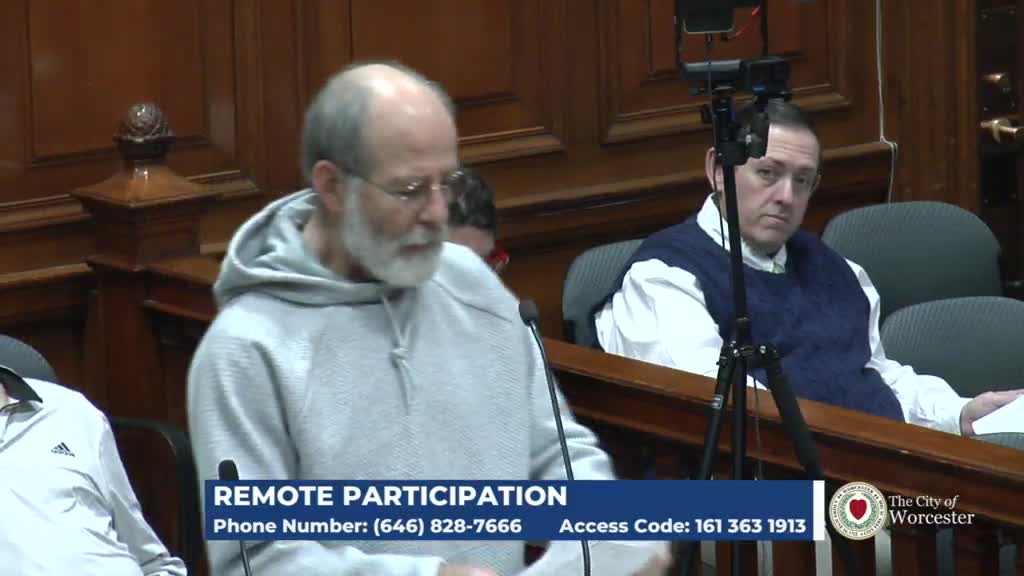
Paul Popanchuk, who identified himself as a Worcester resident speaking on agenda item 19, told the council the plan "will serve as a road map to proactively manage and grow the city's urban canopy." He also noted that the plan was endorsed by the Green Worcester Advisory Council.
"Urban forests are critical to the city's air and water quality, storm management, energy conservation, biodiversity, and overall health and well-being of our residents," Popanchuk said. He pointed to uneven canopy coverage downtown and in some vulnerable neighborhoods and urged the council to adopt the plan and allocate funds for proactive planting and maintenance.
Grace Elton, CEO of the New England Botanic Garden and a Worcester resident, said the garden advised on the master plan and "the garden is fully committed to helping the city achieve this plan in any ways needed." Several other callers including Evelyn Hurwitz, vice chair of the Green Worcester Advisory Council, echoed support for adoption, citing heat-island mitigation and equitable canopy distribution.
At the council meeting the administration's report on the item was accepted (item 19a), moving the master plan forward for implementation planning and budget consideration.
Why it matters: City officials and environmental advocates say a formal master plan helps prioritize tree planting, maintenance, and equitable canopy distribution — measures that can reduce urban heat, improve stormwater management and enhance neighborhood quality of life.
Ending: Council acceptance sends the plan to the administration for implementation steps; the plan’s recommendations will now be considered alongside budget and staffing decisions.