Get Full Government Meeting Transcripts, Videos, & Alerts Forever!
Get email alerts on the Neighborhood Commercial Nodes topic
No spam. Unsubscribe anytime.
Planners map small commercial 'neighborhood hubs' to support walkability
Summary
Consultants presented an analysis of small existing commercial lots inside residential districts and proposed creating neighborhood commercial nodes — small walkable hubs for cafes, grocers and community spaces — to be made conforming in revised zoning.
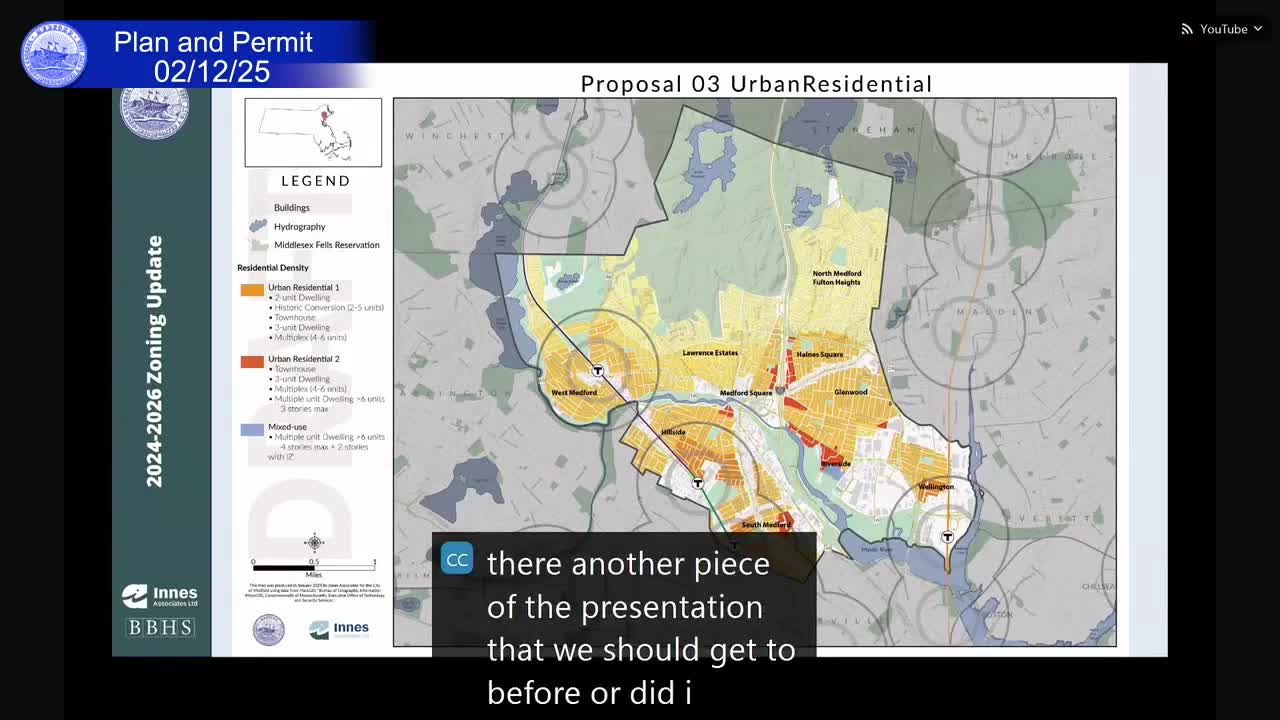
Consultants from Ennis Associates told the Planning and Permitting Committee on Feb. 12 that they have begun cataloguing small, existing commercial lots inside otherwise residential neighborhoods and are evaluating where to formalize those clusters as neighborhood commercial nodes.
Emily Ennis described red lots on the consultants’ maps as “existing commercial, small commercial buildings” that are now often nonconforming. She said the study is intended to identify where small groceries, cafes, a neighborhood co‑working space or other low‑scale uses could be allowed so those businesses can invest and remain conforming.
“We've noticed ... there's a little convenience store, there's a little neighborhood cafe,” Ennis said, and the consultants want to “make it easier for them, but also just sort of thinking through how are they used by the neighborhood and how do we make that a better thing to do?”
Committee members responded positively. Councilor Callahan framed the idea as “community mixed use,” asking that hubs include uses and programming for all ages — cafes, small groceries, coworking and “children’s and teens activities” — so the nodes help neighborhood social life and walkability.
Consultants said many of the scattered commercial parcels sit near bus stops or other pedestrian nodes; the team plans to identify logical groupings and propose appropriate size and use limits for neighborhood hubs. The committee requested the commercial nodes maps and supporting materials be uploaded to the meeting’s public portal after the session so residents can review them in color and at larger scale.
The consultants said this analysis will feed into later rounds of the zoning project as corridors and squares are drafted, and that some hubs could be limited to small‑scale neighborhood uses to avoid broader commercial expansion into stable residential areas.