Get Full Government Meeting Transcripts, Videos, & Alerts Forever!
Get email alerts on the Lcaf And Programs topic
No spam. Unsubscribe anytime.
Duarte High spotlight and LCAP midyear update: counselors, community schools and college advising highlighted
Summary
Duarte Unified presented a spotlight on Duarte High School’s academic support programs and a midyear update on the Local Control and Accountability Plan (LCAP). Presenters emphasized counselors, a community schools partnership and mental-health supports; the board asked for follow-up data on ADA revenue loss and school connectedness.
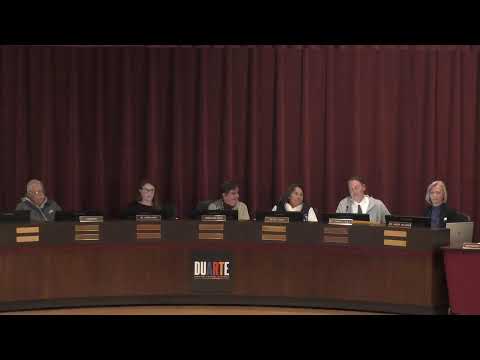
At the Feb. 13 board meeting, Duarte Unified highlighted student supports at Duarte High School and reviewed a midyear update on the district’s Local Control and Accountability Plan (LCAP).
Duarte High spotlight: The board heard from Louie Haro, who outlined what he called the school’s “Falcon family” supports: a four-person counseling team (three academic counselors plus a career/guidance counselor), a community-schools partnership with Los Angeles County Office of Education (LACOE) that places a community schools coordinator (Tracy Hall) and a community schools worker (Gabby) on campus, an on-campus USC college advising coordinator and an on-site mental-health clinician funded through the Joe Torre Foundation’s Margaret’s Place program. Haro described activities including four‑year academic planning meetings for freshmen, evening FAFSA and financial-aid workshops, a clothing/family resource center (the “Falcon Closet” or Falcon Family Center) and upcoming community resource events; presenters said staff distributed about 30 Thanksgiving turkeys last season through the Community Schools Initiative partnership.
Student board member Priscilla gave a first-person account of supports she has used, and members of the board praised campus resources and the dignity-centered approach to family assistance.
LCAP midyear update: Dr. Lawson presented Duarte Unified’s midyear review of LCAP goals and actions. She summarized progress and implementation notes across the district’s four main LCAP goals: (1) college, career and life readiness; (2) a positive, supportive school environment; (3) family and community partnerships; and (4) 21st century facilities and operations. Items discussed included class-size reduction targets, supplemental resources for students who are English learners, foster youth, and low‑income, continued Career Technical Education (CTE) staffing, PBIS training, attendance and chronic-absenteeism initiatives, Parent University and Title I parent-engagement activities, and facilities maintenance and credentialing for staff.
Board questions and clarifications: Board members asked for financial detail on average daily attendance (ADA) revenue loss; Dr. Lawson said that figure was not immediately available and agreed to provide the dollar amount to the board and community.
On school connectedness measures, staff explained that the California Healthy Kids Survey (administered through WestEd) includes multiple items aggregated into a connectedness metric, that the district has baseline and new survey data currently under analysis, and that trend patterns often show declines in self-reported connectedness as students age; staff said they would return with analyzed results after review of the most recent survey cycle.
Funding and program notes: Dr. Lawson and staff clarified that LCFF (Local Control Funding Formula) base and concentration funds, plus grants such as PACE, support many of the LCAP actions; categorical funds and concentration allocations are being used to fund strategies targeted at English learners, foster youth and low‑income students.
No formal board action was required on the presentation; staff will return to the board with the requested ADA revenue figures and with finalized Healthy Kids Survey analysis at a future meeting.