Get Full Government Meeting Transcripts, Videos, & Alerts Forever!
Get email alerts on the Land Use Bond Reduction topic
No spam. Unsubscribe anytime.
Council deadlocks on partial bond release for Shoreline Properties subdivision
Summary
The West Warwick Town Council failed to approve a planning-board recommended reduction of the Shoreline Properties performance bond after a 2-2 tie. Council debate centered on dust, road debris and whether the town has discretion under state law and local regulations.
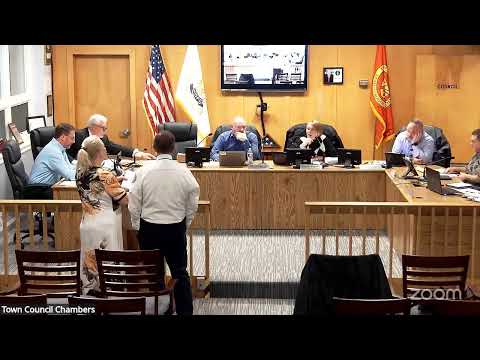
The West Warwick Town Council failed to approve a partial release of the performance bond for Shoreline Properties’ Carlton Avenue subdivision after a 2-2 tie on Feb. 4.
The council considered a planning-board recommendation to reduce a posted improvement bond from about $1,030,100 to $438,800 — a $591,300 release — based on estimates from the town engineer, public works director and Kent County Water Authority of the remaining work to finish sewer, roadway and related improvements.
The matter drew extended comment from Councilman Licciardi, who said he lives near the project and relayed repeated complaints from neighbors about uncut grass, dust and large clumps of dirt tracked onto adjacent streets. “Grass was measured approximately 3 foot high,” Licciardi said, and later added, “This event occurred in the spring, followed through the summer. … It made it dangerous for those walking, those walking their dogs.” He said residents want the developer to “contain their problems” and that he would prefer holding the bond until the project is complete.
Town solicitor Al Bridal gave a legal explanation of the state statute and the town’s subdivision regulations, saying the law provides three methods for guaranteeing completion of improvements and that, in this case, the experts calculated $438,800 as the amount needed to complete the work. Bridal told the council the regulations and state law limit the town to holding only the amount necessary to finish the project when partial completion is demonstrated.
Jeff, identified in the meeting as a town engineer representative, described the methodology for the cost estimate: he said the builder provided square footage and his office applied current material and unit prices to produce the cost figures. He also said he inspected drainage and other onsite work and that sidewalks and a top coat of asphalt remained.
Council members asked clarifying questions about what remained to finish — topcoat asphalt, sidewalks, landscaping and a small number of houses not yet fully built — and about whether pressure testing had been completed for the sewer connections. Council discussion acknowledged other avenues for addressing neighborhood complaints (inspections, violations, enforcement) but emphasized the bond’s purpose is to guarantee completion of the public improvements.
After discussion the council voted; the motion to accept the planning board’s recommendation and reduce the improvement bond failed on a 2-2 tie. The town solicitor and planner noted that if the council declined to reduce the bond, the planning board’s recommendation would stand for further handling per the regulations.
Public comment from developers and principals later in the meeting reiterated disagreement with the outcome and asked the council to review the audio/video record for the exchange that preceded the tie vote.
Looking ahead, council members discussed that maintenance bonds or separate enforcement channels could address some complaints about dust and debris, and that any future reductions would reflect updated expert estimates and inspections.