
Framingham finance subcommittee reviews classification and compensation study, requests per‑position cost detail and schedules Jan. 28 follow-up
Get AI-powered insights, summaries, and transcripts
Subscribe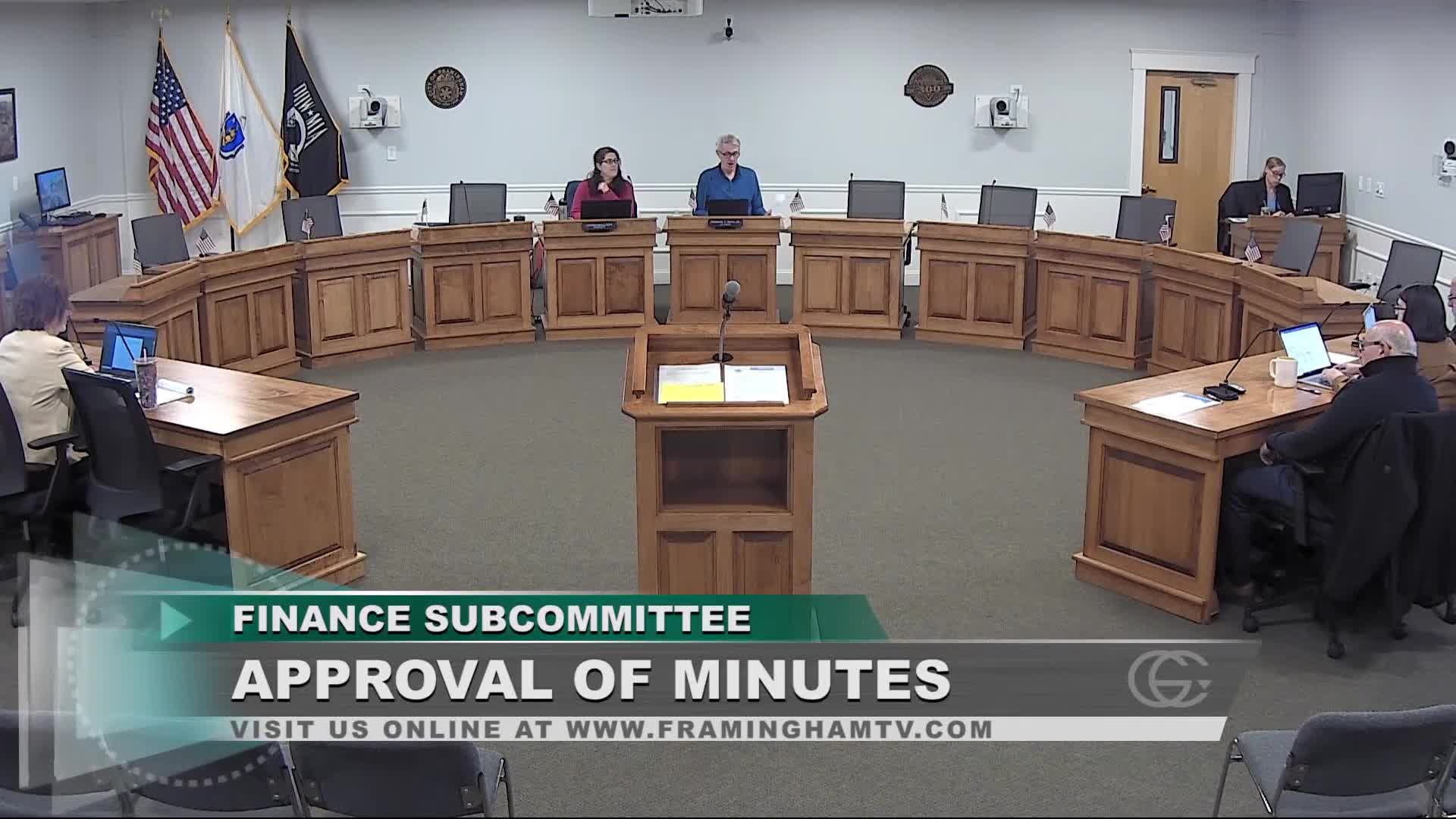
Summary
The Framingham City Council finance subcommittee discussed GovHR's classification and compensation study on Jan. 7, 2025, raised concerns about outreach and legal exposure under the Massachusetts Fair Pay Equity Act, and asked the administration to provide detailed per‑position costs and department breakdowns for a Jan. 28 follow-up.
The Framingham City Council finance subcommittee on Jan. 7 reviewed a citywide classification and compensation study conducted by GovHR and asked the administration for a per‑position financial impact analysis before completing action.
The study, completed in November 2024 after GovHR was retained in March 2023, recommends changes to job groupings and grades, consolidates some salary grades and adds higher subgrades in the M (manager) series. Committee members also raised concerns about potential exposure under the Massachusetts Fair Pay Equity Act, chapter 149, §105A, and questioned the consulting outreach and the level of detail provided with the presentation.
GovHR was the only vendor to respond and was retained under a $49,500 contract, the presenter said. The study covers roughly 125 nonunion positions, proposes adding an M9 and M10 grade, consolidating the S grade to a single range and creating a DH4 group intended to include the chief operating officer, chief financial officer and city solicitor. The presenter said some positions were graded lower in the study but incumbents would be grandfathered to prevent pay reductions.
“Basically, the law states that it’s unlawful to pay an employee less than an employee of the opposite sex for equal or comparable work,” a staff presenter said while reviewing the Fair Pay Equity Act. He added the city could face liability, including back pay and attorney’s fees, and that the administration needs to consult with the city solicitor about possible instances identified during the study.
Council members pressed for more granular numbers. Councilor Cannon said the slides listing current and proposed grades were insufficient without dollar amounts or percentages, asking, “Why haven’t we included that?” He asked for a per‑position historical record and percentage impacts to help the council and the public verify the study’s results.
The administration said departmental and overall cost summaries are in the background materials and that some funding for increases could come from open positions and transfers from salary reserves. Committee members requested explicit per‑position dollar and percentage impacts, the effect in the current fiscal year, and the budgetary plan to offset any increased cost.
Several members questioned the vendor outreach. The presenter said four consultancies were contacted and GovHR was the only timely respondent; members said follow‑up attempts to reach other providers, including the Collins Center, appeared to have generated later responses and apologies but not an offer that fit the original timeline.
Councilor Steiner and others asked about specific regrades. The committee discussed the Chief Diversity Officer position, which the study reclassifies from a division head group to an S grade. Staff said the change aligns the role with other solo‑practitioner positions and that the reclassification would not reduce pay for the incumbent. Councilor Steiner said she remained concerned about the message sent by the regrade for a position the council considers central to the city’s diversity work.
Members also sought clarity on cadence for future studies and on process controls to avoid repeated whole‑system reworks. Staff said the consultant provided a manual intended to allow city HR to grade positions going forward without reengaging a consultant for routine updates.
Rather than taking action at the Jan. 7 meeting, the committee agreed to receive the requested supplemental materials and continue the item at its Jan. 28 meeting. The administration committed to return with per‑position cost detail, departmental rollups and information on funding sources.
Votes at a glance: the committee approved minutes earlier in the meeting and later voted to adjourn. No formal vote was taken on the classification and compensation study at the Jan. 7 session.