Get Full Government Meeting Transcripts, Videos, & Alerts Forever!
Get email alerts on the Immigration Enforcement topic
No spam. Unsubscribe anytime.
Evergreen board delays vote on immigrant‑protections resolution after students, community press for changes
Summary
The Evergreen School District Board of Directors on Feb. 11 paused consideration of Resolution 70‑21, which would affirm the rights of undocumented students and set procedures for INS/ICE access to campuses, saying board members will meet with students and community groups for additional input before finalizing the measure.
The Evergreen School District Board of Directors on Feb. 11 agreed to postpone a planned vote on Resolution 70‑21, a proposed measure affirming undocumented students’ rights and clarifying procedures for immigration enforcement access to schools, after hours of public comment from students and community organizations and a presentation by City of Vancouver officials.
Councilwoman Diana Perez of the City of Vancouver and Vancouver Police Chief Troy Price told the board the city and police department aim to keep schools safe spaces and that local officers are not immigration agents. “The city of Vancouver and the Vancouver police department believe that to ensure community safety every member of the public needs to feel safe contacting law enforcement,” Perez said. “Vancouver Police Officers are not authorized immigration officials nor do they have the capacity nor training to act as such,” she added.
The superintendent, Dr. Christine Maloney, described district steps already under way: a Refugee and Immigrant Family Resource webpage, a district policy titled Limiting Immigration Enforcement in Schools (Policy 4300) available in English, Spanish and Russian, staff training on how to respond to immigration officials, and communication that reached 25,141 families after state guidance was released. “We are going to continue to monitor for potential impacts on our refugee and immigrant families and share accurate information when we receive it,” Maloney said.
Dozens of public commentators — many students from Evergreen High School and Mountain View High School, plus local community organizers and civil‑rights groups — urged stronger, clearer protections. Student speakers described persistent fear among immigrant and mixed‑status families and asked the board for actions including better translation and outreach, mandatory annual staff training, stronger discipline for staff who disclose citizenship information, and formal inclusion of community leaders in drafting the resolution. “We are afraid and we feel unprotected,” senior Isabella Garcia told the board.
Community organizer Olondra Abrego Viveros, identifying her role with SWEC, asked the board to involve leaders of color in drafting the resolution and to stop treating community partners as an “afterthought.” Eduardo Torres, vice president of LULAC’s Vancouver council, said local groups were preparing rapid‑response teams and asked the district to partner with community organizations rather than wait for requests.
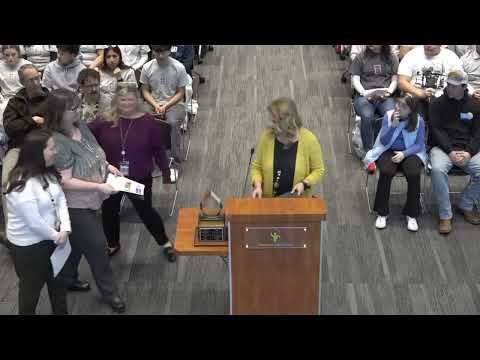
After the comments, Board President Jackie Weatherspoon said the board would not read the resolution aloud for a vote that night and instead invited additional student and community input. The board asked staff to arrange targeted conversations and workshops with students and to make the draft available through board channels (the draft is posted on the board’s Diligent portal for review). Members said they would aim to finalize the measure at the next regular meeting but emphasized the need to incorporate student feedback.
The discussion referenced several district policies and recent administrative steps: Policy 4300 (Limiting Immigration Enforcement in Schools) and related procedures; policy references to law‑enforcement activities in schools (Policy 3226); and the resolution draft identified in board materials as Resolution 70‑21. Board members and speakers also noted that district materials and policies are available in Spanish and Russian, and that staff training on responding to immigration officers took place on the Jan. 31, 2025 professional development day.
What the board did not do: there was no formal vote to adopt Resolution 70‑21 on Feb. 11. Instead the board recorded a decision to postpone action, hold additional student‑focused conversations, and return with a revised resolution for a future meeting. The district emphasized that existing laws entitle each child to a free public education regardless of immigration status and that staff training and resources will continue while the resolution is revised.
Board and community leaders said next steps will include targeted meetings with student groups and community partners, continued translation and outreach, and consideration of concrete enforcement and discipline measures for staff who might disclose confidential information. The board also pointed families and advocates to the district’s Refugee and Immigrant Family Resource webpage and to existing policies for details on procedures and staff training.