Get Full Government Meeting Transcripts, Videos, & Alerts Forever!
Get email alerts on the Parks And Recreation topic
No spam. Unsubscribe anytime.
Germantown presents concept for 55‑acre ‘Premier’ sports and recreation complex; seeks TDEC grant and private partner
Summary
City staff presented a conceptual plan for a 55+‑acre Premier Sports & Recreation Complex focused on multipurpose synthetic fields, an indoor facility and wetland enhancements. The city is pursuing a $10 million TDEC grant (with a $3.3 million match) and has issued an RFP for a private development/operator partner.
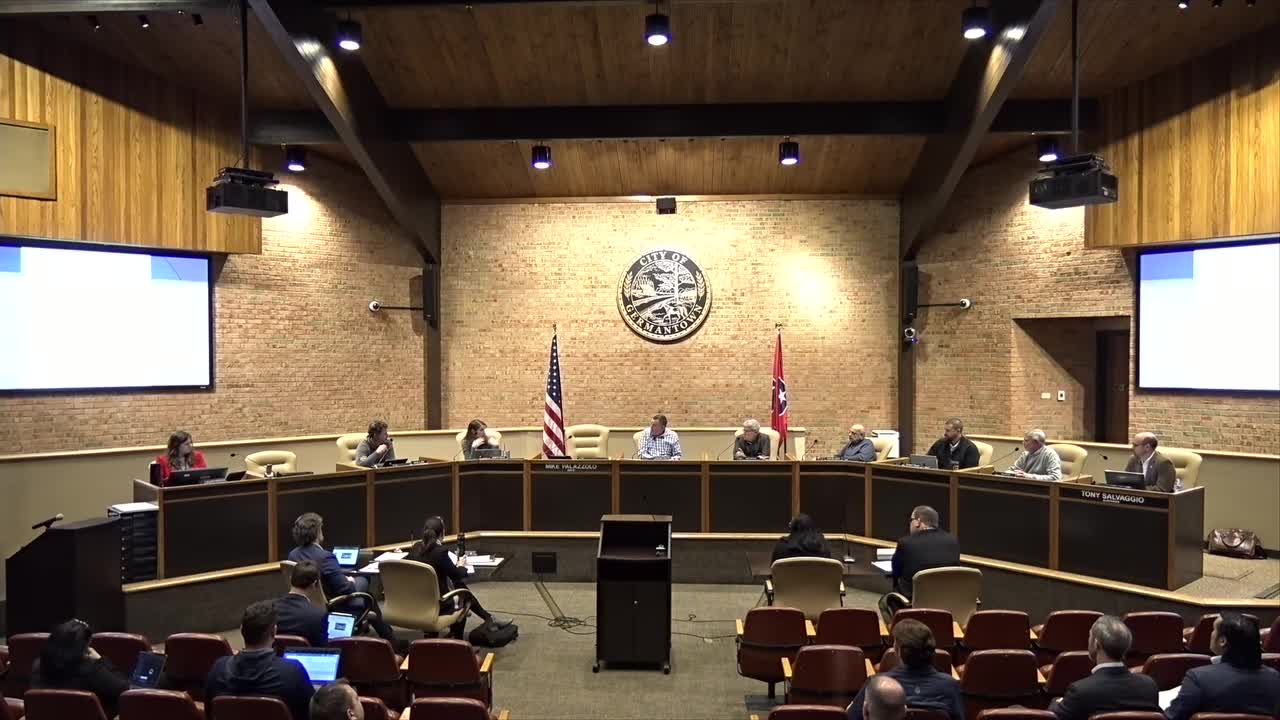
City of Germantown staff on Feb. 4 presented a conceptual master plan and public‑engagement briefing for a proposed Premier Sports & Recreation Complex on a 55‑plus‑acre site near Winchester Road and Forest Hill‑Irene Road.
Assistant City Administrator Andy Sanders told the Planning Commission the city acquired about 46 acres for the site in 2021 and that an adjacent 6.5 acres was later added through donation. The concept presented includes multiple multipurpose synthetic turf fields, six “pee‑wee” synthetic fields, a roughly 100,000‑square‑foot indoor facility, pavilions, an elevated boardwalk through restored wetlands and roughly two miles of trail.
The city is pursuing a competitive grant from the Tennessee Department of Environment and Conservation (TDEC) and plans to request $10 million; Sanders said the city’s planned match for the grant year is about $3.3 million. Sanders said TDEC indicated that costs the city has already incurred for land acquisition, attorney and development fees may be eligible to count toward the required match. Sanders also said the city’s match could include private development dollars or donations, such as naming rights tied to the private partner.
The city solicited a private development partner through an RFP released Jan. 3; staff said they held a pre‑proposal meeting with seven respondents and that proposals are due Feb. 17. The private partner would be expected to operate portions of the complex and could provide revenue‑generating amenities such as concessions, indoor courts and event management.
Sanders highlighted stormwater and wetland work as a core component of the site concept. He said two culverts that carry runoff from the site onto the West Tennessee State Veterans Cemetery property are currently undersized; staff are coordinating with the cemetery on upgrades. The plan proposes a natural‑detention feature and wetland enhancements to restore ecological function while keeping pre‑ and post‑development runoff volumes balanced.
A consultant’s pro forma cited by staff (Sports Facilities Associates) estimated annual sports‑tourism economic impact of about $30 million for the facility, a figure Sanders presented as part of a broader economic case for pursuing outside funding and a private operator to minimize local taxpayer burden.
The presentation described a three‑year performance and build timeline tied to the grant schedule: FY2026 for planning and design, FY2027 for major construction and FY2028 for finish, marketing and grand‑opening activities. Sanders said TDEC’s grant application is due April 1 and that staff are continuing stakeholder engagement and engineering design to support the grant application.
Commissioners and members of the public asked questions about trail connectivity and bike lanes, restroom and amenity placement, the potential for pickleball or tennis courts, how the project would serve older residents and whether the indoor facility could host basketball or volleyball tournaments. Sanders and staff said the indoor facility programing will be shaped in part by the private development partner and the final design and that the concept remains flexible.
Public comment included Dr. Poe Adams, who praised the concept as a regional economic asset and urged support. Commissioners generally expressed support while noting the project’s complexity, funding dependencies and the need to coordinate drainage improvements with the adjacent cemetery and to finalize development‑partner terms.
No formal action or vote was taken; staff characterized the meeting as an early public‑engagement presentation required for the TDEC application and said subsequent design work, stakeholder outreach and an RFP selection process will follow.