Get Full Government Meeting Transcripts, Videos, & Alerts Forever!
Get email alerts on the School Construction topic
No spam. Unsubscribe anytime.
City officials report improved vendor payment process and outline school construction timelines, funding and risks
Summary
City officials told the Finance Committee they have centralized school construction cash management in the finance office, cleared a backlog of approved invoices and set weekly reviews to prevent future payment delays while outlining schedule and funding risks for multi‑phase school projects.
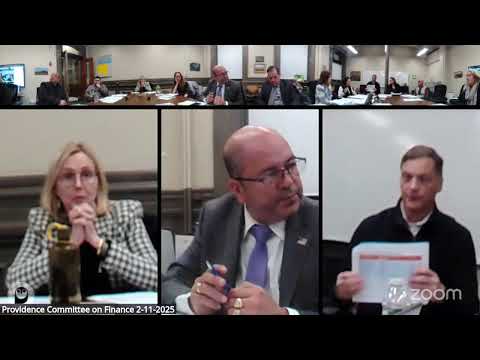
City officials gave the Committee on Finance an update on school construction payments, project timelines and funding sources, saying recent process changes have cleared a backlog of approved invoices and improved cash‑flow oversight while warning the committee about timing risks tied to bonding and reimbursements.
Courtney Hawkins, operating officer in the mayor’s office, and John Arzemanian, director of the Department of Public Property, described moving construction financial management into the city finance office and assigning Sarah, Crystal and Larry to weekly invoice reviews. Officials said the city now has a process to submit bond‑fund payments more efficiently and that, as of the presentation, “everything that we have that's been approved has been paid.” They also said many vendors previously failed to submit timely payment applications and that the city has provided technical assistance and workshops to improve vendor billing.
Officials told the committee the city missed an earlier opportunity to draw down a $60,000,000 authorization under a prior administration but that they expect to pursue available borrowing through existing authorities (including a previously authorized $140,000,000 bond tranche and a recently approved $400,000,000 bond ballot measure). City staff said state reimbursement for school construction ranges from about 80 to 91 percent, depending on project approval timing and available bonus funding.
Committee members pressed staff on whether delayed payments had caused project delays or claims. Staff said selectively chosen contractors were able to carry projects through the payment issues and that no contractor claims had been filed to date. Officials acknowledged some projects experienced schedule movement compared with projections created earlier but emphasized current work to “true up” timelines with vendors and to meet the district’s delivery target of students occupying new buildings in September 2026.
The briefing covered the city’s multi‑phase school construction program, including phases 1–4, and described how the district’s decisions on facility siting and programing have affected schedules. Officials described an $8,000,000 school construction revolving fund administered by the city as a side account to cover urgent capital needs and then submit them for state reimbursement so the fund can revolve.
Committee discussion also addressed energy‑related expectations tied to state (RIDE) bonus incentives. Staff said an anticipated offset of the city’s local match through projected energy savings is unlikely to be guaranteed, noting that new electric systems can increase electric bills because of the addition of cooling systems and other loads; staff recommended coordination with the city’s energy administrator, David Reggio, to pursue efficiency and metering strategies.
Members asked about a specific design change for the Frank Sposiano schools: staff explained a change order that added roughly $24,000 for an all‑electric energy model and about $129,000 for site planning and relocation work tied to moving a building across the street from the original site. Staff said the relocation required re‑submission to planning and set the schedule back by a few months.
Officials said they will continue weekly monitoring of invoices and bring updated expenditure reports and bonding timing to the committee in future meetings.