Get Full Government Meeting Transcripts, Videos, & Alerts Forever!
Get email alerts on the Road Safety Implementation topic
No spam. Unsubscribe anytime.
Providence task force advances North Main road‑safety measures; signs, LPIs and enforcement discussed
Summary
At a Feb. 12 meeting of a Providence City task force, staff and members reviewed implementation steps from a Road Safety Assessment for North Main Street, noting nearly 200 signs and signal timing changes already installed, discussing temporary traffic devices, funding sources and data gaps for enforcement and camera placement.
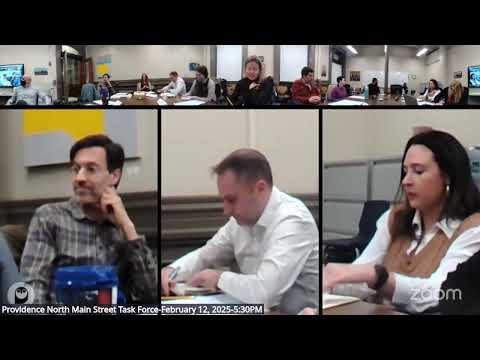
Providence — At a Feb. 12 meeting of the Providence City North Main Street Task Force, members reviewed progress implementing the corridor's Road Safety Assessment (RSA) and discussed near‑term steps including new signage, leading‑pedestrian intervals at signals and options for enforcement and cameras.
The RSA implementation update, presented by Sean Raymond of the North Main Street Task Force, outlined completed installations and next steps and asked the group to help track items that still need follow‑up.
Raymond said the final RSA document is not yet fully finalized but that the implementation matrix will be updated and circulated within about a week. “Some of the stuff has been completed,” he said, and he asked members to flag items they see in the field so the task force can address omissions or installation issues.
Task force members and city staff detailed work already done and items under review: signal modifications including leading‑pedestrian intervals (LPIs) at several intersections, new “no turn on red” signs at some approaches, and other large signing efforts. Raymond said the group had installed roughly 200 signs since November and that some decorative or corridor‑level work remains in progress.
City traffic staff described coordination needs for signal timing and detection equipment. A city engineer explained that many signals along the corridor are coordinated and that timing changes must avoid disrupting coordination while still adding pedestrian priority where possible. Members discussed separating right‑turn phases from the through movement to give pedestrians a clearer crossing window.
Enforcement, cameras and funding were a recurring topic. Task force members raised the fiscal 2024 Safe Streets grant and other federal funding as possible sources for enforcement equipment such as speed‑count devices or mobile cameras. City staff said camera contracts are up for negotiation this year and cautioned that installing fixed red‑light cameras typically requires a study to verify signal operation before placement. Staff estimated the city has about 30 camera locations citywide but said capabilities vary by vendor and by device (for example, some equipment detects only vehicles above a certain speed).
Members also discussed temporary hardware — flexible posts, cones or planter pilots — to delineate space while larger capital projects proceed. Several participants cautioned that temporary delineators can give a false sense of protection and raised Americans with Disabilities Act and maintenance considerations. A public commenter offered to pursue a $10,000 planter grant as a pilot and volunteered maintenance if the task force wishes to pursue planters at selected locations.
Data gaps were flagged. Task force members requested raw pedestrian and bicycle counts that the city has collected at spots on North Main to better target treatments and camera placements. Raymond said some automated counts exist but that additional behavioral and turn movement data would improve placement decisions.
The task force discussed next steps: finalizing and circulating the RSA matrix with lead assignments, continuing coordination on signal timing and tree trimming, identifying candidate locations for temporary treatments, and exploring available enforcement and grant funding (including CDBG and Safe Streets funds). The group agreed to continue tracking implementation at future meetings and to invite technical presenters on topics such as dual‑turn reconfiguration and signal re‑timing.
— Ending note: The task force's next meeting was announced for March 19; the city’s Vision Zero report was expected to be released in mid‑March and may be added to a future agenda.